


Table of Contents
- Define Clear Corporate Event Goals Before You Start
- Set a Realistic Budget and Manage Costs Upfront
- Build a Corporate Gala Planning Checklist and Timeline
- Choose the Right Venue and Finalize Logistics
- Design a Compelling Corporate Gala Program and Guest Experience
- Plan for Accessibility, Inclusivity, and Risk Management
- Measure Success and Gather Actionable Feedback
- Frequently Asked Questions
Last Updated: October 12, 2026
Define Clear Corporate Event Goals Before You Start
Successful company gala planning starts with clear goals, they guide every decision, from budget to venue to guest list.
Ask what success looks like: celebrating a milestone, building morale, attracting clients, or strengthening partner relationships?
Your audience, executives, all employees, or select clients, determines the tone, format, and logistics of your corporate gala planning.
Share goals with your planning team so everyone understands the why, preventing wasted effort and speeding decisions.
Set a Realistic Budget and Manage Costs Upfront
Budget is where many company gala planning efforts derail.
Start with a total budget figure and work backward.
Get written quotes from every vendor, verbal estimates invite unexpected charges.
Build in a 10-15% contingency buffer. Events always have surprises; a fund lets you handle them without panic.
Track spending weekly in a spreadsheet to catch overruns early and adjust other categories before it’s too late.
Request itemized invoices from vendors before paying. This prevents disputes later and gives you documentation for your records. It also makes it easier to spot duplicate charges or errors.
Build a Corporate Gala Planning Checklist and Timeline
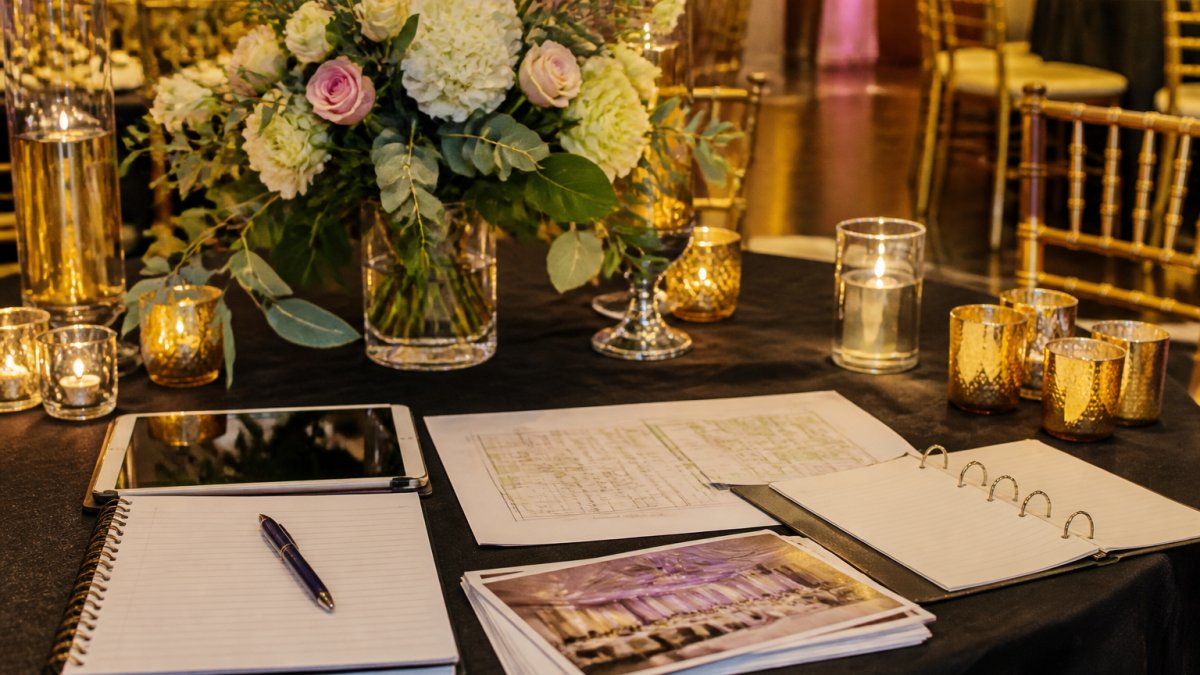
A corporate gala planning checklist keeps your team organized and ensures nothing falls through the cracks. A timeline ensures everything happens in the right order.
Start planning several months out to secure your venue, book vendors, and handle marketing without rushing.
Key Milestones for Your Corporate Gala Timeline
Break your timeline into phases, each with specific deliverables.
Phase 1: Foundation (Months 1-2)
- Finalize event goals and budget
- Confirm date and secure venue
- Identify key stakeholders and decision-makers
Phase 2: Vendor Selection (Months 2-3)
- Book caterer and finalize menu options
- Hire entertainment or speakers
- Reserve audiovisual equipment and technical support
Phase 3: Marketing and Promotion (Months 3-4)
- Design formal invitations
- Build event website or landing page
- Launch email campaigns to target audience
Phase 4: Final Logistics (Month 5)
- Confirm final headcount with all vendors
- Finalize seating arrangements and table assignments
- Prepare event program and agenda
Phase 5: Execution (Week of Event)
- Conduct final walkthrough with venue
- Set up signage and décor day-of
- Brief all staff 2 hours before doors open
Use a shared project management tool like Asana or Monday.com so your team sees tasks, deadlines, and owners.
Choose the Right Venue and Finalize Logistics
Your venue sets the tone for the entire event. The right venue makes everything easier.
When evaluating venues, ask: Does it match your guest capacity? Is the layout flexible?
Capacity matters: a room seating 80 feels intimate, while one seating 200 with 80 guests feels empty.
Visit venues in person, photos don’t show lighting, ceiling height, or how sound travels.
Ask about included amenities: tables, chairs, linens, lighting, and AV.
Confirm logistics in writing.
Never book a venue without confirming the date in writing. Verbal agreements lead to disputes. Get everything in the contract, signed by both parties.
Design a Compelling Corporate Gala Program and Guest Experience
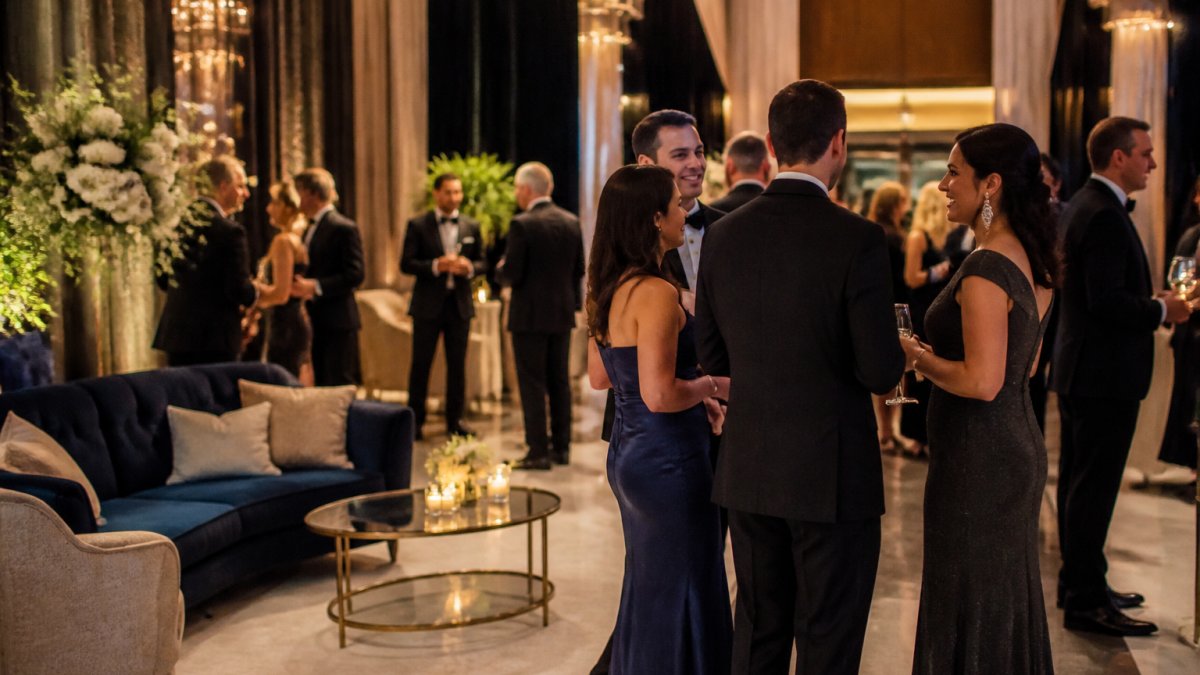
The program is what guests remember, and for a company gala it should also deliver your business objectives. Unlike a nonprofit gala, where the program serves fundraising, a corporate gala program should be engineered around the outcome you defined in your goals: client development, employee recognition, brand positioning, or a milestone celebration.
Map the Program to Your Business Objective
Before writing a single run-of-show line, decide which objective the program serves and design backward from it:
- Client appreciation or business development: Prioritize unstructured mingling time, seated dinner with intentional table assignments that mix your team with target accounts, and a short, senior-leader welcome. Skip the long keynote.
- Employee recognition: Build in a dedicated awards or recognition segment with named honorees, a brief video or slide moment per recipient, and reserved seating that puts recognized employees near leadership.
- Milestone celebration (anniversary, launch, rebrand): Anchor the program around a reveal moment, a video, a countdown, a physical unveiling, and keep speeches tight so the reveal lands.
Build a Run-of-Show That Holds Attention
Well-run corporate galas typically use a 60-90 minute formal program bracketed by open networking:
- Cocktail hour (45-60 minutes): Open mingling, passed hors d’oeuvres, no formal remarks. This lets late arrivals settle in without disrupting the program.
- Welcome and framing (5-7 minutes): A senior leader welcomes guests and states the purpose of the evening in one or two sentences.
- Core segment (20-30 minutes): Keynote, panel, awards, or reveal, depending on your objective above.
- Dinner service (45-60 minutes): Speeches pause; guests eat and talk.
- Recognition or appeal (10-15 minutes): Awards, milestone acknowledgments, or a brief ask if the event has a fundraising or partner component.
- Closing and transition (3-5 minutes): Thank-yous, a clear signal that the formal program is over, and an invitation to stay for dessert, drinks, or entertainment.
Vary the pace: mix a speech with a performance, a video with a live moment. Long stretches of talking lose the room; long stretches of nothing feel aimless.
Coach Your Speakers Like It’s a Business Presentation
Corporate gala speakers are usually executives, not professional presenters. Give each a written brief with the segment objective, a hard time limit, two or three talking points, and who’s in the room. Rehearse once with a timer, a rehearsed 8-minute speech beats an improvised 20-minute one.
Brief any professional emcee on name pronunciations, award order, and topics to avoid. A good emcee keeps transitions tight and covers small hiccups unnoticed.
Design the Guest Journey End to End
Walk through the evening as a guest would:
- Arrival: Clear signage, a staffed check-in desk, and a coat check if the season calls for it. Guests should not have to ask where to go.
- First 10 minutes: A welcome drink within reach and a visible place to mingle. This is where first impressions form.
- Seating: Place cards with correctly spelled names, table assignments that serve your objective (mixed tables for client development, clustered tables for recognition), and a printed or digital seating chart.
- During the program: Clear sightlines to the stage or focal point, adequate sound, and lighting that shifts with the program (brighter for dinner, dimmer and focused for a reveal or performance).
Tie the Program to Measurable Outcomes
Because this is a company event, the program should be measurable. Decide in advance which signals you’ll track:
- Attendance rate: Invited vs. actual guests. A rate below roughly 60% often signals a date, venue, or invitation problem.
- Engagement during the program: Did guests stay through the core segment? Did they participate in the recognition or interactive moment?
- Post-event follow-up: For client-facing galas, track how many target accounts took a meeting, replied to a follow-up, or moved forward in the pipeline in the 30-90 days after the event.
- Employee sentiment: For recognition galas, a short post-event pulse survey on whether employees felt valued and informed.
Document these numbers in your post-event report so next year’s planning starts from evidence, not memory.
Build a one-page run-of-show with times, cues, and the name of the person responsible for each transition. Share it with your AV team, caterer, and emcee at least a week before the event so everyone is working from the same script.
Plan for Accessibility, Inclusivity, and Risk Management
An event that works for everyone is one that succeeds, and one that survives a surprise is one planned for it. Accessibility, inclusion, and risk management shape your venue choice, menu, communications, and staffing, and most gala guides skip them, making this a genuine differentiator.
Build an Inclusion Checklist Into Your Planning
Run through this list before signing the venue contract, because some items are hard to retrofit:
- Mobility access: Step-free entry, accessible restrooms, elevator access to any upper or lower levels, and a clear path from parking or drop-off to the event space. Confirm aisle widths allow a wheelchair or walker to move between tables.
- Seating options: At least some seating that accommodates guests who cannot stand for long periods, plus a quiet area for guests who need a break from noise or crowds.
- Dietary needs: Collect allergies, religious restrictions, and preferences during RSVP. Confirm with your caterer that vegetarian, vegan, gluten-free, nut-free, and halal or kosher options are available as needed, and label every dish clearly at the buffet or on the menu card.
- Sensory considerations: Avoid strobe lighting and sudden loud audio cues if guests may be sensitive. Provide a lower-noise space if the venue allows.
Ask guests during RSVP whether they need accommodations. A simple optional field, “Anything we can do to make the evening comfortable for you?”, surfaces needs you would otherwise miss.
Plan for the Risks That Actually Happen
Most gala disruptions fall into predictable categories. For each, decide in advance who owns the response and what the backup is:
- Vendor cancellation or no-show: Identify a backup caterer, entertainment option, or AV provider before the event. Keep their contact information in your run-of-show binder.
- Technical failure: Test all AV, microphones, and presentation files during the venue walkthrough. Have a backup laptop, spare batteries, and a wired microphone option. Assign one person to own AV troubleshooting during the event.
- Weather: If any part of the event is outdoors or involves guest travel, have an indoor contingency and a communication plan for guests if conditions change.
- Safety incident: Confirm the venue’s emergency procedures, know where the nearest exit and first-aid kit are, and brief staff on who to contact if a guest is injured or becomes ill.
Brief Your Staff and Volunteers
Your staff and volunteers are the face of the event. Give them a written brief covering the program order, key areas (restrooms, coat check, quiet space, first aid), common guest questions, and escalation contacts. A staffer who solves a small problem on the spot keeps the evening smooth without pulling you away from hosting.
The best corporate gala planning accounts for what could go wrong and has a plan for it. Contingency planning isn’t pessimistic. It’s professional, and it’s what separates a gala that survives a surprise from one that doesn’t.
::: Anticipating specific cultural requirements is essential for seamless corporate dinner planning, ensuring that every guest feels accommodated regardless of the event scale.
Measure Success and Gather Actionable Feedback
An event ends, but the learning shouldn’t. Measuring success helps you improve next time and justify the investment to stakeholders.
Define success metrics before the event, tied to your original goals.
Send a brief survey within 48 hours asking 5-7 questions about what worked, what didn’t, and what to change.
Gather feedback from staff and vendors too. They see things guests don’t.
A successful company gala planning process starts with clarity about what you’re trying to achieve and ends with measurement of whether you achieved it. M Lounge’s luxurious venue draping, professional lounge furniture, and mesmerizing up-lights create the opulent ambiance your corporate event deserves. When you combine thoughtful planning with a venue designed for elegance and sophistication, your event becomes the gathering your guests will remember. Learn more about corporate event planning best practices.
Frequently Asked Questions
How far in advance should you plan a company gala?
Start your company gala planning 4-6 months ahead for large events (100+ guests) to secure your venue, coordinate vendors, and build anticipation. Smaller gatherings can be planned in a shorter timeframe. Early planning gives you flexibility on venue selection, reduces rush fees, and allows time for thoughtful theme development and guest engagement strategy.
What should you include in a corporate gala planning checklist?
A comprehensive corporate gala planning checklist covers venue booking, budget approval, vendor contracts (catering, entertainment, audiovisual), guest list and invitations, theme and décor, program agenda, ticket sales or registration, accessibility accommodations, volunteer assignments, contingency plans, and post-event follow-up. Breaking these into phases, with specific deadlines, prevents last-minute scrambling and ensures every element aligns with your corporate event goals.
How do you make a company gala memorable for guests?
Create memorable moments by aligning your corporate gala program ideas with attendee interests: feature a keynote that inspires, include interactive elements like live auctions or networking lounges, and invest in elegant ambiance through professional lighting and thoughtful venue styling. Personalized touches, such as dietary accommodations, cultural recognition, or tailored entertainment, signal respect for your guests and deepen their connection to your organization’s mission.
What are common mistakes to avoid when planning a company gala?
Avoid underestimating your timeline, ignoring accessibility needs, failing to coordinate vendors clearly, setting unrealistic budgets, and skipping post-event evaluation. Many planners also overlook contingency planning for weather or technical issues, neglect to communicate the event’s purpose to attendees, and forget to build in buffer time for setup. Clear communication, detailed checklists, and realistic timelines prevent most of these pitfalls.