


Last Updated: November 3, 2026
Quick Summary
To plan an intimate corporate event in 2026, start with one clear goal, then build a per-guest budget with a 10 to 15 percent contingency. Choose a venue sized for your format, get rate locks and cancellation terms in writing, and work backward through a timeline from 10 to 12 weeks out.
- Pick one primary goal and no more than two secondary goals before booking anything.
- Divide total cost by expected guests to find your true cost per guest.
- Set aside 10 to 15 percent of the budget as contingency for surprises.
- Check venue capacity for your specific format, not just the maximum.
- Get rate locks, cancellation ladders and the final guest-count deadline in writing.
Table of Contents
- Why Small Corporate Events Need a Different Playbook
- How to Set Corporate Event Goals Step by Step
- Building a Corporate Event Budget Template for 2026
- Choosing a Venue and Negotiating Vendor Terms for 2026
- Intimate Corporate Event Ideas That Work for Small Groups
- Event Planning Timeline for Small Groups
- Protecting Attendee Wellness and Keeping Pressure Off the Planning Team
- Book Your Date With M Lounge Before Your Calendar Fills
- Frequently Asked Questions
Why Small Corporate Events Need a Different Playbook
Planning an intimate corporate event in 2026 is different from running a large conference. Refining the logistics for these gatherings requires a shift in focus toward immersive environments, which is why corporate retreat planning in Hermann MO serves as a vital framework for ensuring every attendee feels personally engaged.
Here’s the core difference. Large events can hide problems in the crowd. Intimate events cannot. Every guest notices the lighting, the timing and the seating. That means you need to plan for visibility and personal attention from the start.
Smaller gatherings also tend to carry more weight per guest. A retreat for 60 people may be the only time your leadership team sits together all year. Treat it that way.
- Plan for every guest to notice the details
- Expect fewer vendors, but more direct coordination
- Build in time for real conversation, not just presentations
- Keep the schedule short and the purpose clear
How to Set Corporate Event Goals Step by Step
Start with the goal, not the menu. A clear goal tells you what to spend on, where to host and how long the event should run.
Write one sentence that answers this question: “After this event, what should people know, feel or do?” Examples include strengthening a new team, rewarding a sales group or introducing a leadership change.
Use this simple process:
- Name the purpose. Pick one primary goal and no more than two secondary goals.
- Define the audience. List who attends, their roles and any dietary or accessibility needs.
- Set a success measure. Choose something you can check afterward, such as attendance, a post-event survey score or follow-up meetings booked.
- Confirm the date window. Note any blackout dates for your team and your venue.
- Get sign-off. Share the goal with the person who approves the budget before you book anything.
A common mistake is writing goals that are too broad, like “boost morale.” Make them specific enough that you could tell whether you hit them.
Building a Corporate Event Budget Template for 2026
A budget template keeps small events from drifting over cost, but the template only works if you build it around per-guest math instead of round numbers.
Start with fixed costs, then add variable costs and a contingency line. Use these categories in your spreadsheet:
- Venue rental: Confirm whether the rate includes setup, cleanup, staff time and any required security. Ask whether the rate changes for a Friday versus a Tuesday.
- Food and beverage: Ask whether service charges and taxes are included in the quote, and whether the caterer prices per person or per consumption.
- Décor and lighting: Price draping, lounge furniture and up-lighting separately. These are often the line items that get dropped from an “all-inclusive” quote and reappear as change orders.
- Audio and presentation: Include microphones, screens, a tech contact and a backup for the person running sound.
- Staffing: Count planners, servers, bartenders and any hosts. Small events often need a higher staff-to-guest ratio than large ones because guests expect direct attention.
Run the math two ways before you commit. First, divide total cost by expected guests to get cost per guest. Second, divide total cost by the number of guests you would invite if the budget were 20 percent tighter.
When building the budget, keep a few common cost pressures in mind. Ask whether quoted rates are locked for a set period and put that window in writing.
Pricing depends on guest count, date, day of the week and services chosen.
Watch out: vague “all-inclusive” quotes often leave out lighting, setup, overtime or service charges, and the gap between the quoted number and the final invoice is usually one of those four lines. Ask for each inclusion in writing and ask what triggers an overtime charge.
The budget template covers these categories, each with a guidance point from the article:
| Category | What to check | Note |
|---|---|---|
| Venue rental | Whether rate includes setup, cleanup and staff | Ask if rate changes by day of week |
| Food and beverage | Whether service charges and taxes are included | Confirm per-person or consumption pricing |
| Décor and lighting | Draping, lounge furniture and up-lighting priced separately | Often reappear as change orders |
| Audio and presentation | Microphones, screens, tech contact, backup | Include a backup for sound |
| Staffing | Planners, servers, bartenders, hosts | Small events need higher staff-to-guest ratio |
| Guest extras | Name tags, gifts, transportation, parking | Parking can add cost in dense areas |
| Contingency | 10 to 15 percent of budget | Covers surprises and guest-count swings |
Choosing a Venue and Negotiating Vendor Terms for 2026
Choose a venue that fits your group size and your purpose. A space that feels cozy at 40 guests can feel empty at 20.
Visit at the hour you plan to host. Use the corporate retreat venue planning checklist to compare options side by side before you commit.
Compare your shortlist on a few points: capacity for your format, lighting and décor options, the level of planning support, the venue’s own staffing model, and how quickly the venue can answer questions. A side-by-side guide to intimate corporate venues in Maryland lets you compare options including M Lounge. You can review Annapolis small corporate event spaces to build that shortlist.
Vendor terms matter a great deal. Ask about rate locks and cancellation windows before you sign.
Negotiation Levers That Work for Small Groups in 2026
- Trade date flexibility for rate certainty. Ask what the rate would be on an off-peak day or in an off-peak week. A small group can often move a date more easily than a large one, and venues value filling soft dates.
- Ask for a rate lock in writing. Confirm how long the quoted rate holds and what triggers a change. A 60- or 90-day lock is a reasonable ask for a small event booked well ahead.
- Bundle production instead of discounting food and beverage. Venues and caterers rarely move much on food and beverage, but they can often package lighting, draping or audio into a single line. Bundling protects the guest experience better than cutting the menu.
- Clarify the service charge and gratuity math. Ask whether the service charge is a percentage of the pre-tax subtotal, whether gratuity is separate, and whether either is negotiable for a smaller staff team.
- Set the guest-count change window. Ask what happens if the count moves by 10 percent and by what date the final count is due. Small events can absorb a 10 percent change easily if the deadline is clear.
What to Confirm Before You Sign
Before you sign, get clear answers to these questions:
- What is the total price, including taxes, service charges and gratuity?
- What is the cancellation policy, and when do deposits become non-refundable?
- Who handles vendor communication on the day?
- What happens if guest count changes by 10 percent, and by what date is the final count due?
- Are overtime rates listed, and at what hour do they start?
Get every answer in the contract. Verbal promises do not protect your budget.
Watch out: a venue that will not put the rate lock, the cancellation ladder or the guest-count deadline in writing is telling you something about how the final invoice will be handled. Treat the missing clause as a cost, not a formality.
Intimate Corporate Event Ideas That Work for Small Groups
Small groups respond best to formats that encourage conversation. Forget the large stage presentation and try something more personal.

Some formats that work well:
- Cocktail reception with lounge seating. Guests move freely and meet more people.
- Chef-led tasting dinner. A set menu keeps the schedule tight.
- Short leadership fireside chat. Limit it to 20 minutes with time for questions.
- Holiday celebration with a recognition moment. Share a few thank-you remarks, then let guests mingle.
You can also explore corporate holiday experiences at M Lounge to see how the space can be set up for a smaller group.
Keep one rule in mind: schedule two to three unstructured hours for every hour of structured content. Small groups value the time they spend talking to each other.
Event Planning Timeline for Small Groups
A small event still needs a timeline. Working backward from the date helps you avoid last-minute rushes.
Use this general schedule as a starting point:
- 10 to 12 weeks out: Set goals, confirm budget and shortlist venues.
- 8 to 10 weeks out: Book the venue and sign contracts.
- 6 to 8 weeks out: Send invitations, open RSVPs and finalize the menu.
- 4 weeks out: Confirm guest count and audio-visual needs.
- 2 weeks out: Send the final run-of-show to all vendors.
- 1 week out: Confirm the final headcount and dietary needs.
Exact timing depends on how quickly your team responds and how busy your chosen venue is. If you are booking within the next 4 to 6 weeks, call early to check availability.
Protecting Attendee Wellness and Keeping Pressure Off the Planning Team
Corporate events can add stress for both guests and planners. Build in simple choices that support comfort.
Consider a quiet area where guests can step away from the noise, along with water and seating that is comfortable for a range of mobility needs.
For the planning team, share tasks clearly. Assign one person to vendor communication so no one is juggling five contacts.
Small adjustments like these make a visible difference, and attendees will remember how comfortable the event felt.
Book Your Date With M Lounge Before Your Calendar Fills
You now have a clear process: set goals, build a budget, choose the right space, plan a timeline and protect your team and guests. The next step is finding a venue that matches your plan.
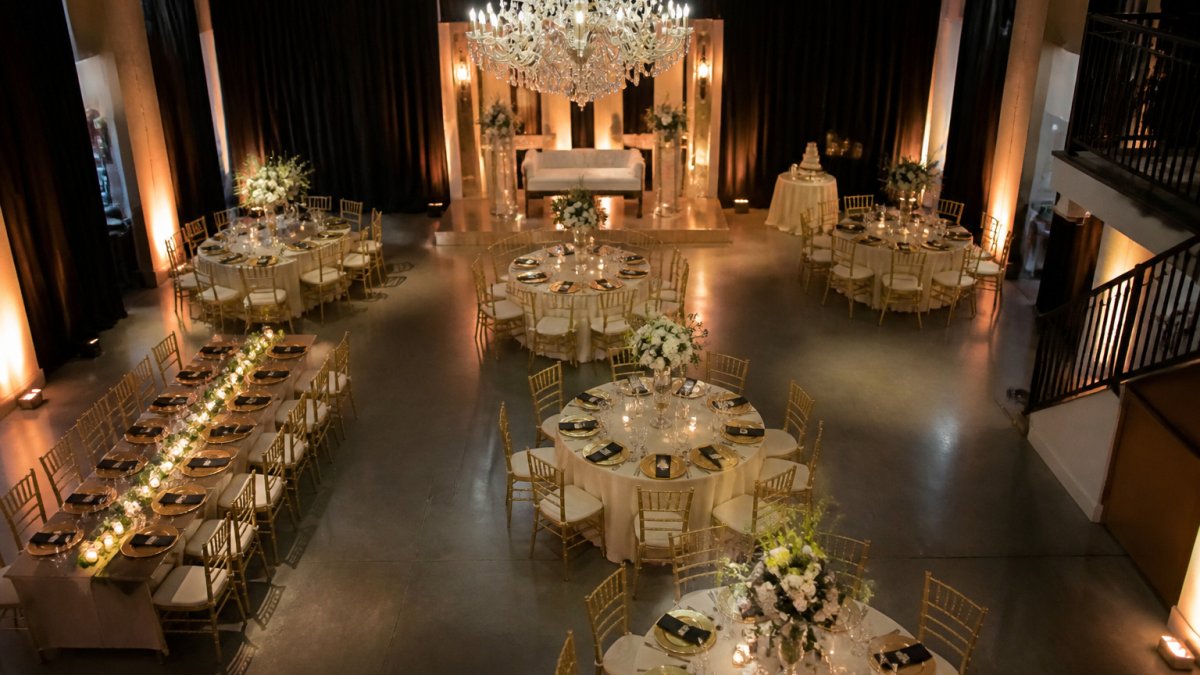
M Lounge offers luxurious venue draping, professional lounge furniture and up-lighting, with seated capacity for 80 guests and cocktail capacity for 100. Explore our corporate holiday experiences to see what fits your group, or request a quote and reserve your date now.
Frequently Asked Questions
How do you define an intimate corporate event?
An intimate corporate event is a small, professional gathering, usually for a few dozen to about 80 people, where the goal is conversation, relationship building or focused work rather than scale. M Lounge’s space is designed for this kind of gathering, with a seated capacity of 80 guests and a cocktail capacity of 100. Because the group is small, the planning priorities shift toward guest experience details, flexible seating and a schedule that leaves room for real discussion. Confirm the headcount and format with the venue early so the layout fits your agenda.
How far in advance should you book a venue for a 2026 corporate event?
Book as early as your calendar allows, and plan ahead to secure your preferred date. Availability depends on the date, day of the week and season, so check M Lounge’s calendar directly and reserve now once you have a headcount and target date. Earlier booking also gives you more time to negotiate vendor terms and finalize the timeline.
How much should I budget for an intimate corporate event in 2026?
Pricing depends on guest count, date, day of the week, the services you need and how much custom setup you request, so there is no single figure that applies to every event. Build your budget from the line items in the template in this guide, then request a current quote from M Lounge at its website to fill in the venue and service costs. Ask for an itemized breakdown that covers lighting, draping, furniture and setup so you can compare it directly against your total.
What should be included in an all-inclusive venue quote?
Ask the venue to list every item in writing, including lounge furniture, venue draping, professional lighting, up-lighting, setup and teardown, and any staffing or overtime charges. Confirm whether the quote covers the full event window or only a base rental period. Request a sample contract with the fee schedule attached so you can check for add-on charges before you commit. A clear written inclusion list is the best protection against surprise fees.