


Last Updated: November 2, 2026
Quick Summary
Hosting private events in Capitol Heights starts with a timeline built backward from your event date, locking in the date, guest count, and budget ceiling first. Tour venues about 10 weeks out, confirm seated and cocktail capacity in writing, and get all fees, permits, and parking details in the contract before signing.
- Set your date, guest list, and total budget about 12 weeks before the event.
- Ask venues for both seated and cocktail capacity figures in writing.
- Score each venue on the same checklist so you compare like with like.
- Build a contingency reserve into the budget and treat it as untouchable.
- Confirm which permits the venue holds and which you must obtain yourself.
Table of Contents
- Start With a Private Event Planning Timeline
- Match Event Venue Capacity for Guest List Realities
- Questions to Ask an Event Venue Before You Sign
- Build a Private Event Venue Checklist You Can Actually Use
- Budget Beyond the Rental Price
- Handle Parking, Permits, and Event-Day Logistics
- Reserve Your Date at M Lounge
- Frequently Asked Questions
Start With a Private Event Planning Timeline
Hosting private events starts with a working backward plan for private events, not a venue tour. Build a timeline from your event date and lock the non-negotiables first: date, guest count, and budget ceiling. This guide from M Lounge covers the full sequence so nothing gets left until the final week.
A private event is any invitation-only gathering, from a milestone birthday to a corporate retreat, held in a controlled space rather than open to the public. The distinction matters because privacy drives your venue requirements, your staffing, and your setup time.
Here is a timeline to work from:
- 12 weeks out: Set your date, draft your guest list, and fix your total budget.
- 10 weeks out: Tour venues, confirm capacity, and request written quotes.
- 8 weeks out: Sign the contract and pay the deposit.
- 6 weeks out: Book catering, entertainment, and any rentals.
- 4 weeks out: Send invitations and confirm your final headcount range.
- 2 weeks out: Lock the run of show and confirm vendor arrival times.
- 1 week out: Final walkthrough, final count, and payment balance.
The most common mistake is treating the venue as a late decision. Venue availability sets your date, and your date sets every vendor after it. Get that piece settled and the rest of the timeline tightens on its own.
Match Event Venue Capacity for Guest List Realities
Event venue capacity for guest list planning means matching your confirmed headcount to the room’s seated or standing limit, then leaving a buffer. Chairs, tables, a dance floor, and a buffet line all consume the same square footage, so a room’s listed capacity is rarely the right number for a comfortable event.
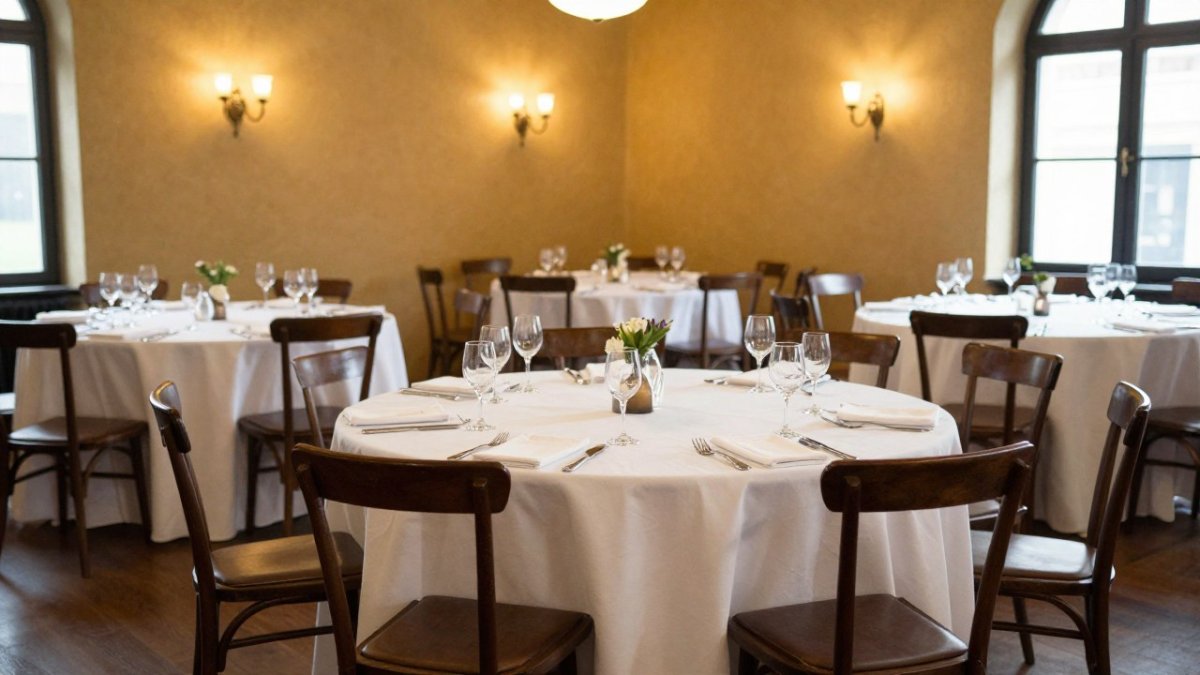
Capacity comes in two forms, and they are not interchangeable:
- Seated capacity: the maximum number of guests at tables with chairs. This is your number for plated dinners, receptions with assigned seating, and ceremonies.
- Cocktail capacity: the maximum standing headcount for a reception-style event. It is always higher than seated capacity because guests move and mingle.
Before you fall in love with a space, ask for both figures in writing. Then ask where the bar, DJ booth, and buffet will sit, because those zones cut into usable floor space. The number changes with the setup.
For an intimate gathering, err smaller. A room filled to capacity can feel cramped, while a room with some breathing room feels more generous.
Questions to Ask an Event Venue Before You Sign
The right questions to ask an event venue fall into four buckets: what is included, what costs extra, what are the rules, and who handles what on the day. Ask all four before you sign, and get the answers in the contract rather than in a conversation.
Start with inclusions. A venue rental can mean the room only, or the room plus tables, chairs, linens, lighting, and staff. Ask for a written inventory of what the rental covers and what you must bring in. What’s included in a venue rental walks through the typical inclusions and exclusions line by line.
Then move to the money questions:
- What is the deposit, and when is the balance due?
- Are there service charges, gratuity, or setup fees on top of the rental price?
- What is the overtime rate if the event runs long?
- What is the cancellation and rescheduling policy?
Next, the rules. Ask about noise limits, curfew, alcohol service, outside catering, and vendor insurance requirements. These constraints shape your whole plan, and discovering them late forces expensive changes.
Finally, ask who runs the day. Does the venue coordinate vendor arrivals, or do you? A venue that manages vendor communication spares you from juggling five separate schedules.
Build a Private Event Venue Checklist You Can Actually Use
A private event venue checklist turns a nerve-wracking decision into a scored comparison. Use the same checklist for every venue you tour so you compare like with like.
Print this and bring it to each tour:
- Seated and cocktail capacity confirmed in writing
- Written list of inclusions and exclusions
- Full cost breakdown, including fees and gratuity
- Deposit amount and payment schedule
- Cancellation and rescheduling terms
- Setup and breakdown windows, plus access times
- On-site parking count and overflow plan
- Catering rules: in-house, approved list, or open
- Audio-visual equipment and event technology on site
- Accessibility for guests with mobility needs
- Noise limits and curfew
- Photos of the space set up for events like yours
Score each item from one to five and total the columns. The venue with the highest score usually wins on fit, not just price. A guide to what to look for when touring event venues covers what to inspect in person, from flooring to lighting controls.
One insider note: ask to see photos from a real event, not a styled shoot. Styled photos show a space at its best; event photos show how it actually functions with guests in it.
Budget Beyond the Rental Price
The rental price is the starting line, not the total. If staffing is part of the event budget, account for hiring security guards alongside other on-site support so the final total reflects the people needed to keep the gathering running smoothly.
Ask for all fee details upfront, including any service charges, gratuity, overtime, and load-in fees, and put them in the budget from day one. How to Avoid Hidden Event Venue Fees covers the most common charges to watch for before signing.
A working budget structure looks like this:
| Line Item | What to Confirm | Typical Share of Budget |
|---|---|---|
| Venue rental | Room, inclusions, fees | Largest single line |
| Catering and bar | Per-guest rate, service charge | Second largest |
| Entertainment | DJ or band, overtime rate | Moderate |
| Rentals and décor | Linens, lighting, florals | Varies widely |
| Staffing | Setup, serving, cleanup | Often bundled |
| Contingency | Buffer for surprises | Keep a reserve |
Ask each venue how its deposit, balance due date, service charges, gratuity, tax, and staffing are billed, since these structures differ and each one changes your total.
Build the total in four passes:
- Fixed venue costs: rental, deposit, service charge, setup or load-in fee, overtime rate, and any required insurance or security deposit.
- Per-guest costs: catering, bar, cake, favors, and rentals that scale with headcount. Multiply by your confirmed count, then run the same math at your low and high headcount range so you see the swing.
- One-time costs: entertainment, décor, florals, photography, and any equipment rental that does not change with guest count.
- Contingency: a reserve held back for surprises, overtime, extra staffing, a last-minute rental, or a guest-count bump.
Watch out: cancellation and rescheduling terms are where budgets take their biggest unplanned hit. Ask in writing whether the deposit is refundable, whether it converts to a credit toward a future date, and how close to the event the terms tighten. A date that looks affordable can carry a steep penalty if plans change.
Keep a contingency reserve and treat it as untouchable. Request a written quote for your specific event rather than relying on any published range. The quote should itemize the rental, service charge, tax, staffing, and any required extras so you can compare venues on total cost.
Handle Parking, Permits, and Event-Day Logistics
Parking, permits, and event-day logistics decide whether guests arrive calm or frazzled. Confirm on-site parking capacity first, then map overflow options and share parking guidance with guests before the event. A short, clear arrival note prevents the late starts that derail a run of show.
Start with parking as a numbers problem. Ask the venue for the exact count of on-site spaces, how many are reserved for guests versus vendors, and whether the lot is shared with other tenants during your event window.
Permits depend on what you are hosting, and the rules are set by the jurisdiction where the venue sits, not by the venue’s marketing materials. Events with amplified sound, temporary structures such as tents or stages, alcohol service, or food prepared on site can each trigger separate requirements.
Then plan the day itself with a run of show that names times and owners:
- Vendor load-in and setup: confirm venue access times, loading-dock or door access, and elevator or ramp availability, then build a buffer before doors open.
- Single point of contact: assign one person to receive vendors so arrivals and questions funnel to a single schedule rather than to you mid-event.
- Guest arrival and program: set a doors-open time, a program start time, and a buffer between them so late arrivals do not interrupt remarks or a first dance.
- Breakdown and load-out: confirm the venue’s breakdown deadline and whether cleanup is included or billed, and schedule vendor pickups inside that window.
Watch out: if any part of the event is outdoors, a weather contingency is not optional. Identify an indoor backup space, decide in advance who makes the call and at what hour, and confirm whether the venue charges to switch setups.
Finally, brief your team on accessibility needs so every guest moves through the space comfortably, step-free routes, accessible restrooms, and seating for guests who cannot stand through a program. The goal is a day where you are present with your guests, not managing logistics in the hallway.
Reserve Your Date at M Lounge
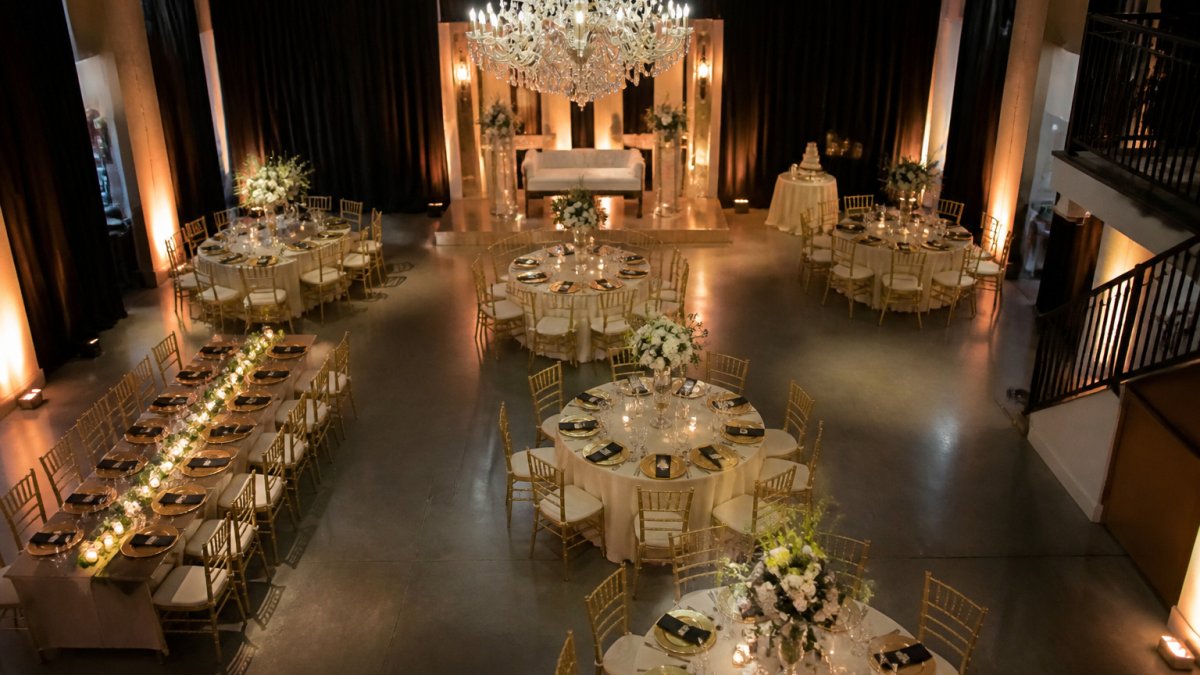
The venue decision carries the most weight in the entire plan, and it is the one we can help you settle. M Lounge offers a luxurious private event venue in Capitol Heights and Bowie, Maryland, built for intimate gatherings and milestone celebrations. The space features venue draping, professional lounge furniture, and mesmerizing up-lights. Seated capacity is 80 guests, with cocktail capacity of 100.
Clients such as karin s., Emma S., and Daniella A. have trusted us with their celebrations. If you are comparing intimate spaces, our
Our advice: tour the space, ask every question on your checklist, and see it decorated. Then make a reservation for your baby shower, corporate gathering, birthday, or wedding party and let our team tailor the details to your event.
Frequently Asked Questions
How far in advance should I book a private event venue?
If your timeline is tight, ask directly about availability. Build your private event planning timeline backward from the date, and confirm the venue before you commit to vendors, because every other booking depends on that confirmation.
How do I estimate the right event venue capacity for my guest list?
Start with your confirmed guest count, not your invite list. A seated dinner needs more room per person than a cocktail reception, so ask for both seated and standing capacity figures. Seated capacity and cocktail capacity are listed separately, so ask how the venue configures tables, a dance floor, and a bar within that count.
What should I ask before booking an event venue?
Ask what the rental price includes, and confirm overtime charges and vendor rules. Request photos from real events similar to yours. Ask about parking, accessibility, and noise restrictions. Getting these answers in writing prevents surprise fees and keeps your private events on budget.
What should a private event budget include?
Beyond venue rental, budget for catering and staff, bar service, rentals, florals, entertainment, photography, and gratuities. Add a contingency line for overtime, extra setup, or last-minute additions. Ask each vendor what triggers an additional charge so nothing appears after the event. A written breakdown from the venue, listing exactly what is included, is the simplest way to avoid hidden fees.
Your date is the one detail that cannot move once vendors are booked, so secure the room before anything else. M Lounge gives you a luxurious setting with venue draping, lounge furniture, and up-lighting included in the ambiance, plus seating for 80 and cocktail space for 100. Get started with M Lounge and reserve a date that turns your private event into the celebration your guests remember.