



Table of Contents
- Why a Thorough Venue Tour Matters
- Key Questions to Ask When Touring a Wedding Venue
- Event Venue Tour Checklist for On-Site Inspections
- Understanding Venue Rental Costs and Hidden Fees
- Event Venue Contract Checklist Before You Book
- Accessibility, Guest Needs, and Operational Details
- Red Flags and What to Verify Before Committing
- Frequently Asked Questions
Last Updated: October 6, 2026
Why a Thorough Venue Tour Matters
Choosing an event venue is one of the biggest decisions you’ll make when planning your celebration. The right space transforms your vision into reality; the wrong one creates headaches that last long after the event ends.
When you’re touring event venues, you’re evaluating whether the space can deliver what you need. Most people decide based on photos alone, a mistake, since a photo doesn’t show how sound travels, whether the layout works for your guest count, or if the staff understands your vision. Physical walkthroughs often reveal that the most memorable celebrations occur in unconventional spaces, prompting many planners to reconsider the potential of alternative event venues.
Asking the right questions now prevents surprises later.
Tour venues in person, even if you’ve seen photos online. Lighting, acoustics, and flow feel completely different when you’re standing in the space.
Key Questions to Ask When Touring a Wedding Venue
Space and Layout Questions
The physical layout determines how your event flows from start to finish, so ask specific questions about how the space works for your guest count and event style.
Confirm the actual capacity, many venues quote different numbers for seated dinners versus cocktail-style events, so ask for the exact figure for YOUR event type. Then ask about layout flexibility: can tables be arranged different ways, and can you use the space for both ceremony and reception?
Ask about ceiling height and natural light, and whether the venue lets you control lighting or offers uplighting and other ambient options.
Find out about traffic flow: where guests enter and how they move from ceremony to cocktail hour to reception. A cramped flow creates bottlenecks; a well-designed one feels effortless.
Ask about the bar setup: is there a built-in bar, how many bartenders can work at once, and where will guests queue for drinks?
The best venues have flexible layouts that adapt to different event types. Test whether the space works for YOUR specific guest count and event flow.
Catering and Beverage Service
Food and beverage is often the largest line item in your event budget. Understand exactly what the venue provides and what you’re responsible for.
Ask whether the venue has an in-house catering team or requires an approved vendor, or whether you can bring in outside vendors, this affects both cost and control over your menu.
Ask about bar options: full open bar or pay per drink, and whether you can bring your own alcohol or the venue has exclusive beverage rights. Alcohol policies vary widely and can significantly impact your total cost.
Ask about service details: the server-to-guest ratio, whether plates are cleared between courses, and how dietary restrictions and allergies are handled.
Ask whether linens, plates, glassware, and silverware are provided or are additional rentals, and whether coffee and dessert service is included or costs extra.
Event Venue Tour Checklist for On-Site Inspections
Ceremony, Cocktail Hour, and Reception Spaces
When touring event venues, visualize each phase of your event in each space and walk through exactly where each moment happens.
For the ceremony space, stand where guests will sit: can everyone see the focal point, is there natural light, and how does sound travel? Test the audio, some spaces echo, others muffle sound.
For the cocktail hour space, picture guests standing with drinks: is there room to move comfortably, are there high-top tables, and where will the bar be positioned?
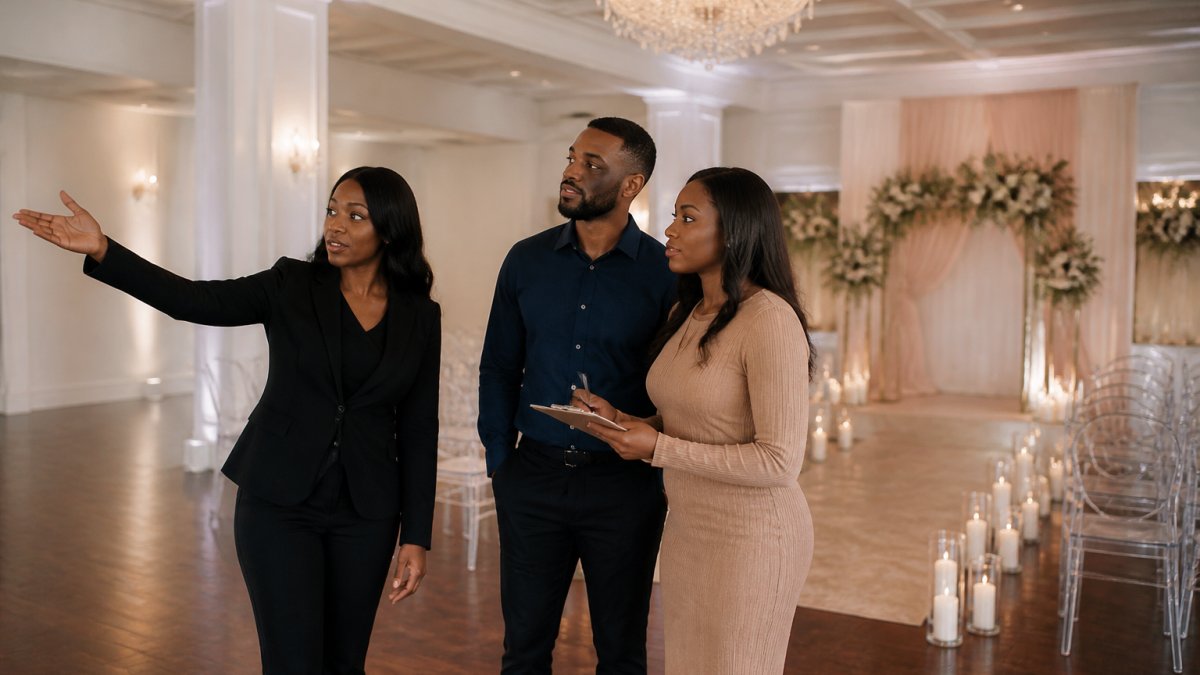
Ask the coordinator to walk you through the exact flow: how long the ceremony-to-cocktail-hour transition takes, and whether staff can reset the room while guests are elsewhere.
Indoor and Outdoor Options
Weather uncertainty makes outdoor contingencies critical. Understand exactly what happens if conditions turn bad.
Ask whether the venue has indoor backup space, a covered area or indoor room guests can move to if it rains, and how much notice you need to make that call.
Ask about the outdoor space itself: is it covered or exposed, what’s the ground surface, will shoes get muddy in wet weather, and are there enough umbrellas or shade structures?
Ask how the outdoor space is lit if your event runs into evening, uplights, string lights, or lanterns, and whether you can add your own lighting or the venue has exclusive control.
Ask about temperature control: fans or misters in summer, heaters in cooler months.
Amenities and Aesthetic Features
M Lounge offers specific aesthetic features that elevate the ambiance. Understand what’s included and what you can customize.
Ask about draping options. Can the venue adjust wall colors through lighting or fabric draping? What about ceiling treatments? Can you add uplighting to create a specific mood?
Ask about furniture: what seating styles are available, can you bring in lounge furniture for intimate conversation areas, and what table shapes and styles does the venue offer?
Ask about decor restrictions: can you bring your own centerpieces and floral arrangements, and are there rules about hanging items from walls or ceilings for safety or aesthetic reasons?
Ask about music and sound: can you bring your own DJ or band, is a sound system built in, and what noise restrictions apply if your event runs late?
Understanding Venue Rental Costs and Hidden Fees
Breakdown of Included and Additional Charges
Pricing is where surprises often happen. Get a complete breakdown of what’s included and what costs extra.
Ask for the base rental fee and exactly how many hours it covers, is setup time included, or does the clock start when guests arrive?
Ask what’s included in the rental: tables, chairs, linens, and place settings, basic lighting and sound, and staff to coordinate your event.
Ask about per-person food and beverage costs: if the venue has in-house catering, what’s the minimum per-person spend, and are non-alcoholic beverages included or separate?
Ask about bar costs: an open bar at a set price per person, or payment per drink consumed?
Ask about rentals that cost extra, uplighting, specialty linens, lounge furniture, dance floor, and coat check, and get specific pricing for each.
Many venues quote a base price but don’t mention that uplighting, specialty linens, and bar setup are separate charges. Always ask for a complete, itemized quote before committing.
Overtime, Setup, and Contingency Costs
Your event might run longer than planned. Understand the financial impact.
Ask about overtime charges: what happens if your event runs past the included time, how much each additional hour costs, and whether there’s a minimum charge or you pay only for exact time used.
Ask whether setup and breakdown hours count toward your rental time or are separate, some venues include setup, others charge for it.
Ask about contingency costs: additional charges if weather forces your event indoors, or if you add tables or adjust the layout last-minute.
Ask about cancellation and postponement fees: how much you lose if you cancel, whether rescheduling costs extra, and the refund policy if the venue cancels on you.
Event Venue Contract Checklist Before You Book
Deposits, Cancellation Policies, and Liability
Before you sign anything, understand your financial obligations and the venue’s responsibilities.
Ask about the deposit: how much holds your date, when the balance is due, and whether the deposit is refundable or forfeited on cancellation.
Ask about cancellation policies at 6 months, 3 months, and 2 weeks out, different venues have different policies, some flexible and others strict.
Ask about liability: who’s responsible if someone gets injured, whether the venue carries insurance, whether you need event liability insurance, and if they require being added as an additional insured.
Ask about damage liability: who pays for repairs if a guest damages the venue, and any limits on your responsibility.
Weather Contingencies and Force Majeure
Unexpected events happen. Know what the contract says about them.
Ask whether the venue has a force majeure clause protecting both parties if something beyond your control prevents the event, and whether it covers weather, illness, or other emergencies.
Ask what happens if severe weather hits on your event date: can you postpone without penalty, and is the deposit held for the new date or lost?
Ask about the venue’s decision-making process. Who decides whether to move an outdoor event indoors? How much advance notice will you get?
Accessibility, Guest Needs, and Operational Details
Accessibility for All Guests
Not all guests have the same physical abilities. Ask about accommodations.
Ask about wheelchair accessibility: easy entry, accessible restrooms, and accessible parking nearby.
Ask about seating options. Can guests with mobility issues sit near the entrance or exit? Can you request specific table locations?
Ask about service animal policies: are service dogs allowed, and are there restrictions?
Ask about dietary accommodations: can the caterer handle common allergies and restrictions like gluten-free, vegan, or kosher?
Parking, Restroom Facilities, and Logistics
These operational details matter more than you might think.
Ask about parking: free or paid, how many spaces, valet availability, and where guests will park if the venue is in an urban area.
Ask about restroom facilities: how many are available, whether lines form at peak times, and whether they’re well-maintained and stocked.
Ask about coat check and guest flow: is coat check available, where guests check bags or coats, and how the flow works on arrival and departure.
Ask about vendor access. Where can your florist, caterer, and DJ enter and set up? Is there a loading area? How early can they arrive?
Ask about timing and transitions: how long setup and breakdown take, and when the venue must be empty.
Red Flags and What to Verify Before Committing
Some warning signs should make you pause before booking.
If the coordinator is vague about costs or says “we’ll figure it out later,” that’s a red flag, you need clear, itemized pricing before you commit.
If the venue won’t discuss their cancellation policy or seems evasive about contract terms, walk away. A reputable venue is transparent about these details.
If the venue doesn’t have a backup plan for bad weather or emergencies, that’s a problem. Every venue should have contingency plans.
Choosing the right venue is the foundation of a successful event. The time you invest in a thorough tour pays dividends later. Walk the space. Ask detailed questions.
When you’re ready to book, M Lounge offers a luxurious event space designed to exceed expectations.
Frequently Asked Questions
What questions should you ask when touring a venue?
Start by asking about guest capacity, available spaces for ceremony and reception, catering options, and what’s included in the rental fee. Inquire about vendor policies, setup and breakdown times, parking availability, and weather backup plans. Ask to see the space decorated or view photos from recent events. Request details on deposits, cancellation policies, overtime charges, and any additional fees. Understanding these fundamentals helps you assess whether the venue meets your event’s specific needs.
What should you check in a venue contract before booking?
Review the deposit amount, payment schedule, and cancellation policy carefully. Verify what happens if the venue becomes unavailable and confirm liability coverage. Check for force majeure clauses addressing weather or emergencies, restrictions on outside vendors, and any overtime or additional fees. Ensure the contract specifies the exact spaces you’ll use, guest capacity limits, setup and breakdown times, and any included amenities. Have an attorney review complex terms, especially regarding liability and dispute resolution.
How do you know if an event venue has enough space for your guest list?
Ask the venue for both seated and standing capacity numbers for each space. Request a floor plan showing table layouts, dance floor, bar, and restroom locations. Tour the space during a similar event type if possible, or ask the venue to show you photos of comparable events with your expected guest count. Consider traffic flow, comfort, and whether guests can move freely. Remember that seated capacity is typically lower than cocktail-style standing capacity, so clarify which applies to your event.
What are common hidden fees when renting an event venue?
Beyond the base rental fee, watch for charges such as setup and breakdown fees, overtime rates, parking fees, service charges, gratuity percentages, equipment rentals (tables, chairs, linens), and premium lighting or draping upgrades. Some venues charge for bar service, coat check, or ceremony setup separately. Ask for a complete itemized quote before signing. Request clarification on what’s included in the rental price and get all additional charges in writing to avoid surprises.