



Table of Contents
- Why a Venue Transforms Your Milestone Birthday Celebration
- Venue vs. Home: What Actually Changes for Your Guests and Your Workload
- Milestone Birthday Party Ideas That Work in a Professional Space
- How to Choose a Venue for a Milestone Birthday That Fits Your Vision
- Understanding Milestone Birthday Party Packages and What’s Included
- Accessibility, Guest Comfort, and Logistics: What a Venue Handles for You
- Making Your Milestone Birthday Memorable Without the Stress
- Frequently Asked Questions
Last Updated: October 15, 2026
Why a Venue Transforms Your Milestone Birthday Celebration
Understanding why host a milestone birthday at a venue starts with recognizing how it shifts the experience from a logistical burden into a celebration that feels intentional. The difference is the gap between managing an event and actually enjoying it.
Instead of coordinating with five vendors while your home gets dismantled, you walk into a space already designed to impress: professional lighting, setup handled, an atmosphere that says “this person matters.”
Guests feel the difference immediately, they’re not navigating around furniture or wondering where to set their coat, they’re focused on the honoree.
The biggest mistake people make is underestimating how much mental energy goes into hosting at home. A venue absorbs that burden, which means you actually get to celebrate instead of troubleshoot.
Venue vs. Home: What Actually Changes for Your Guests and Your Workload
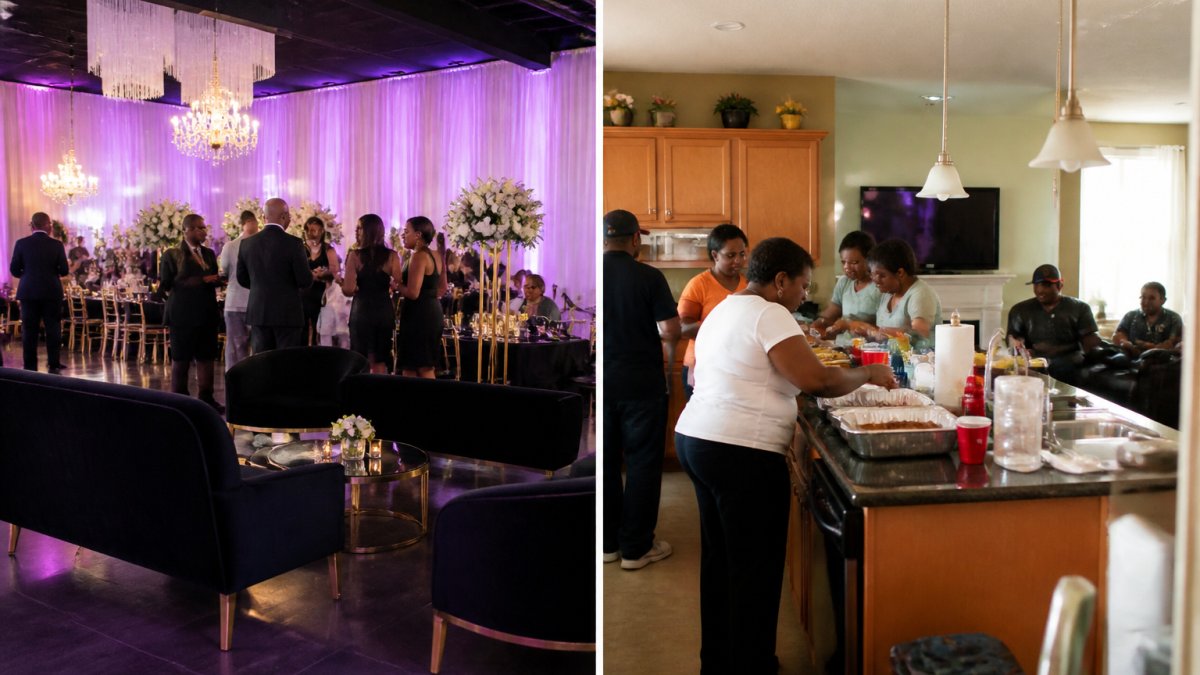
The choice between hosting at home and renting a venue isn’t about space, it’s about which trade-offs you’ll accept. Here’s the honest comparison.
Cost: where the money actually goes
Home hosting looks cheaper because the space is already paid for. But a typical 50-guest home setup requires rented tables, chairs, linens, glassware, coolers, a portable bar, and sometimes a tent or restroom, charged per item and per day, with delivery, setup, and pickup billed separately. Add a caterer, bartender, and cleanup crew, and the gap narrows fast.
A venue bundles space, furniture, lighting, climate control, and restrooms into one fee, then adds food and beverage minimums, service charges, and taxes. The total is usually higher but far more predictable, one contract instead of a dozen vendors.
Setup and cleanup: the hours nobody budgets for
At home, work starts days before and ends the morning after: hours of shopping and prep, a full day of setup, the event, then hours of cleanup. That’s a full weekend of labor, most of it invisible on any budget spreadsheet.
A venue compresses that into a defined window. You arrive for your rental period, the room is already set, and when the event ends the staff breaks it down. Your recovery time is measured in minutes, not mornings.
Space, flow, and privacy
Homes are designed for living, not events. A living room that seats eight becomes a bottleneck for 50: guests cluster in the kitchen, the bathroom line forms, coats land on a bed. A venue is laid out for circulation, separate zones for cocktails, dinner, and dancing.
Privacy cuts the other way. A private venue gives you a closed room and controlled guest list; a home offers a personal setting but also thin walls, nosy neighbors, and a party that spills onto the street.
Noise, parking, and liability
Home hosting hits practical limits fast. Noise ordinances restrict amplified music and late-night volume, and one complaint can end the party early. Street parking for 50 guests is rarely realistic.
Then there’s liability. If a guest slips on your stairs or a rented heater tips over, your homeowner’s policy is on the line. Venues carry their own coverage and trained staff for crowds, alcohol service, and emergencies, part of what the rental fee buys.
When home actually wins
Home hosting wins when the guest list is small (under about 25), the celebration is casual, the honoree wants their own space, or the budget is tight and you have the time and help. For intimate gatherings, the personal setting can outweigh every logistical downside.
When a venue earns its cost
A venue earns its cost when the guest list outgrows your home, when you want professional lighting and sound, when accessibility matters, when you’d rather spend the day with family than taping streamers, or when the milestone deserves a setting to match.
The real advantage of a venue isn’t the aesthetics, it’s trading an unpredictable pile of vendor contracts, rental fees, and labor hours for one predictable booking and a day you actually get to enjoy.
Milestone Birthday Party Ideas That Work in a Professional Space
A venue opens up possibilities that feel cramped at home, your ideas aren’t limited by square footage or living room layout.
Consider these approaches that professional spaces handle beautifully:
- Themed celebrations with dramatic lighting, Professional lighting transforms the mood instantly, dim and intimate for dinner, bright and energetic for dancing.
- Multi-area experiences, Separate spaces for cocktails, dinner, and dancing let guests flow naturally instead of clustering in one room.
- Interactive entertainment, A photo booth, live music, or DJ setup requires space and power. Venues have both built in.
- Elegant food stations, Set up stations throughout the space so guests graze naturally without crowding.
- Milestone-specific touches, A 50th might feature a decade-by-decade photo display; a 60th a memory wall. These need wall space and lighting venues provide.
- Comfort for all ages, Lounge seating, standing room, accessible bathrooms, and climate control.
A venue doesn’t force one configuration, you design the experience, and the space adapts.
A common mistake is choosing a space that’s too small and then cramming decorations into it. A venue should feel spacious, not decorated-over. Pick a space that feels comfortable at half capacity, then fill it with your guests.
How to Choose a Venue for a Milestone Birthday That Fits Your Vision
Choosing the right venue for a milestone birthday starts with clarity about what matters most to you. Not what’s trendy. Not what your friend used. What actually serves your celebration.
Start with these questions:
- How many guests are you expecting?, This determines capacity. Pick a space that feels intentional, not empty or cramped.
- What’s your vision for the atmosphere?, Elegant, relaxed, or energetic? The space should match the feeling, not fight it.
- Do you need food and beverage services, or will you bring your own caterer?, Some venues include catering; others allow outside vendors. Know before you decide.
- What amenities matter to you?, Professional lighting, lounge furniture, sound system, dance floor, outdoor space, parking, accessible entrances. List your non-negotiables.
- What’s your timeline?, Booking months or weeks out? Peak dates fill fast for milestone celebrations.
When you visit, bring photos of your vision and ask how they’d execute it. Their answers reveal whether they understand your celebration or just see another event.
Milestone celebrations aren’t just bigger birthdays, they’re life transitions. Your 50th, 60th, or 70th deserves a space that honors that significance.
Milestone celebrations with 40-100 guests who want an elegant, professional atmosphere without the stress of managing vendors or setup logistics.
Understanding Milestone Birthday Party Packages and What’s Included
Most venues offer packages, but “package” means different things to different spaces. Before you commit, understand how the pricing is built, and the questions that expose the real total.
The four numbers behind every venue quote
A venue quote is assembled from four separate numbers, and confusing them is the most common budgeting mistake:
- Rental fee, the charge for the space, typically per block of hours. Most people anchor on this number, and it’s rarely the whole cost.
- Food and beverage minimum, a required spend on catering and bar, separate from the rental fee. With a small guest count you may hit the minimum before your actual food needs, and the difference isn’t refunded.
- Service charge, a percentage added to food and beverage (sometimes the rental fee) covering staffing, setup, and gratuity. It’s not a removable tip, and it’s calculated before tax.
- Taxes and fees, state and local sales tax plus administrative or facility fees, applied on top of the service charge.
Rule of thumb: the advertised number is often the smallest in the contract. Ask for a full written estimate showing each line separately before comparing venues.
What a package typically includes
- Venue rental, the space for a defined number of hours, with stated start and end times
- Setup and breakdown, tables, chairs, and basic setup installed and removed by staff
- Tables, chairs, and linens, quantities matched to your guest count
- Lighting and ambiance, adjustable or decorative lighting, not just overhead fixtures
- Sound system, a house system for music or a DJ, with defined input and volume limits
- Parking, a stated number of spaces or valet arrangement
- Climate control, heating and cooling sized for a full room
- Restrooms, clean, accessible facilities
- On-site coordination, a point person managing the timeline and vendors
What is almost never included
- Catering and beverages beyond the minimum
- Decorations beyond basic setup
- Entertainment, DJ, live music, photo booth
- Specialty rentals, lounge furniture, dance floor, staging
- Valet parking or shuttle service
- Overtime, if your event runs past the contracted end time
- Security, if your guest count or alcohol service triggers a requirement
Deposits, cancellation, and vendor rules
Ask three questions before signing:
- What is the deposit, and is it refundable? Many venues require a non-refundable deposit to hold a date, with the balance due closer to the event.
- What happens if you cancel or reschedule? Terms vary, some allow one reschedule, others keep the deposit. Get it in writing.
- Can you bring your own vendors? Some require in-house catering or approved vendors; others allow outside caterers for a fee. This rule can change your total by thousands.
How to compare two packages fairly
Don’t compare rental fees. Compare all-in estimates for the same guest count, hours, and food and beverage spend. Ask each venue to quote the same scenario, then line them up. The lower rental fee is often the more expensive venue once minimums, service charges, and add-ons are included.
Accessibility, Guest Comfort, and Logistics: What a Venue Handles for You
What separates a professional venue from DIY is logistics you don’t have to think about.
A venue handles accessibility as a baseline, wheelchair access, accessible parking, accessible restrooms aren’t extras, they’re standard. Guests of all ages and abilities feel welcome.
Climate control matters more than you think. A room full of people generates heat, and dancing makes it climb fast.
Parking and traffic flow prevent frustration before the event starts.
Venue logistics also mean less stress on you, no managing coat check, directing people to the bathroom, or troubleshooting a thermostat. A coordinator handles those details.
Making Your Milestone Birthday Memorable Without the Stress
The reason why host a milestone birthday at a venue is simple: it lets you focus on the celebration, the people, the moment.
Milestone birthdays are different.
The best events aren’t the ones with the most decorations or fanciest food.
A venue gives you that, not luxury for its own sake, but freedom from setup, freedom from stress, freedom to celebrate.
Milestone birthdays happen once in a lifetime. They deserve a space designed to honor them.
| Element | Home Hosting | Venue Rental |
|---|---|---|
| Setup and breakdown | You handle it | Venue handles it |
| Atmosphere and lighting | Basic | Professional |
| Guest flow and comfort | Cramped or awkward | Designed for the experience |
| Parking and logistics | Guests figure it out | Clear and organized |
| Accessibility | Depends on your home | Built-in standard |
| Time investment | 16+ hours | 2-3 hours |
Frequently Asked Questions
What makes hosting a milestone birthday at a venue better than at home?
A venue eliminates setup, cleanup, and coordination stress while providing professional ambiance, capacity for larger guest lists, and built-in amenities like lighting and draping. You focus on celebrating rather than managing logistics. Venues also handle accessibility needs, parking, and contingency planning, factors that become complex at home, especially for milestone celebrations with multigenerational guests.
How do I choose a venue for a milestone birthday party?
Start with guest count and budget, then evaluate venues on capacity, aesthetic alignment with your theme, included amenities (lighting, draping, tables), and catering flexibility. Visit in person to assess lighting and layout. Ask about package inclusions to avoid hidden fees, confirm availability for your date, and verify the venue understands the milestone celebration’s significance.
What’s typically included in milestone birthday party packages?
Most packages include venue rental, setup and breakdown, tables and chairs, basic lighting, and sometimes catering coordination. Ask specifically what’s included versus what incurs additional fees, setup time, overtime, specialty décor, and vendor coordination often vary by venue. Request a detailed quote to compare apples-to-apples across options.
Is it worth the cost to rent a venue instead of hosting at home?
Yes, if your guest list exceeds home capacity, you want professional ambiance, or you value reclaimed time and reduced stress. Venues eliminate hidden costs like deep cleaning, furniture rental, and parking solutions. For milestone celebrations, which often draw extended family and friends, a venue’s built-in accessibility, climate control, and contingency space justify the investment. The honoree and guests experience a more polished, memorable celebration.