


Table of Contents
- Planning a Quinceañera with Cultural Traditions at the Heart
- Understanding the Quinceañera Ceremony Order of Events
- Honoring the Quinceañera Court of Honor Roles
- Selecting Traditional Quinceañera Symbolic Gifts
- Budgeting for Cultural Traditions Without Compromise
- Creating a Modern Celebration with Regional Variations
- Mexican Traditions: The Full Corte and the Mass
- Cuban Traditions: The Hora Loca and the Absence of a Formal Court
- Puerto Rican Traditions: The Waltz and the Surprise Performance
- Colombian Traditions: The Celebration of the XV Años
- Inclusive and Secular Alternatives to the Mass
- Regional Music and Food as Tradition
- Building a Realistic Quinceañera Planning Timeline
- Conclusion: Your Quinceañera Traditions Checklist
- Frequently Asked Questions
Last Updated: September 8, 2026
Planning a Quinceañera with Cultural Traditions at the Heart
A quinceañera is a deeply symbolic rite of passage marking a young woman’s transition to adulthood. When planning a quinceañera, cultural traditions carry as much weight as the guest list and menu. At M Lounge, we understand the importance of this balance. This guide walks you through the essential quinceañera traditions, offering practical planning insight so your celebration feels both authentic and seamless.
Below, we’ll show you how to sequence the ceremony, assign court roles, select symbolic gifts, and build a timeline that keeps you calm, while honoring regional variations and modern touches without losing the soul of the tradition.
Understanding the Quinceañera Ceremony Order of Events
The traditional quinceañera ceremony order of events typically begins with a thanksgiving Mass, where the quinceañera receives a blessing, a cornerstone acknowledging the spiritual significance of her coming of age. Following the Mass, the celebration shifts to the reception venue, where the choreographed court performs the traditional waltz.
The reception order generally flows from the grand entrance to the father-daughter dance and then the ceremonial toast. Many families hold symbolic gift presentations during the reception so all guests can witness the meaning behind each item. The cake cutting signals the transition to open dancing.
Work backward from your venue’s curfew when sequencing the reception. A common mistake is front-loading formalities, leaving the court and family exhausted before the father-daughter dance. Schedule the waltz within 60 minutes of the grand entrance to keep energy high.
Honoring the Quinceañera Court of Honor Roles
The quinceañera court of honor roles symbolize the support system surrounding the young woman as she enters adulthood. The Corte de Honor typically consists of Damas and Chambelanes, who participate in the waltz. A standard configuration includes seven pairs, though many modern celebrations opt for smaller or larger groups.
Assigning roles requires clear communication about expectations, from costume costs to rehearsal commitment. Parents often select a “court captain” to coordinate choreography and dress fittings. Confirming participation early is critical to avoid last-minute gaps. The father-daughter dance remains a separate, intimate moment.
Selecting Traditional Quinceañera Symbolic Gifts
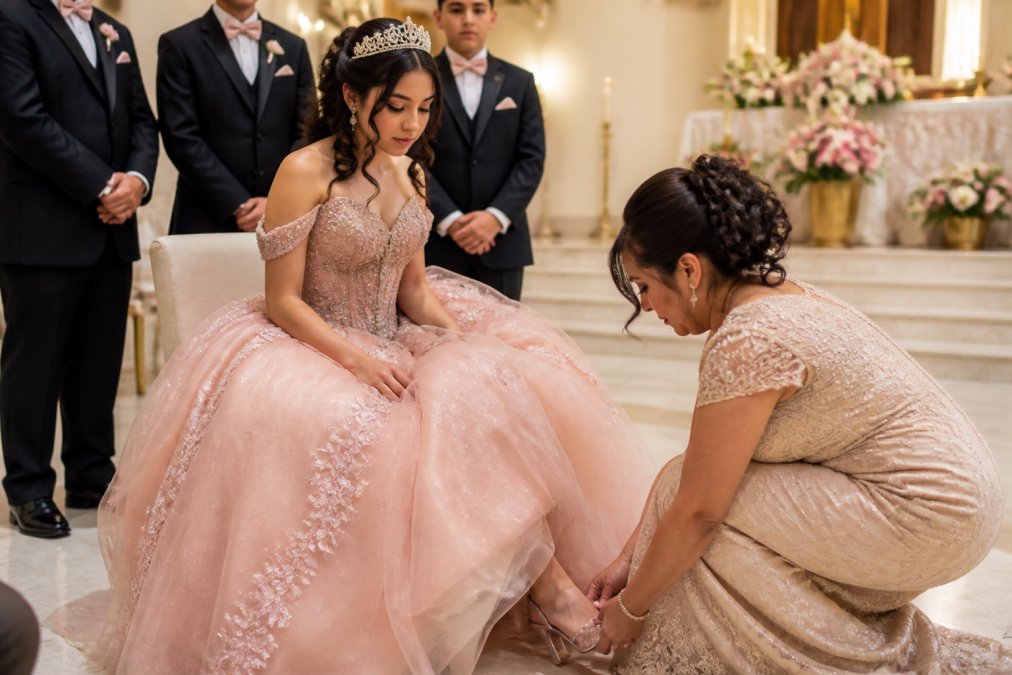
Traditional quinceañera symbolic gifts transform the celebration into a visual narrative of values. Each gift is presented by a designated family member or padrino during the reception. Items include the tiara (victory over childhood), the scepter (authority and responsibility), and the Bible or rosary (faith). The changing of the shoes ceremony, where the father swaps her flats for heels, symbolizes her first steps into womanhood.
The last doll (La Última Muñeca) is one of the most cherished traditions, a final doll dressed to match the quinceañera, which she passes to a younger sibling or keeps as a keepsake, signifying the end of childhood toys. Presenting gifts with a brief explanation of their meaning adds depth for unfamiliar guests.
| Gift | Symbolic Meaning | Presented By | Best Timing |
|---|---|---|---|
| Tiara | Victory over childhood | Godparents | After grand entrance |
| Scepter | Authority and responsibility | Padrinos | After tiara |
| Bible/Rosary | Faith and spiritual guidance | Parents | During or after Mass |
| Changing of Shoes | Transition to adulthood | Father | Before father-daughter dance |
| Last Doll | End of childhood | Parents | Before cake cutting |
The sequence of symbolic gifts tells a story. Order them to build emotional momentum: start with the tiara and scepter, move through the spiritual items, and save the changing of the shoes for the most impactful moment just before the father-daughter dance.
Budgeting for Cultural Traditions Without Compromise
Most guides list the traditions but stop short of telling you what they cost or how to fund them. This section offers a practical, line-item approach to financing the cultural core of your celebration.
The Real Cost of Tradition
While venue, catering, and photography consume the largest share of your budget, ceremonial details are where costs quietly multiply. Here is a realistic look at tradition-specific line items based on common vendor pricing across the United States:
- Court Attire: Coordinating dresses for Damas can range from $80 to $250 each, while Chambelanes’ suit rentals typically run $100 to $200 per person. For a court of 14, this alone can total $2,500 or more.
- Choreography Lessons: Professional instruction for the waltz runs $30 to $60 per hour per couple. A 6-week rehearsal block with two sessions per week can easily cost $1,000 to $1,500.
- The Last Doll (La Última Muñeca): A custom doll dressed to match the quinceañera’s gown ranges from $150 to $400, depending on the artisan and level of detail.
- Ceremonial Shoes: The heels for the changing of the shoes ceremony are often a designer purchase, adding $100 to $300 to the tally.
- Tiara and Scepter: A quality tiara and scepter set runs $80 to $200, with heirloom-quality pieces costing more.
The 70/20/10 Allocation Rule
A practical framework is the 70/20/10 rule: allocate 70% of your budget to non-negotiable pillars (venue, food, photography, attire), 20% to tradition-specific line items, and 10% as a contingency fund. Ring-fencing the tradition budget first prevents the court’s attire or custom doll from being cut when the catering bill comes in high.
Cost-Saving Mechanisms That Protect the Rituals
You do not need to sacrifice symbolism to save money. These strategies keep the ceremony intact while easing the financial load:
- Coordinate, Don’t Customize: Instead of identical custom-made dresses for Damas, choose a single color and fabric and allow each Dama to select a dress within that palette. This can cut attire costs by 30% to 50%.
- Leverage Family Talent: A musically inclined aunt can record the waltz track, or a cousin with dance experience can lead rehearsals. This eliminates the $1,000+ choreography fee while keeping the practice schedule on track.
- DIY the Last Doll: Purchase a plain porcelain or fabric doll and work with a seamstress to create a miniature replica of the quinceañera’s gown. This often costs under $100 in materials and labor versus $300+ for a fully custom doll.
- Rent the Tiara and Scepter: Many quinceañera supply shops offer rental packages for ceremonial items. Renting the tiara, scepter, and even the shoes can save 50% to 70% versus buying new.
When budgeting for the court, ask each Dama and Chambelan to confirm their financial commitment in writing before you book anything. A signed commitment form prevents mid-planning dropouts that force you to absorb costs or re-choreograph the waltz.
::: meaningful religious gifts.
The Venue as a Budget Lever
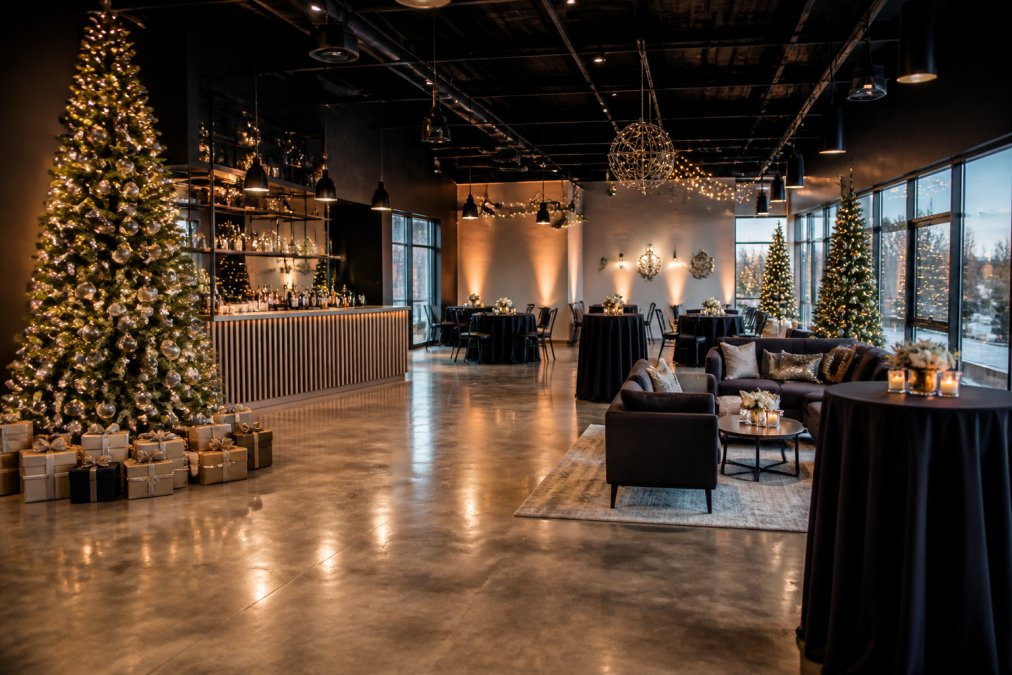
The venue is your single largest tradable asset. A space with visual richness reduces your need for external decor rentals, freeing cash for ceremonial items. Look for venues that include ambient lighting, elegant drapery, or architectural details. A dedicated bridal suite can also eliminate the cost of a separate salon appointment, redirecting funds toward the last doll or the court’s flowers.
Creating a Modern Celebration with Regional Variations
Top-ranking articles treat the quinceañera as a monolithic tradition. In reality, the celebration shifts meaningfully across Mexican, Cuban, Puerto Rican, and Colombian communities in the United States. This section offers a concrete regional breakdown and a roadmap for secular celebrations.
Mexican Traditions: The Full Corte and the Mass
Mexican quinceañeras are the most widely recognized form, with the religious Mass as the non-negotiable anchor. The court typically numbers 14 couples, representing the quinceañera plus her 14 years. The waltz is formal and choreographed. The changing of the shoes and last doll are near-universal. A distinctive touch is the “surprise dance” (baile sorpresa), where the court changes costumes mid-performance for a high-energy number.
Cuban Traditions: The Hora Loca and the Absence of a Formal Court
Cuban-American quinceañeras often diverge sharply from the Mexican model. The religious blessing is common, but the formal court is frequently smaller or absent, replaced by a focus on family and padrinos. The signature element is the “Hora Loca” (Crazy Hour), a late-reception segment with costume changes, masks, glow sticks, and high-energy music. The father-daughter dance remains central, but the waltz is often replaced by contemporary dance. The last doll is less common; instead, the quinceañera may receive jewelry, such as a ring or bracelet.
Puerto Rican Traditions: The Waltz and the Surprise Performance
Puerto Rican celebrations blend the formal court with a strong emphasis on the waltz, often composed of 7 to 14 couples and lasting 10 minutes or more. A distinctive touch is the “sorpresa” (surprise), where the court or quinceañera performs a second dance to a modern pop or reggaeton song. The religious Mass is standard, and the changing of the shoes is often performed by the father or a beloved grandfather.
Colombian Traditions: The Celebration of the XV Años
Colombian quinceañeras, often called “XV Años,” emphasize the “vals” (waltz) and the “brindis” (toast). The court is typically 7 couples. A unique element is the “muñeca” (doll) ceremony, where the quinceañera gives away her last doll to a younger sister or cousin. The celebration often includes a “serenata” (serenade) the night before. The religious Mass is common but can be a separate morning event.
Inclusive and Secular Alternatives to the Mass
Many families want to honor the cultural milestone without the religious framework. A growing trend is the secular “blessing ceremony” held at the reception venue, a distinct ceremony with its own structure:
- The Officiant: A family friend, a respected elder, or a professional celebrant leads the ceremony. The officiant speaks to the quinceañera’s journey, her values, and the community’s support.
- The Candle Ceremony: Replace the religious candle with a “family candle.” The quinceañera lights a single large candle, and then each parent or grandparent lights a smaller candle from it, symbolizing the passing of wisdom and love.
- The Address: Instead of a homily, the officiant invites two or three family members to share short, personal stories or words of advice. This personalizes the ceremony and keeps it grounded in family history.
- The Symbolic Gifts: The tiara, scepter, and changing of the shoes are all secular symbols and can be presented during this ceremony without any religious connotation.
If you choose a secular blessing, communicate this clearly to your venue coordinator and your DJ. The DJ needs to know when to pause the music and cue the officiant. The venue needs to arrange seating so the ceremony is visible to all guests, not just those at the front tables.
Regional Music and Food as Tradition
Do not overlook regional influence on music and food. A Mexican quinceañera might feature mariachi, while a Cuban celebration leans toward salsa and timba. Puerto Rican events often mix reggaeton with plena, and Colombian celebrations might include cumbia or vallenato. Work with your caterer to include a regional dish, whether mole for a Mexican celebration or lechón asado for a Cuban one.
Building a Realistic Quinceañera Planning Timeline
A realistic quinceañera planning timeline generally spans 8 to 12 months (theknot.com). The first three months should focus on the date, venue selection, and guest list, as these decisions dictate every subsequent choice. Months four through six are dedicated to booking the caterer, photographer, and DJ, while finalizing the gown and court attire.
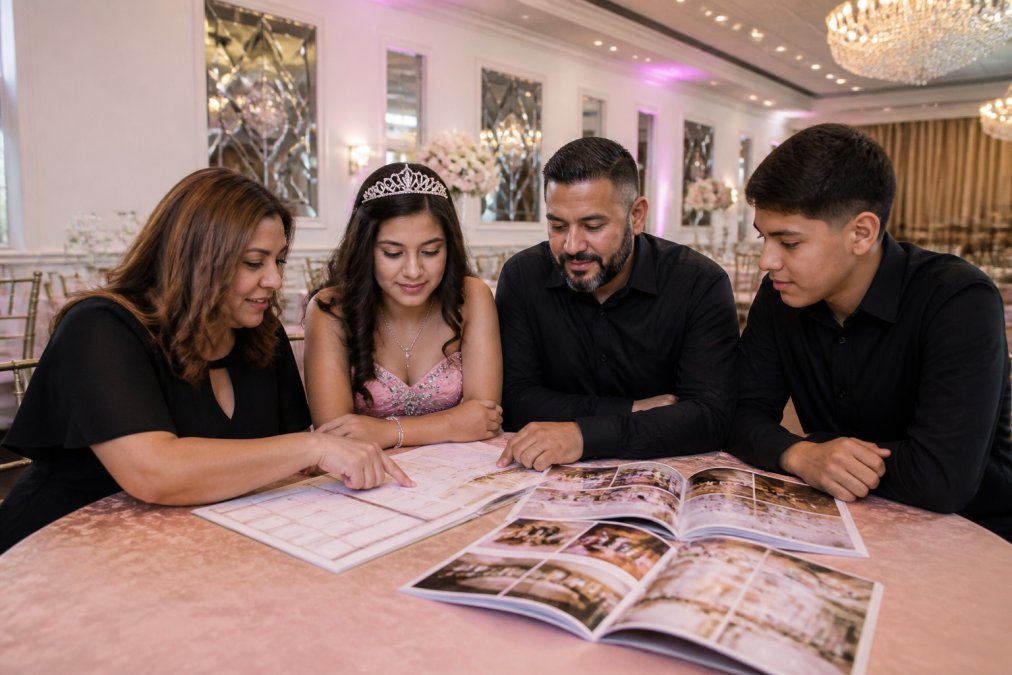
The final three months are for the finer details: ordering the last doll, scheduling choreography rehearsals, sending invitations, and confirming the order of events with your venue. According to general event planning guidance from The Knot, locking in the venue at least 10 months ahead is advisable for peak-season dates. A detailed month-by-month checklist keeps the process manageable, preventing the last-minute scramble that often leads to compromised traditions.
The most common timeline pitfall is underestimating rehearsal time for the court. Choreography needs at least 4 to 6 weeks of consistent practice. If you book the venue for the reception only, find a separate low-cost space for rehearsals, such as a community center or a family member’s large living room, to avoid paying premium hourly rates at your event venue.
Conclusion: Your Quinceañera Traditions Checklist
Planning a quinceañera is a profound act of love and cultural preservation. Prioritize the ceremonies that resonate most with your family, build a budget that honors those priorities, and partner with vendors who respect your vision. Whether you embrace the full religious Mass or a modern secular celebration, the heart of the event lies in the gathering of community to support your daughter.
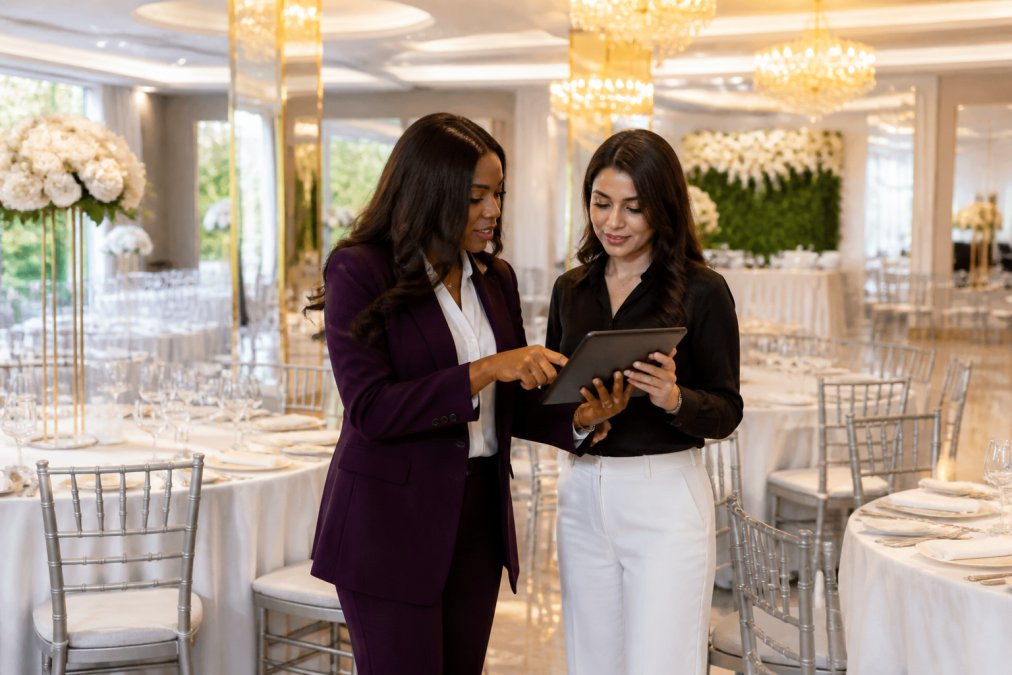
At M Lounge, we specialize in turning these milestone celebrations into timeless experiences. Our opulent space, complete with luxurious venue draping, professional lounge furniture, and mesmerizing up-lights, is designed to provide an unparalleled ambiance for your quinceañera. Our team offers tailored event planning support. We invite you to explore guidance on cultural heritage celebrations from the Smithsonian Center for Folklife and Cultural Heritage for deeper inspiration.
Reserve now to secure your date and let us help you create a celebration that honors your heritage with the grandeur it deserves. Get started with M Lounge and transform your planning a quinceañera cultural traditions vision into an opulent reality.
Frequently Asked Questions
What is the typical order of events for a quinceañera ceremony?
The quinceañera ceremony order of events typically begins with a religious mass or blessing. Following the ceremony, the reception includes the formal entrance, the father-daughter dance, the changing of the shoes, and the presentation of the last doll. The court of honor is presented, followed by a ceremonial toast, dinner, and the traditional waltz. The event concludes with dancing and the cake cutting. Many families also include the candle ceremony and the crowning with a tiara, which symbolizes the quinceañera’s transition into young womanhood.
How far in advance should you start planning a quinceañera?
A full year is the recommended planning window for a traditional quinceañera. This timeframe allows you to secure the venue, especially for a popular weekend date, and book vendors like the caterer, DJ, and photographer. It also gives the court of honor and chambelanes time to learn the choreography for the waltz without rushing. If you have a shorter timeline, consider a smaller court and a simpler ceremony order of events to reduce coordination stress.
How do you incorporate cultural traditions into a modern quinceañera?
Start by selecting the traditions that resonate most with your family’s values and regional customs. You might include the religious blessing, the court of honor, and the father-daughter dance while adapting the music or gown style to feel current. Many families blend in personalized vows or a modern choreographed waltz. The key is to balance the ceremonial elements with entertainment that reflects the quinceañera’s personality. If a full court feels overwhelming, focus on the symbolic gifts and the changing of the shoes as meaningful focal points.
What is the role of the court of honor in a quinceañera?
The quinceañera court of honor roles are both ceremonial and social. Traditionally, the court includes damas and chambelanes who accompany the quinceañera and participate in the formal waltz. The court’s presence symbolizes the support system of friends and family surrounding the young woman as she enters adulthood. In many celebrations, the court performs a choreographed dance, which requires several rehearsals before the event. Some families choose a smaller court of just a few couples to simplify coordination. The court also participates in the ceremony order of events, often standing during the symbolic gift presentations.