


Table of Contents
- Start With Your Wedding Budget and Guest Count
- Date First or Venue First: Which Approach Works Better
- How to Choose a Wedding Venue That Fits Your Vision
- Questions to Ask a Wedding Venue Before You Book
- Wedding Venue Contract Checklist: Red Flags to Spot
- How to Choose a Wedding Venue: The Site Tour Checklist
- Sustainability and Values Alignment at Your Venue
- Frequently Asked Questions
Last Updated: August 29, 2026
Start With Your Wedding Budget and Guest Count
Knowing your total budget and guest count before touring venues makes everything else, aesthetic, location, catering, flow naturally. Skip this step, and you’ll fall in love with spaces you can’t afford or book a room that seats 300 for a party of 60. Couples who define their financial ceiling before touring venues make faster decisions and avoid heartbreak.
Wedding Venue Budget Breakdown: What Each Line Item Actually Costs
A wedding venue budget covers far more than the room itself. Common cost categories include:
- Rental fee: Base cost for the space, varying by day, season, and duration
- Service charge and gratuity: Often separate from tips
- Deposit: Typically required to hold your date, often non-refundable
- Setup and breakdown fees: Early access or extended teardown charges
- Lighting and sound: Up-lights, pin spots, and audio equipment
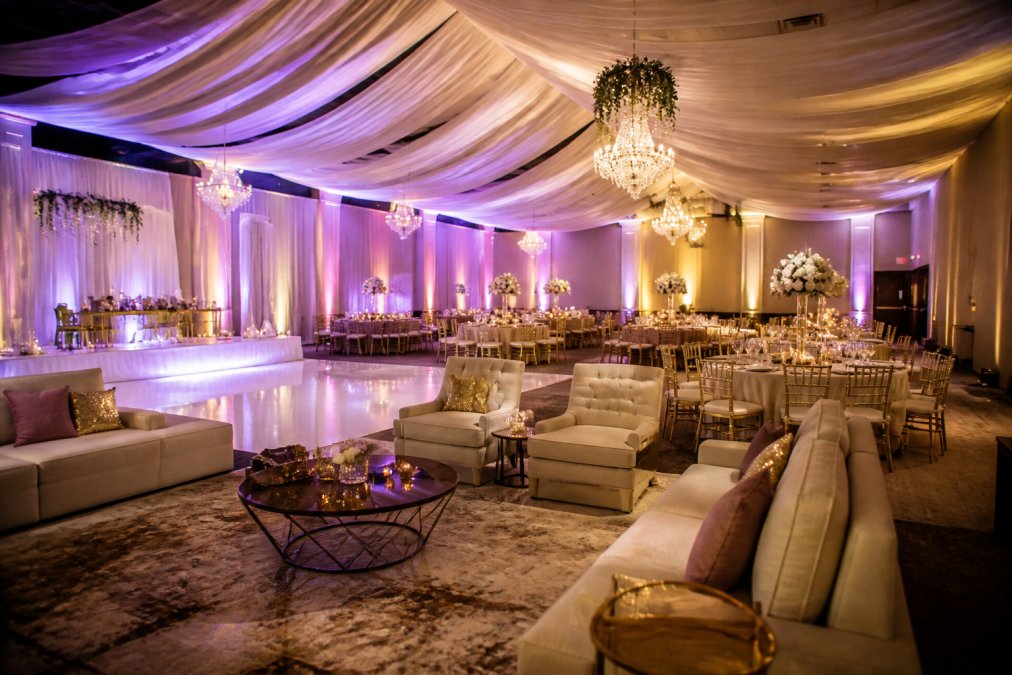
- Venue draping: Ceiling and wall draping transforms a space but may be an add-on
The American Wedding Study by The Knot shows venue costs consistently represent one of the largest single line items in wedding budgets. Request an itemized quote from every venue, never accept a lump-sum figure.
Couples who skip asking for an itemized quote routinely discover that lighting, draping, and setup fees add significantly to the total. Always request a written breakdown before signing anything.
Matching Venue Capacity to Your Guest List
Venue capacity is a hard constraint. A space rated for 80 seated guests cannot safely accommodate 120, regardless of floor plan adjustments.
Distinguish between seated capacity (guests at tables with chairs) and cocktail capacity (standing-and-mingling configuration). Confirm which applies to your event format. Finalize a realistic working guest list before touring venues, then filter by capacity first.
Date First or Venue First: Which Approach Works Better
The answer depends on your flexibility. Choosing the venue first secures a space you love, popular venues book 12 to 18 months in advance for peak season weekends. Choosing the date first makes sense when the date carries significance and you’re willing to accept available venues.
The practical middle path: identify your top three date options and top three venues, then see where they intersect.
Off-peak discounts are real. Venues fully booked every Saturday in October often have wide-open Fridays and Sundays at meaningfully lower rental fees. Ask specifically about weekday and off-season pricing.
How to Choose a Wedding Venue That Fits Your Vision
A space that photographs beautifully in its natural state will translate your decor more faithfully than one requiring heavy intervention. The bones of the space matter: ceiling height, wall color, flooring, and existing lighting all influence how your decor reads.
Ceremony Space and Reception Layout
A venue requiring a full room flip between ceremony and reception adds time, cost, and complexity. Venues with a dedicated ceremony space separate from the reception hall eliminate this problem. Walk the floor plan with your approximate guest count in mind to assess flow between bar, dining tables, and dance floor.
Amenities, In-House Catering, and Vendor Access
Venues with in-house catering offer convenience but limit menu options. Outside vendors give more control but require coordinating between multiple parties. Clarify upfront whether the venue provides an event coordinator to manage vendor logistics. Ask whether you’re required to use approved vendors or can bring anyone you choose.
Lighting, Sound, and Tech-Readiness
Poor lighting and inadequate sound undermine even beautifully decorated spaces. Check for up-lights, pin spots, house sound systems, Wi-Fi bandwidth for live streaming, and adequate power capacity for DJ equipment and catering. M Lounge‘s professional lighting setup, including up-lights and fully equipped event space, addresses this directly, infrastructure is already in place.
Questions to Ask a Wedding Venue Before You Book
The questions you ask before signing are as important as the tour itself. A beautiful space with an evasive coordinator is a red flag.

Prepare a written list before touring so emotional excitement doesn’t crowd out practical due diligence.
Logistics and Accessibility
Key questions to cover:
- What is the parking availability on site and overflow parking nearby?
- Is the venue ADA-compliant with accessible entrances, restrooms, and pathways?
- What is the load-in and load-out window for vendors?
- Is there a bridal suite or dedicated getting-ready space on site?
- How many restrooms are available relative to your guest count?
- Is there a dedicated space for the catering team?
Parking availability is particularly important for venues in dense areas where street parking is limited.
Rain Plans, Noise Ordinances, and Time Restrictions
Outdoor ceremony spaces need a clearly defined rain plan, not a vague assurance but a specific backup layout with confirmed capacity. Ask directly about decibel limits, music cutoff times, and whether the venue has received noise complaints. Time restrictions also affect your photography timeline.
| Question Category | What to Ask | Why It Matters |
|---|---|---|
| Rain plan | Specific backup layout and capacity | Outdoor ceremonies need a guaranteed alternative |
| Noise ordinance | Decibel limit and music cutoff time | Affects DJ set length and reception end time |
| Parking | On-site spaces and overflow options | Guest arrival experience |
| Accessibility | ADA compliance, elevator access | Legal requirement and guest comfort |
| Vendor access | Load-in window and approved vendor list | Affects vendor coordination and fees |
| Bridal suite | Availability and included amenities | Getting-ready logistics for the wedding party |
Wedding Venue Contract Checklist: Red Flags to Spot
Read every line of the venue contract. If a venue representative discourages careful reading or consulting a lawyer, that’s a red flag. Per the Federal Trade Commission’s consumer guidance on contracts, consumers are entitled to a clear, readable copy before signing. Never sign on the day of your tour.
Deposit, Cancellation Policy, and Hidden Fees
The deposit structure and cancellation policy cause the most post-signing disputes. Look for non-refundable deposit amounts and forfeiture dates, cancellation timelines showing percentage owed at different points, force majeure clauses addressing circumstances outside your control, and hidden fees like overtime, cleaning, security deposits, or corkage charges.
A contract listing the rental fee but omitting lighting, draping, and setup costs in a separate addendum obscures the true total. Request a single, all-inclusive quote document before signing.
Liability Insurance and What It Covers
Most venues require event liability insurance, which covers property damage and personal injury claims. This is separate from wedding insurance, which covers cancellation and vendor no-shows. Ask the venue for the minimum liability coverage amount required, whether they carry general liability insurance, whether vendors must carry their own coverage, and who is responsible if a guest is injured. Event liability insurance is generally affordable and available through major insurers.
How to Choose a Wedding Venue: The Site Tour Checklist
A venue walkthrough is your best opportunity to catch problems photos conceal. Arrive with this checklist and move through methodically.
Before the tour:
- Confirm your approximate guest count and event format
- Bring your list of questions for the coordinator
- Test the parking situation yourself
During the tour:
- Walk ceremony and reception spaces, confirm flow between them
- Check restroom count and condition
- Test lighting with your preferred colors
- Inspect the bridal suite if available
- View the kitchen or catering prep area
- Confirm vendor load-in location and service entrance
- Assess ceiling height and wall finishes for your decor vision
- Ask about noise ordinance and latest permitted end time
After the tour:
- Request an itemized quote in writing
- Ask for the full contract to review before deposit
- Confirm date availability for your top three options
Sustainability and Values Alignment at Your Venue
Sustainability metrics to ask about include waste management (composting, recycling), energy sources (renewable energy, efficient lighting), local sourcing in catering, single-use plastic policies, and community alignment. Per the EPA’s sustainable event planning guidance, events of any size can reduce their environmental footprint through vendor selection and waste reduction. A venue that shares your values reduces friction on the day because staff already understands what matters to you.
Choosing the right wedding venue shapes every planning choice that follows. Couples who get it right defined their priorities first and asked hard questions early. M Lounge offers a luxurious, full-service event space with professional up-lighting, elegant venue draping, and lounge furniture designed to create an opulent atmosphere for up to 80 seated or 100 cocktail guests, with tailored event planning support built in. Reserve your date with M Lounge and experience the difference that a truly prepared venue makes.
Frequently Asked Questions
How far in advance should you book a wedding venue?
Most couples book their wedding venue 12 to 18 months before the wedding date. Peak wedding season dates, typically May through October, fill up fastest, so booking earlier gives you more options. If your date is flexible or you are planning an off-peak wedding, you may find availability within 6 to 9 months. Smaller, intimate venues with limited dates often book up just as quickly as larger spaces, so confirming availability early protects your preferred date.
What are the most important questions to ask a wedding venue before booking?
Ask about the rental fee structure, what is included versus what costs extra, the venue’s preferred or required vendor list, and whether in-house catering is mandatory. Confirm the maximum seated capacity and cocktail capacity, parking availability, bridal suite access, setup and breakdown windows, noise ordinance restrictions, and the rain plan for outdoor ceremonies. Also request a copy of the contract before committing so you can review the cancellation policy, deposit terms, and service charge and gratuity details.
What hidden costs should I look for in a wedding venue contract?
Common hidden costs include a service charge added to catering minimums, mandatory gratuity for staff, overtime fees if your event runs past the contracted end time, and separate charges for lighting, draping, or furniture that were shown in photos but are not included in the base rental fee. Some venues also charge for setup hours, security personnel, or event coordinator services. Read every line of the contract and ask the venue to confirm in writing exactly what is included in the quoted price.
How do I determine the right wedding venue for my guest count?
Start with your final guest count, then look for venues where your number falls comfortably within the seated capacity, not at the maximum. A venue rated for 80 seated guests feels comfortable at 70 and crowded at 80. If you plan a cocktail-style reception, venues often list a higher cocktail capacity. Factor in space for a dance floor, bar area, and ceremony setup. Visiting the venue in person during a site tour helps you visualize how your specific guest count will feel in the space.
Do I need liability insurance for my wedding venue?
Most venues require couples to carry event liability insurance, and some require the couple to name the venue as an additional insured. Event liability policies typically cover property damage and bodily injury claims arising from your event. One-day event insurance policies are widely available and generally affordable. Review your venue contract carefully, the minimum coverage amount required is usually specified. Your homeowner’s or renter’s insurance policy may offer some coverage, but a dedicated event policy provides more reliable protection.
What is the 50/20/30 rule for wedding budgeting?
The 50/20/30 wedding budget guideline suggests allocating roughly 50% of your total budget to the venue and catering combined, 20% to photography and videography, and 30% to everything else, flowers, music, attire, stationery, and transportation. This is a general framework, not a strict rule. Couples who prioritize a particular element, such as an all-inclusive venue with professional lighting and draping, often shift percentages to reflect what matters most to them while keeping total spending within their planned wedding budget.
This article was written using GrandRanker