



Table of Contents
- Set a Realistic Budget for Your Quinceanera
- Create a Quinceanera Budget Breakdown Template
- Build Your 12-Month Quinceanera Planning Checklist
- Find Affordable Quinceanera Venue Tips and Strategies
- Manage Catering, Decor, and Entertainment Costs
- Negotiate Vendor Contracts and Avoid Hidden Fees
- Recover Financially After Your Celebration
- Frequently Asked Questions
Last Updated: September 3, 2026
Set a Realistic Budget for Your Quinceanera
Start with one hard number: how much can you actually spend? This determines where your money goes and forces intentional choices about what matters most to your family.
Most families pick a venue first, then add costs until they spiral. Instead, decide your total budget first, then allocate across categories. Your budget becomes your decision-making filter for every vendor negotiation.
Account for non-negotiables: venue, catering, photography, music, invitations, and the debutante’s dress. Add 10-15% contingency for unexpected costs.
Family members often have competing visions for what a quinceanera “should” cost. Setting a clear budget upfront and communicating it prevents constant pressure to add more. You’ll have a framework to say yes or no without guilt.
Document your budget in writing and share it with key family members before vendor conversations begin. This prevents scope creep and keeps everyone aligned on priorities.
Create a Quinceanera Budget Breakdown Template
A budget breakdown template forces you to assign real numbers to each category and see where your money goes, preventing surprises and identifying where to cut costs.
Here’s a practical framework for planning a quinceanera on a budget:
| Budget Category | Typical Allocation | Notes |
|---|---|---|
| Venue Rental | 20-30% | Largest single expense; negotiate hard here |
| Catering & Beverages | 25-35% | Second largest; offers most flexibility |
| Photography/Videography | 10-15% | Document the event; consider hybrid options |
| Music/Entertainment | 8-12% | DJ, live band, or curated playlist |
| Dress & Attire | 8-12% | Debutante dress, court of honor outfits |
| Decorations & Flowers | 5-10% | DIY opportunities here reduce costs |
| Invitations & Paper Goods | 2-4% | Digital + printed hybrid saves money |
| Party Favors | 2-4% | Homemade or bulk options work well |
| Miscellaneous (tips, contingency) | 5-10% | Always budget for the unexpected |
Fill in your total budget, then calculate each category as a percentage. This prevents overspending in one category and leaving nothing for others.
The breakdown offers flexibility: if you find a cheaper venue, redirect savings to catering or photography. The template forces conscious trade-offs instead of random spending.
Your budget breakdown isn’t fixed in stone, it’s a planning tool that evolves as you negotiate with vendors and discover actual costs.
Build Your 12-Month Quinceanera Planning Checklist
Timeline discipline prevents panic purchases and overpaying. A 12-month timeline gives you breathing room to negotiate, compare vendors, and catch discounts.
Months 12-10: Foundation & Vision
- Set your total budget with family input
- Identify your target date and day of week (Friday/Sunday events may cost less than Saturday)
- Create your guest list estimate (this drives venue and catering needs)
- Establish core family roles (who’s making decisions, who’s managing vendors)
- Research venue options in your area; request quotes from at least 3-5 spaces
- Begin following event planners and venues on social media for inspiration and promotions
Months 9-7: Vendor Selection & Contracts
- Sign venue contract (lock in date and pricing)
- Book photographer and videographer (these fill up fast)
- Hire DJ or entertainment (confirm music preferences and technical requirements)
- Meet with caterers; request tastings if possible
- Order invitations (digital save-the-date can go out immediately)
- Begin shopping for the debutante’s dress; allow 3-4 months for alterations
Months 6-4: Details & Contingency
- Finalize catering menu and confirm final guest count
- Order decorations and flowers (or plan DIY approach)
- Confirm all vendor contracts are signed with clear terms
- Plan court of honor; confirm attendees and attire requirements
- Order party favors or plan homemade alternatives
- Send formal invitations (6-8 weeks before event)
Months 3-1: Execution & Final Confirmations
- Confirm final headcount with caterer
- Final walk-through with venue; confirm setup times and requirements
- Collect final payments from family members contributing to costs
- Prepare timeline and vendor contact list for day-of coordination
- Arrange transportation for debutante and court of honor
- Confirm all vendor arrival times and technical requirements
- Week before: Final confirmations with all vendors
- Day before: Prepare any DIY decorations; confirm final details
The biggest mistake is waiting until 3-4 months before the event to book your venue. Peak dates fill quickly, and you’ll either miss your preferred space or pay premium pricing for last-minute availability.
Find Affordable Quinceanera Venue Tips and Strategies
Your venue is the single largest expense. It sets the tone for the entire event and determines what’s possible for everything else. You have options if you know where to look.
Explore Non-Traditional Spaces
Most families assume “venue” means a banquet hall or hotel ballroom. Instead, consider community centers, church fellowship halls, parks with pavilions, restaurants with private dining rooms, or cultural centers. These rent for 30-50% less because they have lower overhead.
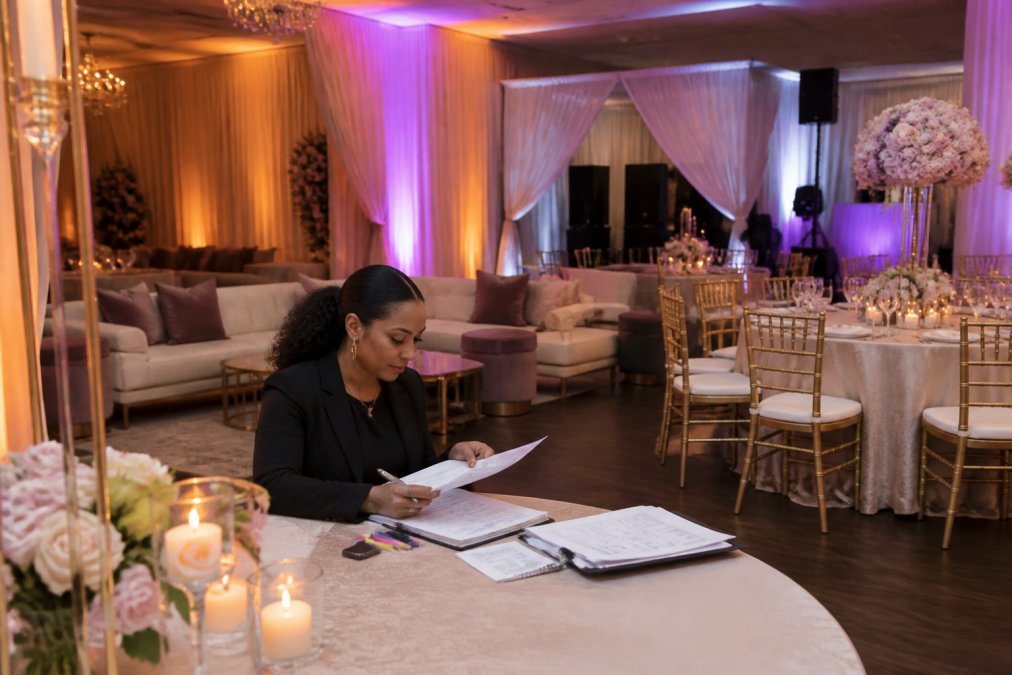
M Lounge offers a different approach: a luxurious event space with professional up-lighting and venue draping built in. This eliminates separate lighting designers or expensive décor rentals, letting you allocate budget elsewhere.
Negotiate Day and Time
Friday evenings and Sunday afternoons cost 20-40% less than Saturday nights (bls.gov). Afternoon events also undercut evening pricing. Ask about off-peak discounts.
Get Everything in Writing
Ask for a detailed quote including rental fee, setup/teardown, parking, tables, chairs, linens, lighting, and service charges. Hidden fees destroy budgets. Request an all-inclusive quote to compare accurately.
Ask About Package Deals
Some venues offer discounts for booking catering through preferred vendors. Compare package prices against booking separately.
Non-traditional venues work best for families comfortable with a more casual atmosphere or willing to invest time in decorating. Traditional venues with built-in elegance (like M Lounge) suit families who want a polished aesthetic without the decoration labor.
Manage Catering, Decor, and Entertainment Costs
Catering is your next-largest expense and where most families overspend.
Catering Strategies
Request quotes from at least three caterers and specify your budget upfront. A caterer quoting $35 per person might offer $22 per person for buffet service or without a cocktail hour (nrn.com).
Cost-reducing catering approaches: buffet instead of plated (saves 15-20%), limited bar, afternoon event with appetizers and cake, family-style service, and three entrée options instead of five.
The most expensive catering mistake is overestimating your guest count. Manage your guest list ruthlessly.
Decoration and Ambiance
DIY saves the most money here. Professional floral arrangements cost $8-15 per centerpiece; homemade ones cost $2-4 (sba.gov). For 10 tables, that’s $60-110 in savings.
Professional lighting and draping create opulent ambiance that’s hard to replicate with DIY effort. If your budget allows, this investment often yields a more sophisticated result with less stress.
Entertainment Options
A professional DJ costs $600-1,200; a curated playlist with rented sound costs $200-400; live music costs $800-2,000. Choose based on what matters most to your family.
Consider a hybrid: use recorded music during ceremony and dinner, then hire a DJ for the last three hours when dancing matters most.
When negotiating with entertainment vendors, ask about package deals. A DJ who also provides lighting might offer a combined rate lower than booking separately.
Negotiate Vendor Contracts and Avoid Hidden Fees
This section separates families who stay on budget from those who don’t. Vendor contracts are where surprises hide, and surprises cost money.
Read Every Line
Before signing, read the entire contract. Look for service charges (often 18-20%), setup/teardown fees, equipment rentals, overtime charges, cancellation penalties, payment schedule, and what’s included versus extra.
“Tables and chairs included” might mean basic items only. Specialty linens, chair covers, or upgrades might cost extra. Clarify.
Negotiate in Writing
Never rely on verbal agreements. Get all promises in writing, whether in the contract or via email confirmation.
Understand Payment Terms
Most vendors require a 25-50% deposit to hold your date. Some demand final payment 10-14 days before the event. Negotiate payment terms that work for your family’s cash flow.
Ask About Discounts
Vendors often negotiate if you ask. Paying upfront instead of splitting payments sometimes earns a discount. Booking multiple services with one vendor may reduce costs. Off-peak dates have negotiable pricing.
The most dangerous phrase in a vendor contract is “at the discretion of the venue” or “subject to availability.” This language gives vendors permission to charge extra or change terms later. Push back on vague language and get specific commitments in writing.
Recover Financially After Your Celebration
Manage the Financial Aftermath
If financed through family contributions, establish a clear repayment plan and document contributions in writing. If you borrowed money or used credit cards, create a repayment timeline immediately after the event.
Recoup Some Costs
Sell unused decorations, excess party favors, or the debutante’s dress on local marketplaces or consignment shops. Recovering 20-30% of decoration costs helps offset expenses.
Capture the Financial Lessons
After the event, review actual spending against your budget. Document what worked and what didn’t for future family celebrations.
Plan for Ongoing Costs
If you hired a professional photographer or videographer, budget for prints, albums, or digital copies after the event, as these often aren’t included in the initial quote.
Planning a quinceanera on a budget is entirely achievable when you approach it with clear priorities and disciplined execution. The key is setting a realistic budget early, negotiating vendor contracts carefully, and making intentional trade-offs about where to invest and where to cut costs.
At M Lounge, we understand that families want to celebrate this milestone with elegance and sophistication without financial stress. Our venue offers professional up-lighting and luxurious venue draping that create an opulent ambiance, eliminating the need for expensive additional decoration. This approach lets you allocate your budget toward what matters most, the food, the photography, and the celebration itself. When you’re ready to explore how a thoughtfully designed venue can elevate your quinceanera while respecting your budget, reserve now with M Lounge to discuss your vision and get a detailed quote that includes everything you need.
Frequently Asked Questions
How far in advance should I start planning a quinceanera on a budget?
Begin planning 12 months ahead to secure affordable rates and negotiate vendor contracts. Early booking allows you to compare quotes, lock in better pricing, and make adjustments without rushing. If you’re starting later, begin immediately with your venue and catering selections, as these lock in the largest budget items. A structured planning checklist helps you prioritize expenses across the full timeline.
What are the most essential costs when planning a quinceanera on a budget?
The top three expenses are typically venue rental, catering, and the quinceanera’s formal attire. These three items often consume 60-70% of the total budget. Secondary essentials include photography, music or DJ services, invitations, and basic decor. By focusing your budget on these core elements and finding cost-effective solutions for each, you maintain the celebration’s cultural significance without overspending.
How can I save money on a quinceanera venue without compromising elegance?
Choose venues that offer built-in ambiance through professional lighting and draping, reducing your decor costs. Consider off-season dates or weekday events for lower rental rates. Venues with seated capacity around 80 guests allow you to maintain an intimate celebration while reducing catering and rental expenses. Always ask what’s included in the venue package to avoid hidden fees for setup, lighting, or draping.
Who typically pays for a quinceanera, and how does that affect budgeting?
Traditionally, parents or the extended family fund the celebration, though cultural practices vary. Some families split costs with godparents (padrinos) who sponsor specific elements like the court of honor attire or entertainment. Understanding who contributes helps you allocate budget sections and manage family expectations early. Clear communication about financial responsibility prevents misunderstandings and allows better planning across all vendors.
This article was written using GrandRanker