


Table of Contents
- The Evolution of Modern Wedding Decor Trends for 2026
- Color Palettes Defining 2026 Celebrations
- Modern Wedding Lighting Design: From Ambient to Statement
- Wedding Venue Draping Trends and Fabric Choices
- Tablescape and Floral Installation Strategies
- How to Choose Wedding Decor That Reflects Your Vision
- Sustainable and Budget-Conscious Decor Solutions
- Conclusion
- Frequently Asked Questions
Last Updated: September 2, 2026
The Evolution of Modern Wedding Decor Trends for 2026
Modern wedding decor trends for 2026 reflect a fundamental shift in how couples approach celebration aesthetics. Rather than following rigid design rules, today’s weddings embrace personalization, sustainability, and layered visual storytelling. The difference between a forgettable reception and an unforgettable one often comes down to how thoughtfully decor elements work together to create mood, flow, and genuine reflection of the couple’s identity.
At M Lounge, we’ve watched couples move away from cookie-cutter designs toward curated aesthetics that balance luxury with authenticity. The venues that succeed in 2026 are those that understand modern wedding decor trends go beyond pretty colors and flowers, they’re about creating immersive experiences where every detail serves a purpose.
This guide walks you through the defining modern wedding decor trends shaping celebrations right now, from color palettes and lighting design to sustainable choices that don’t compromise on elegance. Whether you’re planning an intimate gathering or a grand celebration, these insights will help you craft a space that feels genuinely yours.
Color Palettes Defining 2026 Celebrations
The color stories of 2026 weddings tell a different narrative than years past. Gone are the days of safe, predictable palettes. Today’s couples are exploring monochromatic layering, unexpected color blocking, and palettes inspired by fine art movements.
Monochromatic elegance remains strong, but with a twist. Rather than a single flat color, couples are using multiple tones within one color family, think deep charcoal paired with soft dove gray and crisp white. This creates visual depth and sophistication without feeling chaotic. The approach works especially well with modern wedding lighting design, where layered tones catch light differently throughout the evening.
Earthy, warm neutrals have gained tremendous traction. Terracotta, warm taupe, and burnished gold create an inviting, grounded aesthetic that photographs beautifully in natural light. These palettes pair seamlessly with sustainable, organic textural elements, a key trend for environmentally conscious couples.
Jewel tones are experiencing a renaissance, but applied strategically. Rather than covering an entire room in emerald or sapphire, couples are using these colors as accent points, perhaps in florals, linens, or statement pieces. This restraint makes the color feel intentional rather than overwhelming.
The color palette you choose should inform every other design decision: your lighting choices, fabric selections, floral arrangements, and even the mood board that guides your vendors. When these elements align, the space feels cohesive rather than scattered.
Modern Wedding Lighting Design: From Ambient to Statement
Modern wedding lighting design has evolved into a sophisticated tool for transforming space and emotion. Lighting is no longer an afterthought, it’s a primary design element that shapes how guests experience the entire event.
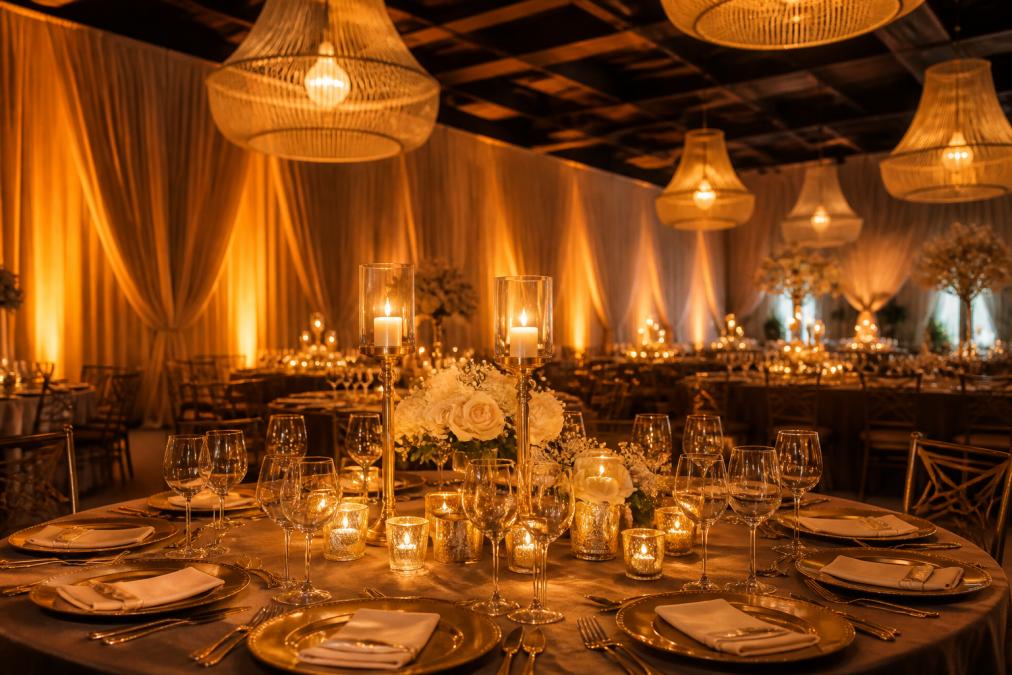
Ambient lighting creates the foundation. Soft, warm uplighting on draped walls establishes an opulent atmosphere without harshness. This layered approach to lighting prevents the “flat” feeling that poor lighting creates. The key is mixing light sources: uplights, candlelight, string lights, and statement fixtures all working together.
Statement lighting has become a signature trend. Oversized pendant lights, sculptural installations, or dramatic chandeliers serve as focal points that anchor the space visually. These pieces work best when they align with your overall color palette and aesthetic, a geometric brass installation feels different from an ornate crystal chandelier, even though both make a statement.
Candlelight remains essential, but it’s being used more strategically. Rather than scattered votive candles, couples are creating intentional candle installations, perhaps tall candelabras on high-top tables, or rows of pillar candles along ceremony aisles. This creates a sense of drama and intentionality.
Lighting color temperature matters tremendously. Warm color temperatures (2700K-3000K) create intimacy and luxury. Cool tones feel modern and crisp but can feel cold in excess. Most successful 2026 weddings blend both, warm ambient light with strategic cool-toned accent lighting for visual interest.
The relationship between lighting and draping cannot be overstated. Fabric choices directly impact how light reflects and diffuses. Matte fabrics absorb light differently than satin or silk. When planning your modern wedding decor trends strategy, coordinate lighting design with fabric selection from the start.
Wedding Venue Draping Trends and Fabric Choices
Wedding venue draping transforms raw space into an intentional, curated environment. The fabric you choose and how it’s installed fundamentally changes how a room feels and photographs.
Luxurious venue draping is experiencing a shift toward texture and movement. Rather than flat, static draping, designers are creating layered, flowing installations that catch light and create visual depth. Sheer fabrics layered over heavier drapes create dimension. Asymmetrical draping feels more modern than perfectly symmetrical installations.
Fabric choice drives the entire aesthetic. Silk creates elegance and luxury, it drapes beautifully and reflects light in sophisticated ways. Linen feels more relaxed and organic, perfect for couples seeking a less formal atmosphere. Velvet adds richness and drama. Cotton blends offer practicality without sacrificing appearance.
Color selection in draping should tie directly to your overall color palette. Neutral draping (ivory, gray, taupe, black) provides a sophisticated backdrop that lets florals and lighting shine. Colored draping makes a bolder statement but requires careful coordination with other elements to avoid visual chaos.
Textural elements are increasingly popular. Draping with subtle patterns, ombré effects, or layered textures creates visual interest without overwhelming the space. This approach is particularly effective in smaller venues where you need to create drama without making the space feel cramped.
The installation method matters as much as the fabric itself. Draping that’s pulled taut feels formal and structured. Loose, gathered draping feels romantic and organic. Asymmetrical installations feel contemporary and intentional.
M Lounge’s approach to venue draping incorporates these modern trends while maintaining the opulent ambiance that defines luxury celebrations. Professional installation ensures fabric hangs perfectly, catching light and creating the visual impact you envision. AI design platforms.
Tablescape and Floral Installation Strategies
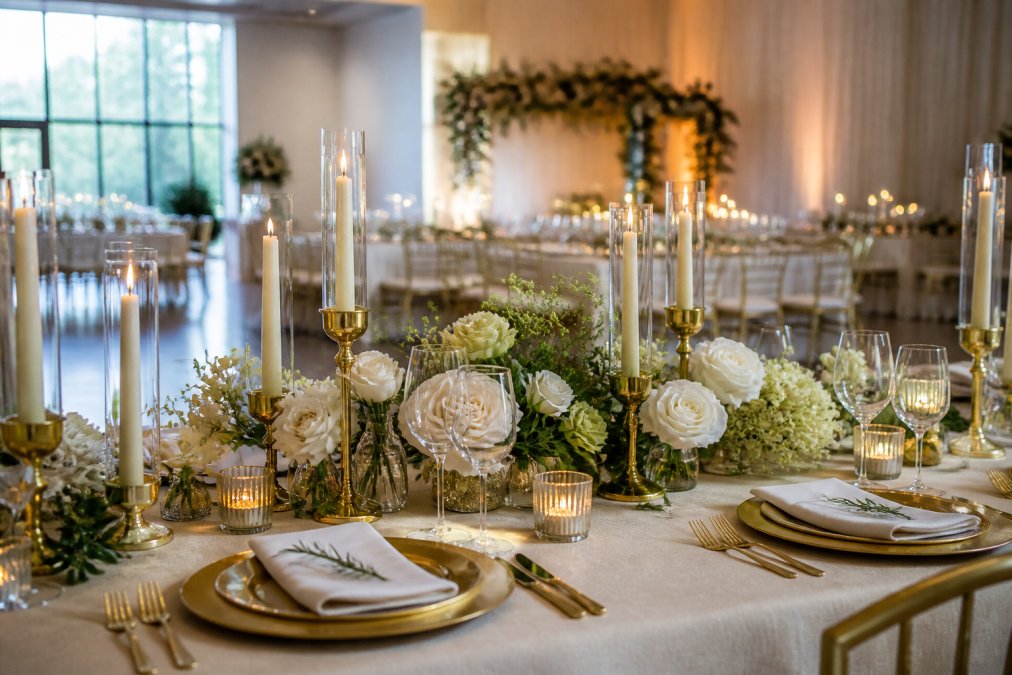
Tablescape styling has evolved from simple centerpiece arrangements into layered, multidimensional design statements. Modern tablescape design considers height variation, textural contrast, and how elements interact with lighting.
Layered tablescape design means mixing multiple visual elements at different heights. A tall floral installation draws the eye upward. Mid-height candlelight and smaller florals create middle layers. Low-profile place settings and linens anchor the table. This vertical variation prevents the flat, one-dimensional feeling of tables where everything sits at the same height.
Floral installation strategies now emphasize sustainable sourcing and seasonal flowers. Rather than forcing out-of-season blooms, designers are celebrating what grows naturally, creating arrangements that feel authentic to the season. This approach often costs less while looking more sophisticated.
Textural elements in tablescape design create visual richness. Mixing soft florals with structural greenery, incorporating dried elements, adding unexpected textures like branches or woven elements, these details elevate a tablescape from pretty to memorable. The goal is creating a tablescape that invites closer inspection rather than one that looks the same from every angle.
Color blocking in tablescape design means using strategic color placement to guide the eye. Perhaps one table features jewel tones while another emphasizes neutrals. This creates visual rhythm throughout the reception space and prevents the monotony of identical tables.
Personalized elements in centerpiece design tell your story. Incorporating family heirlooms, meaningful objects, or custom signage transforms a generic tablescape into something that reflects who you are. These bespoke details are what guests remember and photograph.
Centerpiece design should consider sightlines. Tall installations work on cocktail tables where guests stand. At seated dinners, lower arrangements ensure guests can see and converse across the table. Modern wedding decor trends emphasize function alongside beauty.
How to Choose Wedding Decor That Reflects Your Vision
Selecting decor elements that authentically represent your vision requires clarity about what matters to you. Many couples feel overwhelmed by endless options, but a structured approach simplifies decision-making.
Start with a mood board. Gather images that resonate with you, not necessarily wedding images, but anything that captures colors, textures, feelings, and aesthetics you love. This visual reference guides every subsequent decision and helps vendors understand your vision beyond words alone.
Define your design throughline. What’s the core idea connecting all your choices? Perhaps your wedding celebrates your shared love of travel, and decor reflects destinations meaningful to you. Maybe your aesthetic is “modern minimalism with organic touches” or “maximalist luxury with vintage influences.” This throughline ensures cohesion rather than a scattered collection of pretty elements.
Consider your venue’s existing architecture and bones. The best modern wedding decor trends work with your space, not against it. A soaring ceiling invites dramatic installations. A smaller, intimate space benefits from refined, layered details. An outdoor venue suggests different lighting and fabric choices than an indoor ballroom.
Budget allocation shapes what’s possible. Rather than spreading resources thin across every element, identify what matters most to you. If lighting creates the mood you crave, invest there. If florals are your passion, prioritize that. This focused approach often creates more impactful results than trying to excel at everything.
Vendor coordination is essential. Your florist, lighting designer, draping specialist, and other vendors need to understand how their work integrates with the overall vision. Miscommunication between vendors results in elements that don’t work together, even if each piece is beautiful individually.
Timeline matters significantly. Certain modern wedding decor trends require specific lead times. Custom installations, specialty florals, and unique fabric choices need advance planning. Starting the design process six to nine months before your event allows time for thoughtful sourcing and coordination.
Sustainable and Budget-Conscious Decor Solutions
The assumption that sustainable decor requires compromise on elegance is outdated. Many of 2026’s most beautiful weddings incorporate eco-friendly practices while maintaining luxury aesthetics.
Seasonal florals are both sustainable and cost-effective. Flowers in season require less transportation and energy to produce, reducing environmental impact while lowering costs. They also feel more authentic to the time of year. Working with a florist who prioritizes seasonal sourcing often results in fresher arrangements that last longer.
Reusable and rental options extend your budget while reducing waste. Linens, centerpiece vessels, and decor elements can be rented rather than purchased. This approach works particularly well for couples who won’t use these items again and prefer not to store them indefinitely.
Locally sourced elements reduce transportation impact and support community businesses. Local flowers, greenery, and decor items often cost less while creating a more authentic connection to your celebration location.
Digital elements replace some traditional printed materials. Projected signage, digital menus, and digital place cards reduce paper waste while offering flexibility to update information easily. This approach feels modern while serving environmental goals.
Donation programs allow you to repurpose florals and decor after your event. Many charities accept post-event flowers and elements for use in community spaces. This extends the life of beautiful items while supporting charitable causes.
For couples with tight budgets, strategic decor choices maximize impact without excessive spending. Focusing on lighting, draping, and a few statement florals often creates more visual impact than spreading resources across numerous small elements. Quality over quantity remains the most effective budget strategy.
M Lounge supports sustainable and budget-conscious approaches by offering flexible options for venue draping and professional lighting that enhance your space efficiently. Thoughtful design choices mean you don’t need excessive elements to create an opulent atmosphere.
Conclusion
Modern wedding decor trends for 2026 celebrate personalization, sophistication, and intentional design choices. Whether you’re drawn to monochromatic elegance, jewel-tone accents, or sustainable approaches, the most successful celebrations reflect authentic choices rather than following trends blindly.
The difference between a forgettable reception and an unforgettable one lies in how thoughtfully every element, from color palette to lighting design to venue draping, works together to create a cohesive experience. When these pieces align, your celebration becomes a genuine reflection of who you are.
M Lounge provides the sophisticated foundation these design visions require. Our luxurious venue draping, professional lounge furniture, and mesmerizing up-lights create the opulent ambiance where your modern wedding decor trends vision comes to life. With seated capacity for 80 guests or cocktail capacity for 100, we offer the intimate luxury space where every detail matters.
The Knot’s 2026 Wedding Trends Report confirms that couples increasingly prioritize personalized, thoughtfully curated celebrations over generic designs. Wedding Wire’s sustainability guide documents how eco-conscious choices enhance rather than limit design possibilities. Design industry insights from the American Society of Interior Designers emphasize that intentional lighting and spatial design create the most memorable experiences.
Reserve your date at M Lounge and transform your vision into an unforgettable celebration where every design element serves your story and creates genuine magic for your guests.
Frequently Asked Questions
What are the most popular wedding colors for 2026?
2026 favors jewel tones, soft neutrals, and monochromatic layering. Deep emerald, sapphire, and burgundy pair with cream, champagne, and warm whites. Many couples blend color blocking with organic textures, think blush and sage with natural wood elements. The key is choosing a color palette that complements your venue’s architecture and lighting design to create cohesion throughout the space.
How can I incorporate modern wedding lighting design into my celebration?
Layer your lighting strategically: combine ambient overhead fixtures with accent up-lights on draped walls, candlelit centerpieces, and statement pendant lights or chandeliers. Warm color temperatures (2700K-3000K) create intimacy, while dimmable systems let you shift the mood throughout the evening. Professional lighting design transforms a venue’s architecture and draws attention to key focal points like ceremony backdrops and the dance floor.
What’s the difference between traditional and modern wedding venue draping trends?
Modern draping emphasizes texture and dimension rather than heavy fabric coverage. 2026 trends favor sheer, layered draping with organic folds, asymmetrical installations, and mixed materials, combining silk with linen or incorporating wooden structural elements. Draping is now used strategically to frame focal areas, soften architectural lines, and provide a backdrop for lighting effects rather than covering entire walls uniformly.
How do I choose wedding decor that works for my budget and venue size?
Start by defining your color palette and mood board, this guides all other choices and prevents costly impulse decisions. For smaller venues (under 80 guests), focus on statement pieces like a dramatic floral installation or lighting feature rather than scattered decor. Prioritize elements that photograph well and enhance your venue’s existing features. Work with your venue’s in-house amenities like professional lounge furniture and built-in lighting systems to maximize impact without additional rental costs.
This article was written using GrandRanker