



Table of Contents
- Your 2026 Corporate Holiday Party Timeline Checklist
- How to Choose a Corporate Event Space That Fits Your Team
- Building Your Company Holiday Party Budget Template
- Inclusive Holiday Party Ideas for Work That Everyone Will Enjoy
- Hybrid and Remote-First Holiday Celebrations: A 2026 Must
- Legal and HR Considerations for Your Corporate Holiday Party
- Frequently Asked Questions
Last Updated: September 12, 2026
Your 2026 Corporate Holiday Party Timeline Checklist
A corporate holiday party planning guide 2026 works best when you build it backward from the event date. Most teams start too late, pay premium rates for rushed vendor bookings, and settle for whatever venue is left in December.
Below is the schedule we recommend, organized into three checkpoints. Print it, drop your date in, and work backward.
| Timeframe | What Gets Done | Why It Matters |
|---|---|---|
| Six months out | Budget, date, guest list | Locks the two variables everything else depends on |
| Three months out | Venue, vendors, theme | Best dates and vendors disappear first |
| One month out | RSVPs, menu, logistics | Prevents day-of scrambling |
Six Months Out: Budget, Date, and Guest List
Start with the number you can actually spend, then divide by headcount. That per-person figure decides everything downstream: venue tier, catering style, hosted bar, and decor. Planners who skip this step overspend on the venue and cut the food, which guests notice immediately.
Pick your date next. Mid-week evenings in early December cost less and see better attendance than the second or third Friday, when every company competes for the same ballroom. Send a save-the-date once the date is confirmed.
Then build the guest list, including plus-ones and remote employees. A common mistake is treating the list as a headcount exercise. It’s really a budget document.
Three Months Out: Venue, Vendors, and Theme
Book the venue before anything else, because every other vendor needs the address. On tours, ask three questions: seated capacity, cocktail capacity, and what’s included in the quoted rate. Those answers separate a smooth event from a surprise invoice.
Once the venue is signed, sequence your vendors in this order:
- Caterer, since menus drive rental needs
- Entertainment or DJ, which sets the room’s energy
- Florist and decor, which should complement the space rather than fight it
- Photographer, if you want images for internal communications
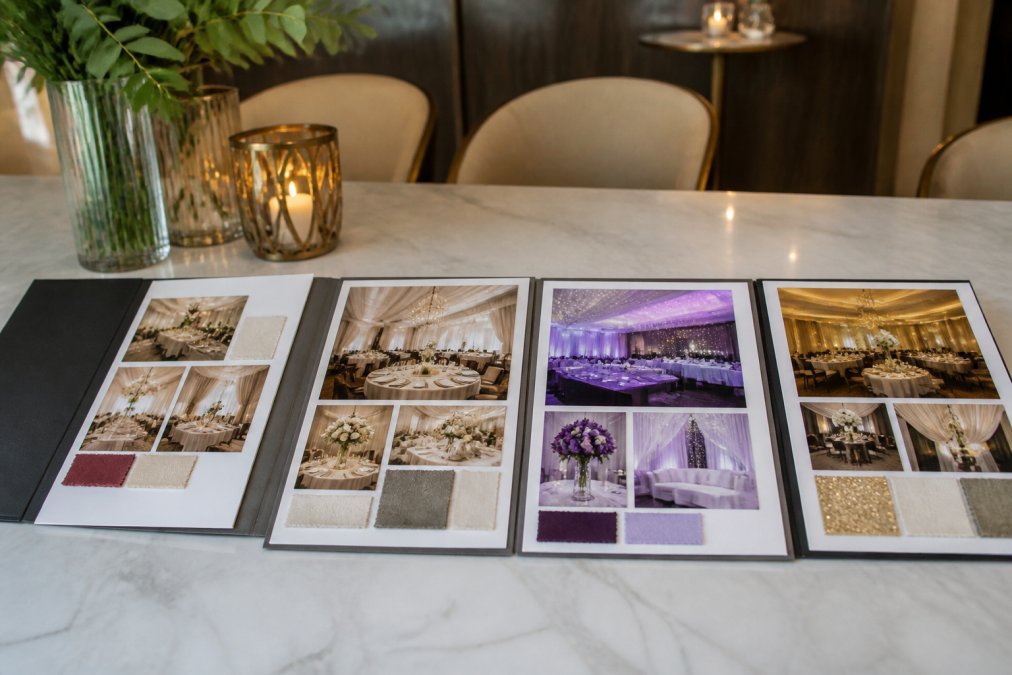
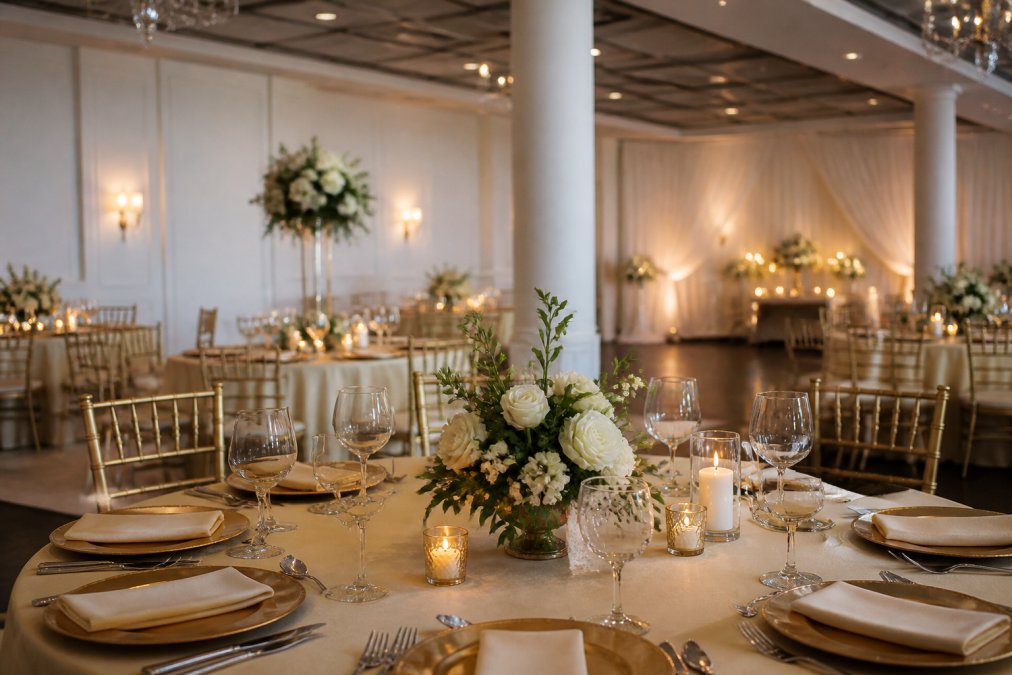
Choose a theme that works with the room’s existing character. Heavy draping and warm up-lighting flatter almost any holiday concept.
One Month Out: RSVPs, Menu, and Logistics
Finalize the headcount now, because caterers need firm numbers and venues need a seating plan. Send non-responders a reminder with a hard cutoff date.
Confirm dietary restrictions in writing. Collect them during RSVP rather than on the night, and pass the list directly to your caterer.
Walk the run of show with your team: arrival window, welcome remarks, dinner service, awards or activities, and closing time. Assign one person to vendor arrivals and one to guest questions so nobody does both.
Skipping the walkthrough is the single most common cause of a stalled event. If your DJ, caterer, and venue coordinator have never spoken, expect a 20-minute gap between dinner and dancing while someone finds a power outlet.
How to Choose a Corporate Event Space That Fits Your Team
The right corporate event space matches your headcount, format, and formality level, in that order. Capacity is the first filter, but format matters just as much: a seated dinner for 80 needs a different room than a standing reception for 100. A room that seats 80 for dinner may feel cramped for 100 standing guests once you add a bar, DJ booth, and coat check (nfpa.org).
Before you tour, build a one-page scoring sheet: venue name, seated capacity, cocktail capacity, rental fee, catering minimum, included amenities, parking, and accessibility notes. Score each venue 1-5 on fit, then compare. This prevents falling in love with the first space you see and rationalizing the numbers afterward.
Ask these questions on every tour:
- What is the seated capacity versus the cocktail capacity, and how does that change with a dance floor?
- Is there a dedicated area for check-in and coats, or will guests queue in the main room?
- What lighting and audio are built in, and what costs extra?
- Is the space accessible for guests with mobility needs, including restrooms and the entrance?
- What are the load-in and load-out windows for vendors, and is there a freight elevator?
- What is the cancellation policy, and what happens if you need to reduce your guest count?
- Are there any noise ordinances or curfews that affect the end time?
- Is there a required security guard or off-duty police officer, and who pays for it?

What most guides miss is that ambiance is not a luxury line item. Lounge furniture and professional lighting change how long guests stay and how the event photographs, which matters if you’re using the party for recruiting or internal communications. A room with character needs less decoration to feel finished; a plain banquet hall with fluorescent overheads needs a full drape and lighting package, which can add 15-25% to your venue cost.
Book a venue with in-house lighting and draping rather than renting them separately. You avoid a delivery window, a setup crew, and one more vendor to coordinate on the day. In-house also means the venue’s team knows how to hang the draping without damaging the walls, which protects your damage deposit.
One contract detail that trips up first-time planners: the difference between a “hold” and a “signed contract.” A hold is a courtesy reservation the venue can release if another client signs first. If your date is in high demand, the second or third Friday of December, sign within 48 hours of the tour, or you may lose the space to a faster company. Securing a venue quickly requires decisive action, yet the complexity of these logistical negotiations often highlights the strategic value of hiring event planners to manage the entire booking process.
For a sustainability angle most venue guides skip: ask whether the venue has a recycling or composting program, uses LED lighting, and can provide a water station instead of single-use plastic bottles. These questions signal that you care and often lead to small concessions on rental fees because the venue wants to showcase its green credentials.
Finally, visit the venue at the same time of day as your event. A room that looks warm at 2 p.m. can feel cavernous at 7 p.m. if the lighting is wrong. If you can’t visit at night, ask for photos from a past evening event in the same space.
Building Your Company Holiday Party Budget Template
A company holiday party budget template should list every cost line before you sign a contract. Build it with five columns: item, estimated cost, actual cost, variance, and notes. The variance column turns a static list into a working tool, when catering comes in 12% over estimate, you see which line has to absorb it.
Start with your all-in number, then allocate it using a rough percentage split that most planners converge on after a few seasons:
- Venue and rentals: 25-35% of total
- Catering and service staff: 30-40%
- Beverages (including alcohol): 10-20%
- Decor, lighting, and draping: 8-15%
- Entertainment: 5-10%
- Photography and videography: 3-7%
- Invitations, printing, and name cards: 2-4%
- Transportation or parking: 2-5%
- Contingency: 10% of the total, held separately
Those ranges shift based on format. A standing cocktail reception for 100 runs a lower per-person food cost than a seated three-course dinner for 80, because plated service requires more staff hours and kitchen time. A hosted bar can double your beverage line versus beer and wine only, so decide the alcohol model before finalizing the venue contract.
Your line items should cover:
- Venue rental, overtime charges, and any required security or cleaning fees
- Catering, service staff, gratuity, and any cake-cutting or corkage fees
- Beverages, including whether alcohol is hosted, capped, or cash
- Decor, draping, lighting, and any delivery or setup charges
- Entertainment, equipment rental, and any sound or lighting technician fees
- Photography or videography, including editing and delivery timeline
- Invitations, printing, name cards, and postage
- Transportation, parking validation, or ride credits
- Contingency, typically 10% of the total
Pricing depends on your date, guest count, and package, so ask each vendor for a written quote. A common pattern: the venue quote looks reasonable until you add the catering minimum, service charge, and state sales tax, which together can push the effective per-person cost 20-30% above the headline number. Ask for an all-in estimate including service charges, gratuity, and tax before comparing quotes.
Negotiate the venue contract before you negotiate anything else. Venues often have more flexibility on rental fees for off-peak dates (early December mid-week evenings) than on catering minimums, so trade where you have leverage.
If your company has a procurement or finance team, loop them in before you sign. Many organizations require a purchase order or vendor onboarding that takes two to three weeks, and discovering that after verbally committing to a date creates unnecessary friction.
For a sustainability angle most budget templates ignore: ask vendors whether they offer compostable serviceware, local sourcing, or a food donation program for leftovers. These options sometimes carry a small premium, but they can reduce waste-disposal fees and align with your company’s CSR reporting.
Ask for the written breakdown, not the verbal summary.
Inclusive Holiday Party Ideas for Work That Everyone Will Enjoy
Inclusive holiday party ideas for work start with one principle: celebrate the season without requiring anyone to participate in a specific religious tradition. Call it a year-end celebration, decorate with winter motifs rather than one holiday’s symbols, and skip activities that put people on the spot.
Practical moves that make a real difference:
- Offer a full menu of non-alcoholic options that aren’t an afterthought
- Label every dish clearly, including allergens
- Choose a venue that’s accessible by transit and step-free at the entrance
- Skip mandatory games, group dances, and anything resembling a roast
- Give people an easy, graceful way to leave early
The fastest way to make a party feel inclusive is to remove obligation. Attendance should be genuinely optional, and nobody should be asked to explain why they aren’t drinking.
Hybrid and Remote-First Holiday Celebrations: A 2026 Must
Remote employees should be able to participate in the celebration, not just hear about it afterward. If part of your team works from home, plan the hybrid element alongside the in-person event, not as an afterthought in December.
Options that work well:
- Livestream the welcome remarks and any awards segment
- Ship a small gift or meal credit to remote team members
- Run a short virtual activity before the in-person event begins
- Assign someone to monitor the chat so remote guests aren’t talking to an empty screen
The goal is parity of experience, not identical experience. A remote colleague who gets a genuine shout-out during the program and a package at their door feels included. One who watches a silent livestream of a room they can’t hear does not.
Legal and HR Considerations for Your Corporate Holiday Party
Company-sponsored parties carry real liability, and the precautions are straightforward. Treat the event as a work function in your policies, communicate expectations in advance, and make sure managers understand they’re still managers that evening.
Key areas to address:
- Alcohol: Decide whether the bar is hosted, ticketed, or capped, and arrange transportation options. Many employers provide ride credits or a shuttle.
- Injury and liability: Confirm the venue carries appropriate insurance and ask what coverage applies during your event.
- Conduct: Restate your harassment and conduct policies in the pre-event communication. Employees should know the same standards apply.
- Wage and hour: If hourly staff are required to attend or work the event, check how your state’s rules treat that time.
- Accessibility: Ensure the venue meets accessibility requirements for guests with disabilities.
Federal and state employment rules vary, so confirm specifics with your HR counsel rather than relying on general guidance. The U.S. Equal Employment Opportunity Commission guidance on harassment is a useful starting point for conduct policy language, and the U.S. Department of Labor’s wage and hour resources covers attendance-time questions.
Never assume the venue’s insurance covers your company’s liability. Ask for the certificate and confirm what it actually protects before the event, not after an incident.
Planning a corporate holiday party that feels genuinely elegant takes more than a checklist. It takes a room that already looks the part, a team that has run this play before, and a timeline that keeps every vendor on the same page. M Lounge offers luxurious venue draping, professional lounge furniture, and mesmerizing up-lights in a space that seats 80 or hosts 100 for a cocktail reception, with tailored event planning. Reserve now and give your team a year-end celebration they’ll actually remember.
Frequently Asked Questions
How far in advance should you start planning a corporate holiday party?
Start planning at least six months in advance for a 2026 corporate holiday party. This gives you time to secure a desirable venue, negotiate vendor contracts, and send save-the-dates before the busy holiday season. For larger events with 100+ guests, begin eight to twelve months out. A corporate holiday party timeline checklist helps you stay on track and avoid last-minute stress.
How do you set a budget for a company holiday event?
Begin with a per-person figure based on your total guest count, then allocate across venue, catering, entertainment, decor, and staffing. Use a company holiday party budget template to track line items and add a 10-15% contingency. Review last year’s actual spend if available. For a luxury venue, request a detailed quote upfront so you can plan accurately.
What are some inclusive holiday party ideas for employees?
Choose neutral decor that reflects winter rather than one specific holiday. Offer diverse menu options including vegetarian, halal, and gluten-free choices. Plan activities like team trivia, a hot cocoa bar, or a charitable giving station instead of religious traditions. Send a survey beforehand to learn about dietary needs and cultural preferences, ensuring every team member feels welcome and respected.
What essential elements belong on a corporate holiday party checklist?
A strong corporate holiday party checklist includes: budget approval, date selection, venue booking, guest list and RSVP tracking, catering and dietary accommodations, entertainment booking, decor and theme, transportation, alcohol policy, event accessibility, and a post-event survey. Assign a point person for each area and set internal deadlines at least two weeks before the event date to allow buffer time.