


Last Updated: November 1, 2026
Quick Summary
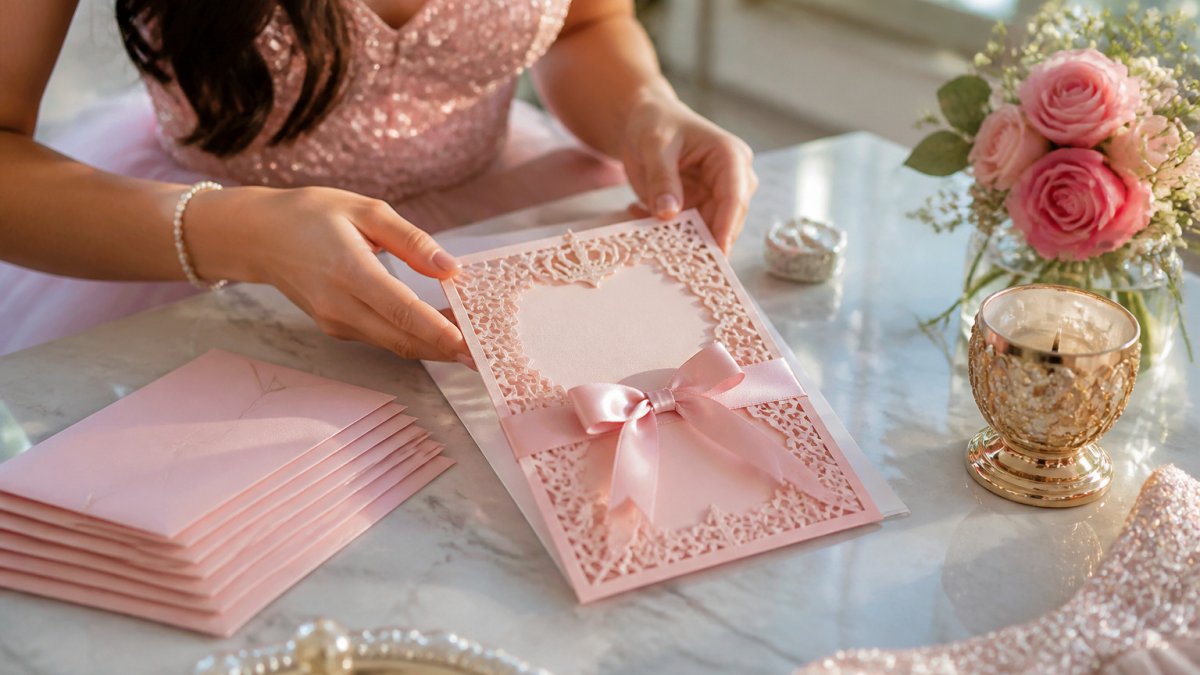
Quinceañera invitation wording should match your event’s formality: short and playful for relaxed parties, or a formal request with a faith-based blessing for ceremonies. Choose the style first, then include the honoree’s name, date, time, location, and RSVP details. Send formal invitations about 6 to 8 weeks before the event.
- Short, modern wording suits informal guest lists and a playful tone.
- Formal invitations often open with a request rather than an announcement.
- For bilingual cards, keep English and Spanish versions parallel in meaning and tone.
- Send formal invitations about 6 to 8 weeks before the event.
- Set the RSVP deadline about 2 to 3 weeks before the event.
Table of Contents
- Quinceañera Invitation Wording Examples by Style
- Bilingual English and Spanish Wording Options
- How to List the Quinceañera, Parents, Padrinos, and Court
- Formal Attire Wording for Quinceañera Invitations
- Quinceañera Invitation Gift Wording and Gift Requests
- When to Send Quinceañera Invitations and Track RSVPs
- Booking Your Quinceañera Venue Before You Send Invitations
- Frequently Asked Questions
Planning a quinceañera means many small decisions add up fast, and choosing your quinceañera invitation wording is one of the first places families feel the pressure. The wording sets the tone for the whole celebration, and the etiquette behind it shapes how guests read your event. The invitation is often where good planning starts. Here is how to choose wording, list the right people, and get your invitations out on time.
Quinceañera Invitation Wording Examples by Style
The right wording depends on how formal your event will be. A short, modern line works well for a relaxed celebration, while a traditional invitation fits a formal ceremony with a full court.
Short and Modern Wording
Short invitations are easy to read and easy to send by text or email. They work best when your guest list is informal and the tone is playful.
- “Join us as Sofia celebrates her quinceañera.”
- “Come dance, eat, and celebrate with us on her 15th birthday.”
- “Please save the date for Valentina’s quinceañera celebration.”
Keep the core details close at hand: the honoree’s name, the date, the time, and the location.
Formal and Religious Wording
Formal invitations usually open with a request rather than an announcement. Many families include a faith-based quote or blessing, especially when the celebration begins with a Mass.
- “Together with their families, Mr. and Mrs. Rivera request the honor of your presence at the quinceañera of their daughter, Isabella.”
- “With grateful hearts, we invite you to witness the celebration of Ana’s fifteenth year.”
Religious wording is a personal choice. Ask your parish or family elders which blessing or verse they would like included.
Bilingual English and Spanish Wording Options
Bilingual invitations are common for quinceañeras, but most guides stop at one translated line. The real work is keeping both versions parallel in meaning, tone, and layout so neither language reads like an afterthought. Below are copy-ready templates you can adapt, followed by the consistency rules that keep them clean. Maintaining this level of visual and linguistic harmony is essential for those who choose to craft DIY wedding invitations at home.
Parallel Templates You Can Copy
Use the same structure in both languages: host line, honoree, event type, date/time, venue, dress code, and RSVP. Match line for line rather than translating sentence by sentence.
Formal, faith-based (English / Spanish)
- English: “With grateful hearts, Mr. and Mrs. Rivera request the honor of your presence at the quinceañera of their daughter, Isabella Marie, on Saturday, June 14, 2026, at 5:00 p.m. at St. Gabriel Catholic Church, followed by a reception at The Garden Room.”
- Spanish: “Con corazones agradecidos, el Sr. y la Sra. Rivera solicitan el honor de su presencia en los quince años de su hija, Isabella Marie, el sábado 14 de junio de 2026 a las 5:00 p.m. en la Iglesia Católica San Gabriel, seguido de una recepción en The Garden Room.”
Short and modern (English / Spanish)
- English: “Join us as Sofia turns fifteen. Dinner, dancing, and a night to remember. Saturday, August 22, 2026, 7:00 p.m. at The Loft on Main. Cocktail attire. RSVP by August 8.”
- Spanish: “Acompáñanos a celebrar los quince años de Sofía. Cena, baile y una noche inolvidable. Sábado 22 de agosto de 2026, 7:00 p.m. en The Loft on Main. Cóctel. Confirmar antes del 8 de agosto.”
Ceremony and reception split (English / Spanish)
- English: “Mass at 4:00 p.m. at Holy Family Church. Reception to follow at 6:00 p.m. at The Grand Hall. Formal attire requested. Please RSVP by May 30.”
- Spanish: “Misa a las 4:00 p.m. en la Iglesia Sagrada Familia. Recepción a las 6:00 p.m. en The Grand Hall. Se solicita vestimenta formal. Favor de confirmar antes del 30 de mayo.”
Consistency Rules That Prevent Embarrassing Errors
- Match the register, not just the words. If the English is formal (“request the honor of your presence”), the Spanish should be formal too (“solicitan el honor de su presencia”), not a casual “te invitamos.”
- Keep names identical in both versions. Do not anglicize or translate given names. Accents belong on the Spanish side and should appear on the honoree’s name wherever it is printed.
- Translate titles consistently. “Mr. and Mrs.” maps to “Sr. y Sra.”; “padrinos” stays “padrinos” rather than becoming “sponsors” unless you define it.
Have a native speaker read both versions aloud before printing. Parallel text often looks correct on screen but reveals mismatched tone or missing accents when spoken.
Layout Options for Two Languages
- Side-by-side columns: English on the left, Spanish on the right. Best for formal cards with enough width.
- Stacked blocks: English block first, Spanish block below a thin divider. Works well for smaller cards and digital invitations.
- Front/back split: English on the front, Spanish on the back. Common for bilingual formal invitations and keeps each side uncluttered.
Whichever layout you choose, keep the visual hierarchy identical: same font sizes, same spacing, same emphasis on the honoree’s name. A bilingual invitation should look like one design, not two cards glued together.
How to List the Quinceañera, Parents, Padrinos, and Court
Listing the right people is one of the most common etiquette questions. The order usually follows tradition, but you can adjust it to fit your family.
Here is a typical order:
- The honoree’s name, first
- Her parents
- Padrinos, if you include them
Common practices include:
- Use full names on formal invitations.
- Mention padrinos by role, such as “padrinos of honor,” so guests know who is who.
- Decide early whether to list the court by name or simply say “and her court of honor.”
Formal Attire Wording for Quinceañera Invitations
If you want guests to dress up, say so on the invitation. A short dress code line sets expectations without sounding stiff.
- “Formal attire requested.”
- “Cocktail attire suggested.”
- “Black tie optional.”
Place the dress code near the event details so guests see it before they reply.
Quinceañera Invitation Gift Wording and Gift Requests
Gift wording is where etiquette gets delicate. Say too much and the invitation reads like a bill; say too little and guests call the family to ask what to bring. The goal is a short, warm line that answers the question without making gifts the focus. Below are copy-ready options for the common situations, plus tactful language for the guest-list questions that usually travel with gift wording.
Gift Lines by Situation
No gifts requested
- “Your presence is the greatest gift. Please join us to celebrate.”
- “No gifts, please, just bring your dancing shoes and your best wishes.”
Gifts welcome but unspecified
- “If you wish to honor Sofia with a gift, a card is always appreciated.”
- “Gifts are welcome but never expected. Your company is what matters most.”
Registry or fund mention
- “If you would like to contribute to Sofia’s future, a contribution to her education fund is deeply appreciated. Details available upon request.”
- “Sofia is registered at [store name]. Registry information is available on our event page.”
Cash or monetary gifts (handle with care)
- “For those who have asked, a monetary gift toward Sofia’s first year of college would be gratefully received.”
Avoid printing registry URLs or account numbers directly on a formal invitation. Put them on an insert card, an event website, or share them only when guests ask. This keeps the invitation focused on the celebration and avoids the appearance of solicitation.
Etiquette for Adults-Only, Plus-Ones, and Limited Guest Lists
These are the questions guests ask most often, and the ones families most often fumble. Address them on the invitation or a details card so no one has to guess.
Adults-only celebration
- “We love your little ones, but this is an adults-only celebration. Thank you for understanding.”
- “Please note: this is a 21-and-over event.”
Plus-ones
- “We are only able to accommodate guests named on the invitation.”
- “Due to venue capacity, we cannot accommodate additional guests. Thank you for understanding.”
Limited guest list
- “Seating is limited, and we are unable to accommodate guests beyond those listed. We appreciate your understanding.”
Dietary needs
- “Please let us know of any dietary restrictions by [RSVP date] so we can plan accordingly.”
Put sensitive guest-list language on a separate details card or the event website rather than the main invitation. It keeps the formal card elegant and gives you room to explain without crowding the design.
Attire and Gift Wording Together
Attire and gift lines often sit near each other on the card, so keep them short and parallel in tone. A formal card might read: “Formal attire requested. Your presence is the greatest gift.” A relaxed card might read: “Cocktail attire.
For families balancing gift expectations against overall costs, planning a quinceañera on a budget covers where the money typically goes and how to plan without overextending.
When to Send Quinceañera Invitations and Track RSVPs
A clear timeline keeps your guest count accurate and your planning on track.
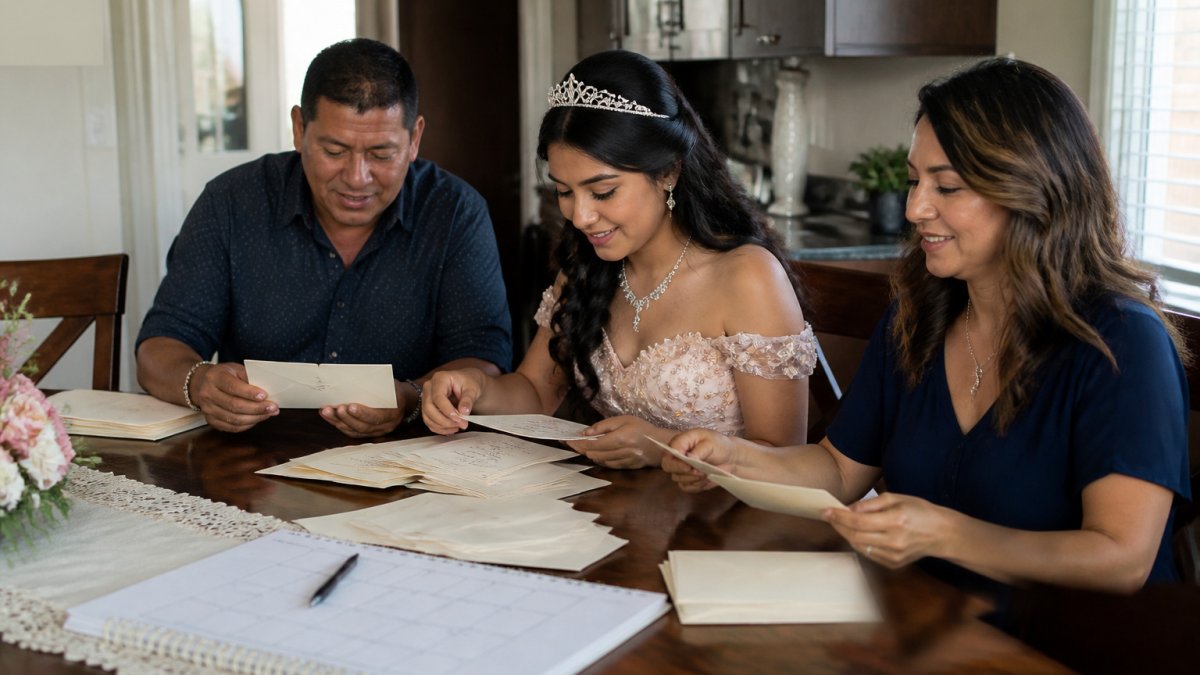
- Send formal invitations about 6 to 8 weeks before the event. This gives guests time to plan.
- Set an RSVP deadline about 2 to 3 weeks before the event. This lets you finalize catering and seating.
- Follow up personally with guests who have not replied. A quick text or call is often enough.
Track responses in one place, such as a spreadsheet or a simple list. Note dietary needs and plus-ones as you go.
A clear timeline keeps your guest count accurate and your planning on track. The article’s key timing points are:
| Step | What to do | Time |
|---|---|---|
| Send formal invitations | Mail formal invitations | About 6 to 8 weeks before the event |
| Set RSVP deadline | Finalize catering and seating | About 2 to 3 weeks before the event |
| Follow up | Contact guests who have not replied | Personally, by text or call |
| Track responses | Record replies, dietary needs and plus-ones | As responses arrive |
Booking Your Quinceañera Venue Before You Send Invitations
Confirm your venue before you mail a single invitation. Your date, time, and address go on every card, and you do not want to change them later.
For a large celebration, consider how many guests the space holds. M Lounge offers a seated capacity of 80 guests and a cocktail capacity of 100 guests, along with luxurious venue draping, professional lounge furniture, and mesmerizing up-lights.
Frequently Asked Questions
When should quinceañera invitations be sent out?
Most hosts mail quinceañera invitations about six to eight weeks before the celebration, which gives guests enough time to arrange travel, attire, and childcare. Invitations for a destination celebration or a date during a holiday season may need to go out earlier, closer to ten or twelve weeks ahead. Include an RSVP deadline roughly two to three weeks before the event so the venue and caterer can finalize headcounts. If you are working with M Lounge, confirm your guest count with the venue team before printing, because the seated capacity of 80 and cocktail capacity of 100 shape how many invitations you can send.
What are some examples of quinceañera invitation sentences?
A common English example reads: “Together with their parents, Maria Elena Rodriguez requests the honor of your presence at her Quinceañera, celebrating her fifteenth birthday.” A shorter modern option is: “Maria is turning fifteen. Join us for dinner, dancing, and a night to remember.” Spanish versions often begin with “Con mucho amor y alegría, sus padres la invitan a celebrar sus XV años.” Choose a tone that matches the rest of your design, and keep the wording consistent across English and Spanish cards when you use a bilingual invitation.
How do you politely request formal attire on a quinceañera invitation?
Place a short dress-code line near the event details rather than in the main wording. Phrases such as “Formal attire requested” or “Black tie optional” communicate expectations clearly without sounding demanding. For a themed or cultural event, you can write “Dress code: cocktail attire” or “Traje formal requerido” for a Spanish-language card. Avoid long explanations, because guests generally look for the dress code in one line. If the event is held at a venue with professional lighting and lounge furniture, a brief note about formal dress helps guests match the setting.
How should you word a gift request on a quinceañera invitation?
Keep gift requests discreet and place them on a separate insert or on a registry card rather than the main invitation. A gentle example reads: “Your presence is the greatest gift. For those who wish to give, a card box will be available at the reception.” Avoid writing a specific dollar amount or direct demand. If you are collecting monetary gifts for a padrino or sponsor tradition, explain the custom in a single sentence and include a contact name for questions.