



Last Updated: November 7, 2026
Quick Summary
Pipe and drape works creatively as a ceremony backdrop, a room divider between dining and dancing, a concealment screen for prep areas and storage, a VIP lounge wrap, and a photo backdrop. The same freestanding system can be reused and restyled across one event, changing a plain hall into several distinct spaces.
- Build a ceremony backdrop as a three-sided frame with an ivory or champagne back panel and open sides.
- Plan one upright per panel joint plus one at each end, with a weighted base under every upright.
- Layer an opaque base, a sheer voile, and a textured accent panel to create visual depth.
- Place uplights at the base of each upright and route cables behind the fabric, never across walkways.
- Keep walkways at least 1.5 metres wide and obtain written fire-retardant documentation for all fabric.
Table of Contents
- Why Pipe and Drape Belongs in Your Event Design
- Pipe and Drape Ideas for Weddings
- Pipe and Drape Room Divider Setups for Every Venue
- Choosing Pipe and Drape Fabric for Depth and Texture
- Pipe and Drape Lighting That Transforms the Room
- Concealing Clutter and Dividing Zones With Drape
- Planning and Safety Checks Before Setup
- Reserve Your Date at M Lounge
- Frequently Asked Questions
Why Pipe and Drape Belongs in Your Event Design
Pipe and drape is a temporary fabric system built from adjustable metal uprights, weighted bases, and horizontal crossbars, and it remains the most flexible tool in event design because it can change a room’s shape in an afternoon.
The appeal is simple. Fabric softens hard architecture, hides what you do not want seen, and gives you a place to hang light.
Below, we break down the creative ways to use pipe and drape for events, from wedding altars to room dividers, plus the fabric, lighting, and safety decisions that separate a polished setup from a wobbly one. The Event Safety Alliance guidance on temporary structures is a useful starting point for stability questions before you book anything.
Pipe and Drape Ideas for Weddings
Weddings are where pipe and drape earns its keep. Couples planning their styling around modern wedding decor trends for 2026 often find drape is the fastest way to get that soft, layered look without permanent construction.
Ceremony Backdrops and Altar Settings
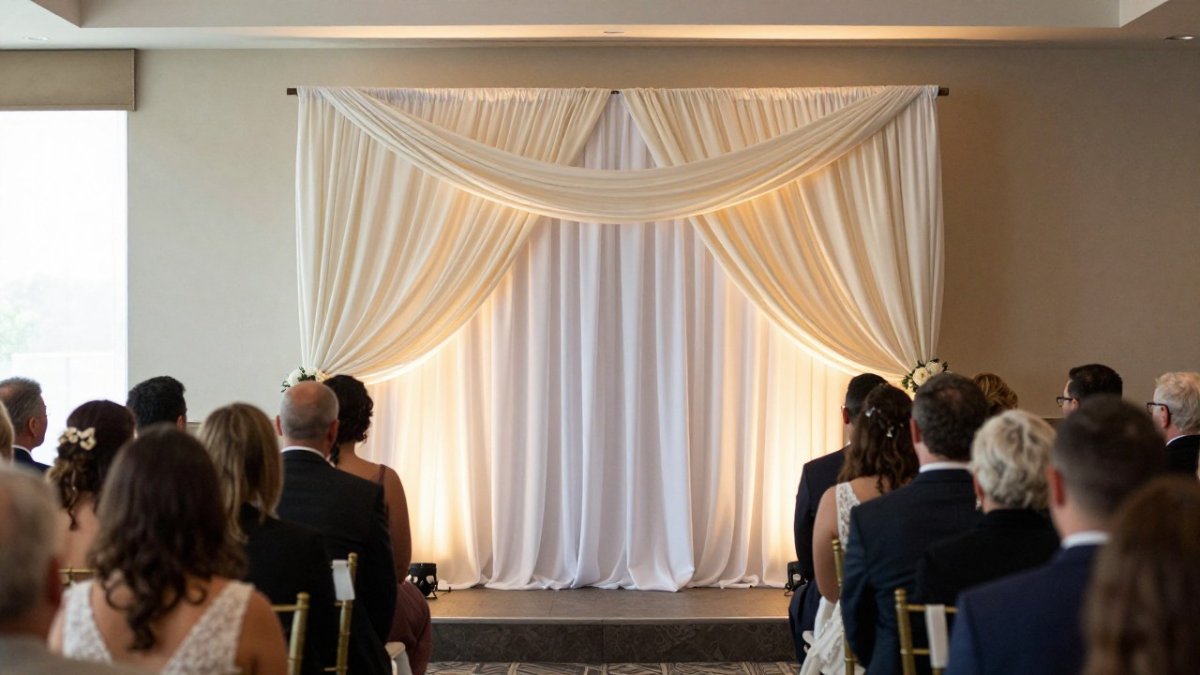
A ceremony backdrop is the single most photographed square metre of a wedding. Build it as a three-sided frame, drape the back panel in an ivory or champagne fabric, and leave the sides open so the room still feels airy.
Watch out: fabric that pools more than a few centimetres on the floor becomes a trip hazard for a bride in heels and a long train. Ask for a hemmed drop, or tape the hem line before the aisle walk-through.
Reception Styling and Photo Areas
The same frame does a second job after the ceremony. Rotate it ninety degrees, swap the floral for a neon sign or a greenery hoop, and you have a photo area guests will queue for. Sheer fabric over a solid panel gives you a soft glow behind the group shots.
Pipe and Drape Room Divider Setups for Every Venue
A pipe and drape room divider splits one large space into zones without building a wall, and it is the setup most often botched because planners treat it as decoration rather than structure. If you are working with a big hall and a small budget, these affordable ways to decorate a large event space pair well with a simple divider plan.
For corporate gatherings, a divider behind the registration table creates a private check-in area. For weddings, it shields the gift table from the dance floor. The key is to leave a clear walking path, ideally around a metre and a half wide, at each end of the run.
Layout Math That Keeps a Divider Standing
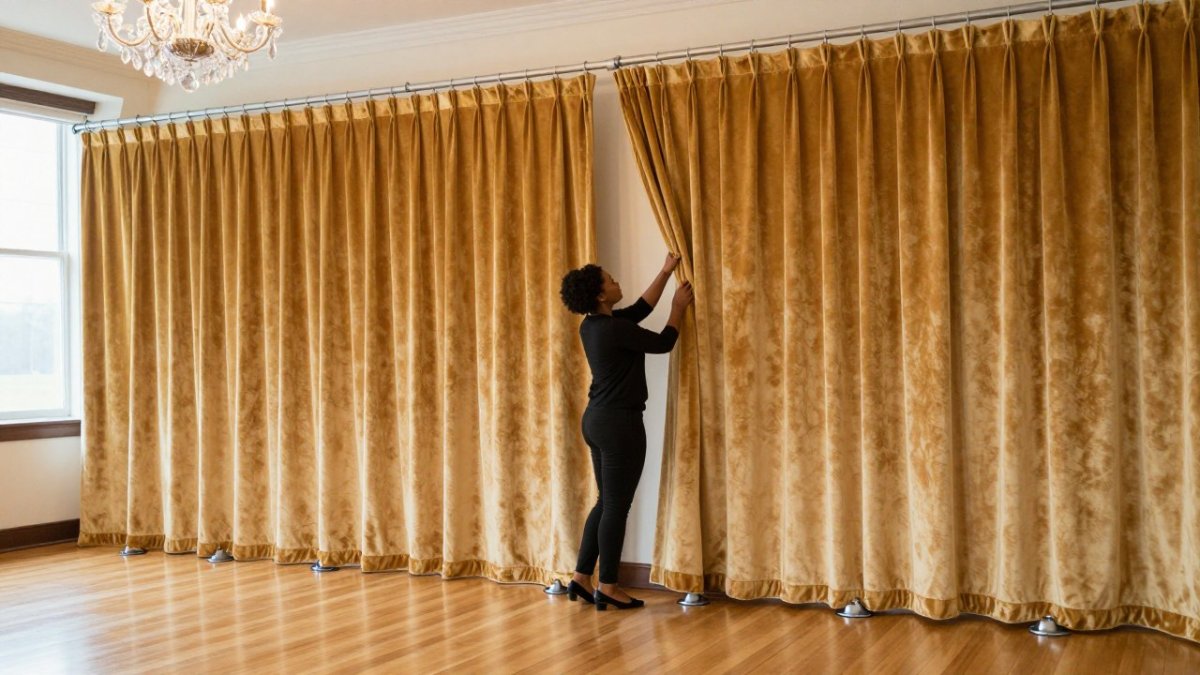
Most rental systems use uprights that adjust roughly between 7 and 16 feet, with crossbars sized to the panel width. A common panel width is 8 to 10 feet, and uprights are typically spaced so each panel hangs taut rather than sagging. As a working rule, plan one upright per panel joint plus one at each end, and place a weighted base under every upright, not just the ends. A 24-foot run with 8-foot panels needs four uprights and three panels, with four bases.
Base type matters more than most planners expect. A flat steel base slides under carpet and looks clean but offers less tip resistance than a stackable weight base, which is heavier and more stable but creates a visible foot. On a hard floor, a base with a rubber pad grips better than bare metal.
Straight, L-Shape, and U-Shape Runs
- Straight run: the simplest and most stable. Best for splitting a rectangular ballroom into ceremony and reception halves, or separating a buffet line from seating.
- L-shape: two runs meeting at a corner upright. Use it to tuck a lounge into a corner without closing it off. The corner upright carries load from both directions, so give it the heaviest base.
- U-shape: three sides of a box, open on the fourth. This is the VIP-lounge and photo-area workhorse. Leave the open side facing the room’s natural traffic flow so guests can drift in.
Watch out: a divider placed across a fire exit or an accessible route is a code problem, not a design choice. Keep exits, extinguisher cabinets, and accessible paths clear, and confirm placement with the venue before you set bases.
Hiding the Hardware
A divider looks rented when the bases and uprights are visible. Wrap the base of each upright with a fabric skirt or a low floral arrangement, and orient the crossbar seam toward the back of the run. If the divider is freestanding in the middle of a room, plan for guests to see both sides, which means a double-sided fabric treatment or a solid opaque panel rather than a single sheer layer.
Choosing Pipe and Drape Fabric for Depth and Texture
Fabric choice does more for the final look than the hardware does. Once fabric weights and textures work together, the same attention to color and balance can help style a balloon garland that complements the drape.
A practical approach:
- Base layer: an opaque polyester in ivory, white, or black to block sightlines.
- Middle layer: a sheer voile for softness and light diffusion.
- Accent layer: a textured or colored panel, swagged or tied back, to create a focal point.
- Finishing: tie-backs shaped into swags, plus floral accents at the anchor points.
Layering three fabrics of different opacities gives visual depth that a single flat panel cannot match. It also hides wrinkles, which matters because most rental fabric arrives folded.
Pipe and Drape Lighting That Transforms the Room
Lighting is what turns fabric from a wall into an atmosphere. For venue-wide inspiration, modern wedding venue lighting ideas for 2026 show how drape and light work as a pair.
Keep cables taped and routed behind the fabric, never across a walkway. For a full walkthrough of the design process, see this guide to designing luxury wedding lighting step by step.
Concealing Clutter and Dividing Zones With Drape
Some of the most useful pipe and drape setups are the ones guests never notice. Drape screens caterer prep tables, band equipment cases, extra chairs, and storage boxes. It hides construction or unfinished walls during a venue renovation.
The same principle builds a lounge or VIP area. Wrap three sides of a seating group in drape, leave the fourth open, and the space feels intentional and private.
| Setup | Best For | Key Consideration |
|---|---|---|
| Ceremony backdrop | Weddings, vow renewals | Hemmed drop, trip-free aisle |
| Room divider | Splitting dining and dancing | Clear paths at both ends |
| Concealment screen | Hiding prep or storage | Full opacity base fabric |
| VIP lounge wrap | Private seating areas | Leave one side open |
| Photo backdrop | Guest photos, step-and-repeat | Sheer layer plus pin spot |
Planning and Safety Checks Before Setup
A drape plan fails on logistics far more often than on design, and the failures cluster around three things: measurement, stability, and code compliance. Before you commit, confirm ceiling height, floor surface, and power access. Weighted bases need a level floor; carpet is fine, but a sloping outdoor surface is not. Keep every run anchored and never rely on friction alone.
How to Measure a Space for Drape
Measure the run length along the floor from end to end, then measure ceiling height at the highest and lowest points, because sloped or beamed ceilings change how tall the uprights can go. Add the panel width to your run length to account for overlap at each joint, since panels are hung with a few inches of overlap so no gap shows.
Stability: Bases, Crossbars, and Wind
Stability comes from weight low and connection high. Every upright needs a base, and the heavier the base relative to the panel, the less the run sways. Crossbars should be fully seated in their upright fittings; a crossbar that is not locked in is the most common cause of a collapse. Outdoors, even a light breeze turns a drape panel into a sail, so outdoor runs need additional weight, guy lines, or staking, and many rental companies will not guarantee an unanchored outdoor setup.
Fire Code and Fabric Compliance
Most venues require drapery and fabric to meet a fire-resistance standard, and the practical proof is a certificate or label from the fabric supplier stating the material is flame-retardant or has been treated. Ask for that documentation in writing before the event, not on setup day. The Event Safety Alliance guidance on temporary structures is a useful starting point for stability and placement questions.
Pre-Setup Checklist
- Measure run length and ceiling height at high and low points
- Count uprights, crossbars, and bases, including one base per upright
- Confirm the floor is level and clear of cables
- Check power outlets for up-lights near each upright
- Plan walkways at least 1.5 metres wide and keep exits clear
- Obtain written fire-retardant documentation for all fabric
- Agree setup and teardown windows with the venue
- Walk the finished layout before guests arrive
Watch out: fabric that pools on the floor is a trip hazard and a code concern near exits; ask for a hemmed drop or tape the hem line before the walk-through. Ask your supplier for fire-rated fabric and written confirmation of it, because it is far easier to arrange in advance than on the day.
Reserve Your Date at M Lounge
M Lounge offers luxurious venue draping, up-lights, and professional lounge furniture. Our seated capacity of 80 guests and cocktail capacity of 100 suit a range of events.
If you are ready to see how drape and light can change a room, make a reservation and check availability for your date.
Frequently Asked Questions
What fabric works best for pipe and drape backdrops?
The right pipe and drape fabric depends on the look you want. Polyester and voile offer a smooth, opaque finish that photographs well and holds color under lighting. Sheer fabrics like chiffon create a soft, romantic layer that works well over a solid backdrop. For a luxurious feel, layering a sheer over an opaque fabric adds visual depth and texture. Ask your venue or rental supplier which fabrics they stock, since availability and pricing depend on quantity and delivery dates.
Can you add lighting to pipe and drape?
Yes, and it changes the entire mood of the room. Up-lights placed at the base of a drape wall wash the fabric in color, while pin spots can highlight a focal point like a cake table or stage. Warm white lighting keeps a backdrop elegant, while colored pipe and drape lighting suits themed parties and corporate events. Check that your venue allows fixture placement and that cords are taped down or routed safely away from guest walkways.
How can pipe and drape divide an event space?
A pipe and drape room divider creates a temporary partition without permanent construction. Planners use it to separate a cocktail hour from a dining room, screen a vendor prep area, or carve out a VIP lounge within a larger hall. Set the uprights on stable bases, keep the fabric taut, and leave clear walkways so guests and staff can move safely. This approach works especially well in venues with a single open floor plan.
How do you make a pipe-and-drape backdrop look more elegant?
Start with quality fabric in a color that matches your palette, then layer a sheer over an opaque panel for depth. Add swagging or tie-backs to shape the drape rather than leaving it flat. A central focal point such as a floral arrangement or monogram sign draws the eye. Finish with warm up-lighting behind or beside the fabric. Venues with built-in draping and professional lighting can help handle these details before your guests arrive.