


Table of Contents
- How Modern Wedding Venue Lighting Transforms Your Celebration
- Modern Wedding Decor Trends for 2026
- Ceremony Aisle and Backdrop Lighting
- Indoor Wedding Lighting Design Tips for Impact
- Wedding Venue Draping and Lighting Combinations
- Reception Table and Centerpiece Lighting
- Dance Floor and Stage Lighting Effects
- Sustainable Lighting Solutions for Modern Weddings
- Frequently Asked Questions
Last Updated: September 18, 2026
How Modern Wedding Venue Lighting Transforms Your Celebration
The difference between a forgettable reception and an unforgettable one often comes down to one thing: lighting. When done right, modern wedding venue lighting ideas don’t just illuminate a space, they create an atmosphere that makes your guests feel transported. At M Lounge, we understand how the right lighting design transforms venues into extraordinary experiences.
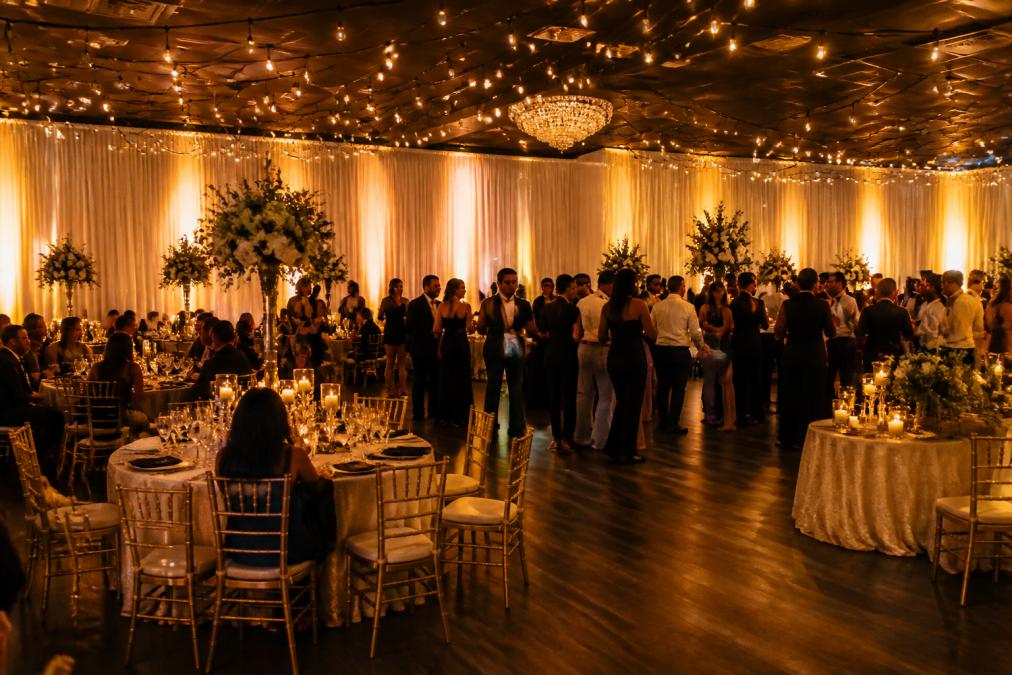
The weddings you remember most vividly are defined by ambiance. Warm uplighting against draped walls, string lights overhead, and candlelit tables create a mood that photographs can’t quite capture and that guests remember for years.
The challenge is translating inspiration into a plan that works within your venue, budget, and timeline. This guide covers modern approaches to wedding venue lighting that deliver real impact.
Modern Wedding Decor Trends for 2026
The 2026 trend moves away from theatrical effects toward layered, sophisticated lighting that feels intentional.
Warm color temperatures dominate, with adjustable fixtures shifting from soft amber during dinner to brighter tones during toasts, maintaining intimacy while ensuring visibility.
LED technology is now standard, using 75% less energy than incandescent fixtures. Couples increasingly prioritize eco-friendly options.
Modern weddings layer different lighting elements, string lights, uplighting, candlelight, and hanging fixtures, to create visual depth and a curated feel.
Ceremony Aisle and Backdrop Lighting
Your ceremony backdrop sets the tone and deserves the most careful lighting attention.
Combine ambient backdrop lighting with accent lighting. Position uplighting behind or below your backdrop, floral installation, draped wall, or architectural feature, to create a glowing effect without distraction.
Pin spotting uses small, focused lights to illuminate specific elements, a focal flower arrangement, arch, or drapery, while leaving the rest in softer focus.
For the aisle, use subtle ground-level lighting to define the space without competing with the backdrop. Battery-operated LED uplights placed low along the perimeter create definition without harsh shadows.
Use warm white light (2700K) for a romantic, timeless feel. Cool white (5000K+) reads as clinical unless you’re pursuing a modern aesthetic.
Indoor Wedding Lighting Design Tips for Impact
Indoor lighting creates the entire atmosphere and is foundational to your design. Execution varies by venue type, ceiling height, wall color, and electrical infrastructure.
Lighting Strategy by Venue Type
Historic Buildings and Ballrooms
Position uplighting low on walls to illuminate architectural details without competing with the ceiling. Use warm white (2700K) to enhance period features. Avoid mounting fixtures to historic elements; use temporary floor-based or table-mounted uplights instead. Supplement existing chandeliers with subtle perimeter accent lighting.
Industrial Lofts and Warehouses
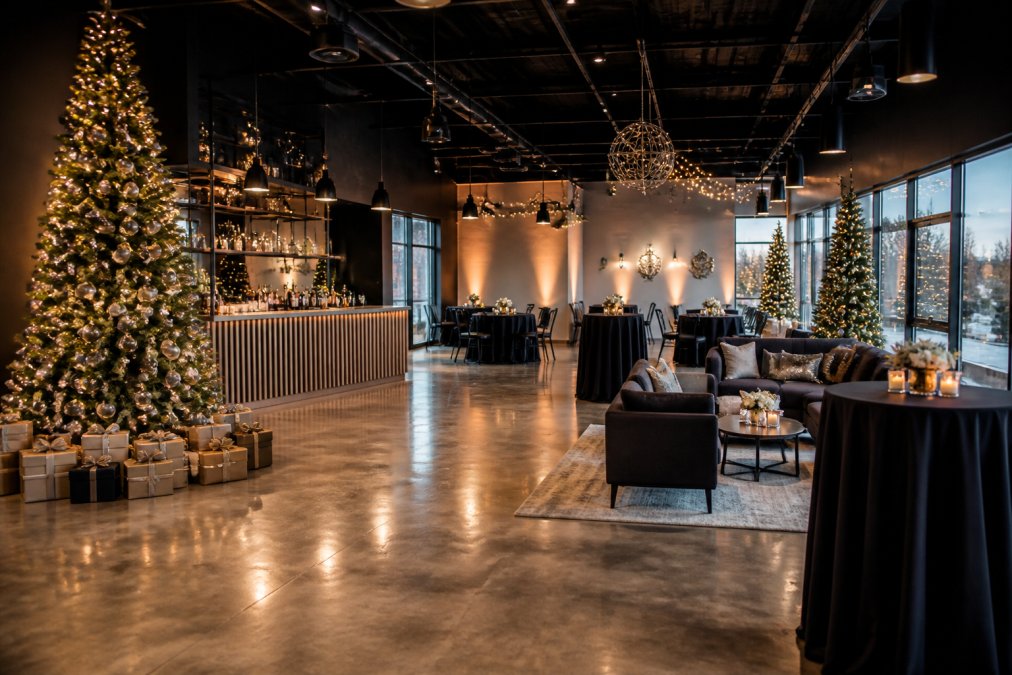
Use warm amber uplighting (2200K-2700K) against brick for depth. For concrete, use 3000K to prevent washed-out appearance. Suspend string lights at varying heights and position uplights at low angles to graze surfaces and emphasize texture.
Ballrooms with Low or Dropped Ceilings
For low ceilings, avoid heavy overhead fixtures. Use wall-based uplighting and table-level accent lighting. Mount thin-profile LED panels high on walls to wash the ceiling with soft light, creating height illusion. Stick with warm white or pale gold.
Uplighting and Color Washes
Uplighting is the workhorse of modern venue lighting, washing walls and architectural features with color and light when executed thoughtfully.
Uplighting works best when it complements existing architecture. Warm amber enhances exposed brick; soft white or pale gold creates an elegant glow on neutral walls.
Space uplights 6-8 feet apart along walls. Test placement during a site visit to confirm coverage.
Color washes should be subtle: soft blush for romance, pale gold for warmth, or soft blue for modern feel. Limit to accent walls or specific features rather than flooding the entire room.
String Lights and Fairy Light Installations
Professional string light and fairy light installations use proper voltage, appropriate spacing, and quality fixtures for even light distribution.
Anchor string lights to structural points rather than stringing loosely. Run parallel lines at consistent heights (8-10 feet) spaced 4-6 feet apart to create an intentional grid pattern with even ambient light.
Drape fairy lights around the room perimeter at eye level (6-7 feet) to create an intimate frame, then add overhead string lights for ambient coverage.
Select warm white string lights (2700K) for an inviting glow unless pursuing a minimalist or industrial aesthetic.
Chandeliers and Hanging Fixtures
Statement chandeliers serve as both lighting and decor. Ensure they provide usable light while maintaining aesthetic impact. If your chandelier is purely decorative, plan for 60-70% of ambient light from uplighting or wall-mounted fixtures.
For multiple hanging fixtures, ensure even spacing and consistent heights. Use dimming controls to balance brightness across fixtures.
Downward-facing chandeliers create pools of light below, leaving surrounding areas dim. If your venue has downward-facing chandeliers, supplementary wall uplighting is essential.
Wedding Venue Draping and Lighting Combinations
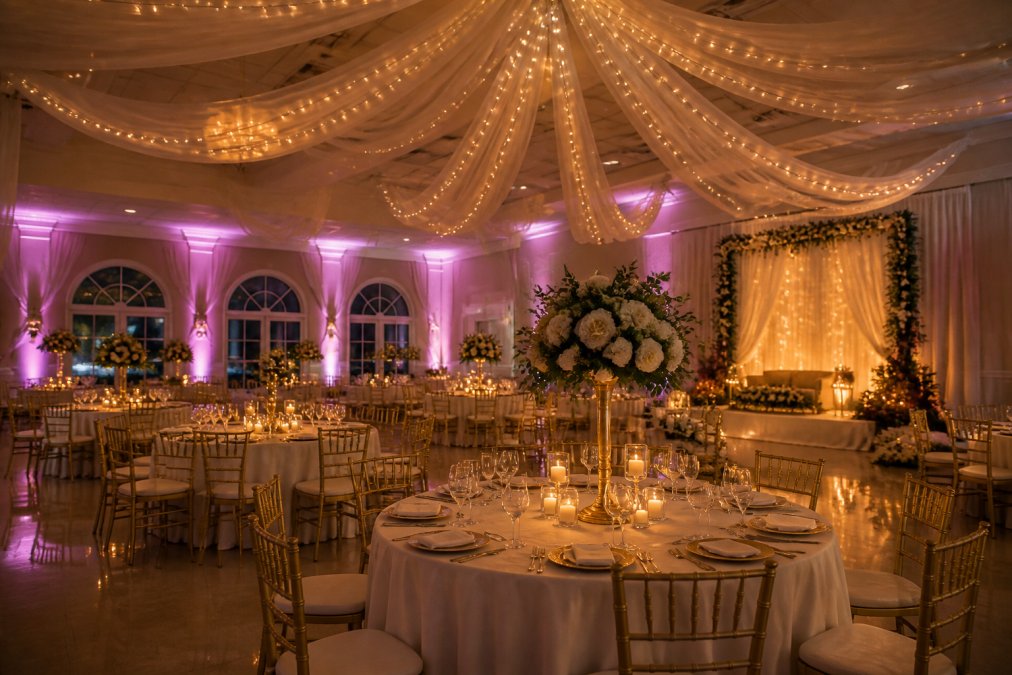
Draping transforms a blank venue into an elegant, intimate space. Uplighting positioned behind draped walls creates dimension and depth. White or cream draping reflects light and amplifies brightness, while darker fabrics absorb light and create a moodier effect. M Lounge offers luxurious venue draping combined with professional lighting, integrating dedicated lighting systems seamlessly with custom draping installations. Layering drapery textures, smooth silk, textured linen, or velvet, creates visual richness when lit professionally. Extending this atmospheric focus to the surrounding grounds allows for the application of sophisticated outdoor lighting techniques that draw the natural silhouettes of trees into the overall design scheme.
Reception Table and Centerpiece Lighting
Dining table lighting directly affects guest experience and wedding photographs. The goal is warm, flattering light that allows guests to see their food and each other while providing conditions for sharp, color-accurate images.
Lighting for Photography and Videography
Poor table lighting creates unflattering shadows, color casts, and forces photographers to use high ISO settings that introduce grain and noise.
Color Temperature and Skin Tone
The sweet spot for ambiance and photography is 2700K-3000K. If using candles as primary light, supplement with LED fixtures at 2700K to ensure consistent color temperature. Mixing candlelight with cool white overhead light creates competing color casts that are difficult to correct.
Light Direction and Shadow Control
Layer light sources: position uplighting on the dining area perimeter for a soft base glow, add candlelight at table level, and use subtle accent lighting on centerpieces. This three-layer approach softens shadows and creates dimension.
If your venue has recessed ceiling lights, ask your lighting designer to diffuse or dim them. If dimming isn’t possible, supplement with wall-based uplighting and table-level light.
Brightness Levels for Photography
Your photographer needs a minimum of 250-500 lux at table level. Candlelight alone provides 10-20 lux. A combination of candlelight, ambient uplighting, and accent lighting typically reaches 300-400 lux. Ask your lighting designer to measure lux levels during a site visit.
Candlelight and Ambient Layering
Candlelight is the gold standard for table ambiance, but candles alone don’t provide enough light for guests to see food or for photography. Layer candlelight with subtle uplighting: place a pillar or taper candle at each table center, then position LED uplights 3-4 feet away from the table perimeter, angled to wash the wall behind the table with soft light.
Verify your venue allows real candles and confirm fire safety protocols. Battery-operated LED candles are a practical alternative if real candles aren’t permitted.
Centerpiece and Accent Lighting
Use small, focused LED spotlights positioned 2-3 feet away from centerpieces, angled at 45 degrees. Match the color temperature of accent lighting to your ambient table lighting.
For tall centerpieces, position accent lights low and angle upward. For low centerpieces, position lights higher and angle downward to prevent light from shining in guests’ eyes.
Color Temperature Consistency Across the Venue
Match table lighting color temperature to the rest of your venue. Specify color temperature in Kelvin for every fixture and ask your rental company to confirm all fixtures are rated for the same temperature.
Dance Floor and Stage Lighting Effects
Dance floor lighting should match and amplify the venue’s energy. Combine wash lighting, accent lighting, and effects lighting. Gobo projections add sophistication when executed well. Use gradual color and intensity shifts rather than constant changes and strobing effects.
Stage lighting should provide clear visibility without harsh shadows. Use soft front-of-house lighting to ensure speakers are well-lit.
Sustainable Lighting Solutions for Modern Weddings
LED technology uses 75% less energy than incandescent bulbs and lasts significantly longer. Modern LED fixtures with warm color temperatures (2700K and below) create light indistinguishable from traditional incandescent light. Battery-operated LED fixtures eliminate the need for complex electrical infrastructure. Ask about LED options for every fixture.
Modern wedding venue lighting succeeds when it balances aesthetics with function, ambiance with visibility, and personal style with professional execution.
Frequently Asked Questions
What are the top wedding lighting trends for 2026?
The leading trends for 2026 emphasize warm color temperatures, sustainable LED fixtures, and layered lighting that combines uplighting, string lights, and ambient glow. Modern couples are moving away from harsh, single-source lighting toward multi-dimensional designs that set mood throughout the venue. Gobo projections, pin spotting on key elements, and dimmable fixtures that adapt throughout the evening are becoming standard for luxury celebrations.
How does professional lighting design enhance venue draping and wedding decor?
Strategic lighting transforms draping from static decoration into dynamic visual art. Uplighting behind draped walls creates silhouettes and depth, while accent lighting highlights texture and fabric quality. When combined with color washes that shift throughout the evening, draping becomes an active design element that reinforces your theme. Professional lighting design ensures drapery catches light at angles that flatter the fabric and create the opulent ambiance couples seek.
What’s the difference between ambient, accent, and task lighting for weddings?
Ambient lighting provides overall illumination and sets the mood, think uplighting and string lights that bathe the space in warm glow. Accent lighting highlights specific features like centerpieces, signage, or architectural details through pin spotting and wash lighting. Task lighting ensures guests can see food and navigate safely. A well-designed wedding uses all three: ambient for atmosphere, accent for visual interest, and task for function. This layered approach creates professional, polished results.
Can I use DIY lighting solutions, or should I rent professional equipment?
DIY battery-operated string lights and lanterns work for intimate outdoor celebrations, but professional rental delivers superior results for luxury weddings. Professional fixtures offer dimmable controls, precise color temperature management, and safety compliance that DIY solutions cannot match. Professional installation also prevents voltage issues, safety hazards, and the technical headaches of coordinating multiple light sources. For venues like M Lounge designed for opulent events, professional lighting rental ensures your aesthetic vision matches the sophistication of the space.