



Table of Contents
- Why Small Business Corporate Event Ideas Matter
- Team-Building Activities That Strengthen Employee Engagement
- Small Business Event Ideas That Drive Results
- Corporate Event Ideas for Small Budgets
- Small Business Team-Building Activities Worth Hosting
- Small Business Event Planning Checklist
- Making Your Small Business Corporate Event Memorable
- Frequently Asked Questions
Last Updated: October 16, 2026
Why Small Business Corporate Event Ideas Matter
Hosting a corporate event as a small business owner isn’t a luxury, it’s a strategic investment.
Small business corporate event ideas need to serve a real purpose. Whether you’re strengthening employee engagement, showing customer appreciation, or launching something new, the event should move the needle.
The difference between a forgettable event and a memorable one is intentionality. You don’t need a massive budget or sprawling venue, just activities that align with your business goals and feel authentic to your culture.
Team-Building Activities That Strengthen Employee Engagement
Team-building activities work best when they feel like a genuine break from routine, not an obligation, so pick activities without elaborate setup or extensive time away from work.
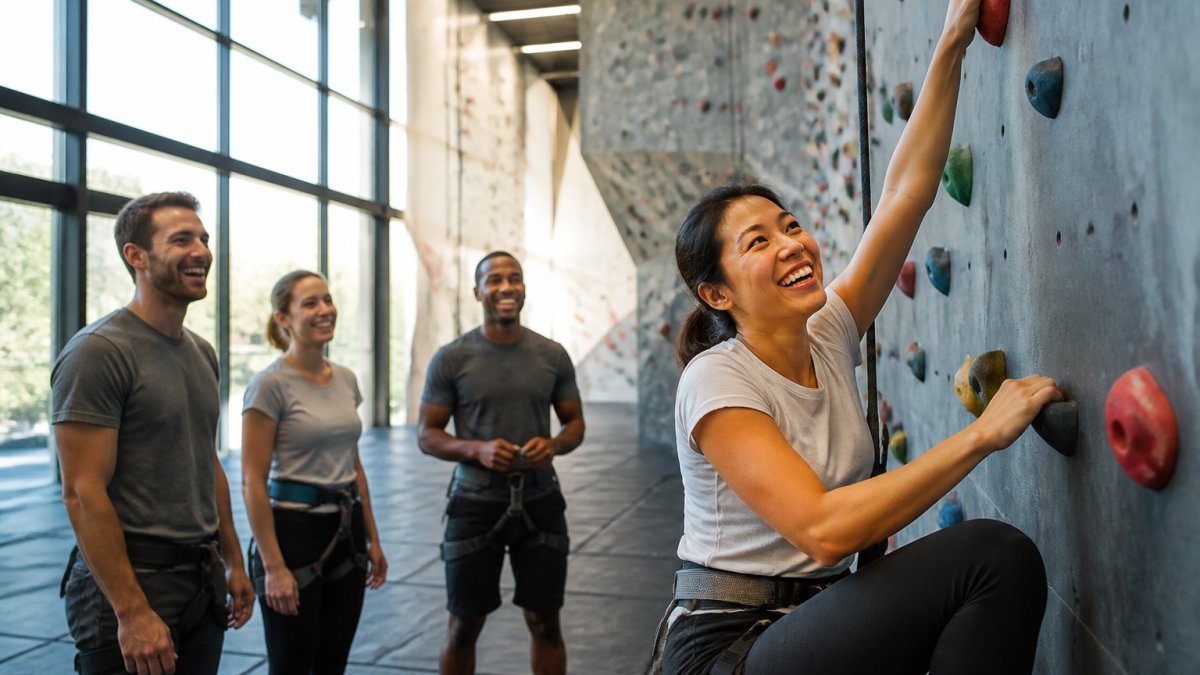
Indoor rock climbing or escape rooms create natural collaboration: teams must communicate, problem-solve, and trust each other while having fun.
Cooking classes or mixology workshops add a creative element.
The common mistake is choosing activities only certain personality types enjoy.
Pair physical activities with food and drinks. The informal socializing after the main event often matters more than the activity itself. That’s where real team connection happens.
Small Business Event Ideas That Drive Results
Not every corporate event needs to be about entertainment. The most effective gatherings tie directly to business outcomes, launching a product, recognizing achievements, or strengthening customer relationships. Here’s the same set of ideas mapped to four common small-business goals, with the small-team adaptation that makes each workable.
Goal 1: Employee morale and retention.
- Recognition ceremony. Publicly acknowledging achievement reinforces your company values and motivates others. Keep it genuine, vague praise falls flat. Recognize specific contributions and explain why they mattered. Small-business adaptation: you don’t need a stage. A 20-minute segment at the end of an all-hands, with a small gift and a written note, lands as well as a formal banquet and costs a fraction as much.
- Team outing with choice. Offer two or three activity options in the same time slot (a hike, a trivia night, a cooking class) so different personality types can opt in. Adaptation: choice raises attendance and satisfaction without raising cost.
Goal 2: Customer retention and appreciation.
- Exclusive happy hour or behind-the-scenes tour. Invite your best clients to a curated gathering, a happy hour, an operations tour, or a casual workshop where you share expertise, to show they matter beyond transactions. Adaptation: cap the guest list at what your team can genuinely host (often 15-25 people) and have the owner or a senior leader personally greet each guest; large competitors can’t match that personal touch.
- Client workshop. Teach something your customers actually need, a tax-season primer, a social media audit, a hiring clinic. Adaptation: one expert plus one host is enough staff; record it so remote clients can attend later.
Goal 3: Lead generation and partnerships.
- Casual mixer with structure. Host a mixer where employees invite contacts. Provide structure (a brief presentation, guided introductions) but leave room for organic conversation. Adaptation: assign each employee a target of two introductions, and collect business cards or scan badges at the door, the follow-up is where leads actually convert.
- Pop-up showcase or demo day. Invite prospects and local partners to see your product or service in action. Adaptation: pair each prospect with one team member for the evening so no guest stands alone.
Goal 4: Community visibility.
- Volunteer day with a public-facing component. A cleanup, food drive, or nonprofit partnership does double duty: your team bonds over shared purpose, and the community sees your business contributing. Adaptation: invite a local media contact or post a short recap; visibility is half the value.
- Sponsor or co-host a local event. Rather than building your own, partner with an existing community event. Adaptation: this is the lowest-staff option available, you contribute money or a small team presence rather than planning from scratch.
The small-business constraint checklist. Before committing to any idea above, run it through four questions:
- Staffing. Can you run it with the people you have? If it needs more than two dedicated staff, scale it down.
- Budget. Does the per-person cost fit your ceiling (see the budget section)? Build in a 10-15% contingency.
- Accessibility and inclusion. Ask about dietary needs, mobility access, and comfort levels ahead of time. Offer a hybrid or remote option where it makes sense.
- Measurement. Decide before the event how you’ll judge success: attendance rate, survey score, leads collected, or cost per attendee. Without a measure, you can’t tell a good event from an expensive one.
The best small business corporate event ideas tie back to a specific goal: strengthening team culture, celebrating wins, launching something new, or deepening customer relationships. Events without clear purpose feel like obligations rather than investments. Map the idea to the goal first, then adapt it to your headcount, budget, and staffing, that’s the sequence that separates a result from a party.
::: Fostering genuine connection often requires thoughtful corporate icebreaker ideas to ensure that the time spent together translates into lasting professional rapport.
Corporate Event Ideas for Small Budgets
Budget constraints are real for small businesses, but they shouldn’t stop you from hosting meaningful gatherings.
How to read these ranges. Figures assume a group of 10-30 people, a mid-size metro market, and a 2-3 hour event.
| Format | Typical per-person cost | Best for | Main trade-off |
|---|---|---|---|
| Group hike or park picnic | $15-$35 | Morale, low-stress bonding | Weather-dependent; needs a backup plan |
| Volunteering (food bank, cleanup) | $0-$25 | Purpose-driven culture, community visibility | Scheduling around nonprofit hours |
| Trivia night (in-house or at a bar) | $20-$45 | Mixed teams, cross-department mixing | Needs a host and prize budget |
| Cooking or mixology class | $60-$120 | Creative bonding, client entertaining | Per-person cost scales fast with headcount |
| Escape room or indoor climbing | $35-$75 | Problem-solving, trust-building | Group size caps; may need two sessions |
| Local performer or acoustic set | $300-$800 flat | Celebrations, customer appreciation | Flat cost is efficient only above ~15 guests |
| Expert-led workshop (financial, social media, wellness) | $25-$60 | Practical value, low production | Instructor availability and group rates vary |
| Pop-up vendor showcase | $10-$30 | Office perk, local partnership | Vendor coordination takes staff time |
Where the money actually goes. For most small-business events, food and drink run 40-60% of the total, the activity or venue 25-40%, and supplies, signage, and prizes the remainder.
Three formats that stretch a small budget furthest:
- Volunteering together. Community cleanups, food bank shifts, or local nonprofit support bond your team over shared purpose and are easy to organize. Many team members appreciate this more than another happy hour, and the cost is often near zero beyond transportation and a small donation.
- Outdoor adventures. A guided canoe tour, group hike, or park picnic costs a fraction of a formal dinner and naturally encourages conversation. People are more relaxed outdoors, and the informal setting reduces the “performance” aspect many employees feel at formal events. Budget for a rain date, a single-date outdoor plan with no fallback is the most common failure mode.
- Workshops and classes. Bring in a local expert to teach something relevant, financial planning, social media strategy, stress management, or communication skills. Your team gains practical knowledge, and the informal learning environment builds camaraderie. Many instructors offer group rates; ask for a flat group fee rather than per-head pricing once you’re above about 12 attendees.
Pop-up events or vendor showcases let employees discover local talent.
Avoid the common mistake of choosing free options that feel cheap. A poorly organized free event damages morale more than no event at all. Better to do one well-planned event annually than quarterly gatherings that feel like afterthoughts. Set a per-person ceiling before you book anything, and hold a 10-15% contingency for the surprises that always show up.
Small Business Team-Building Activities Worth Hosting
Certain team-building activities consistently deliver results because they’re flexible, inclusive, and enjoyable.
Trivia nights work across industries and skill levels, virtually or in person.
Live entertainment adds energy without requiring employee participation.
Wellness workshops address real employee needs. Yoga, meditation, nutrition seminars, or mental health talks show your team you care about their wellbeing.
Networking games create structure for socializing.
Small Business Event Planning Checklist
Successful small business corporate events require planning, but you don’t need to overcomplicate it. This checklist keeps you on track.
8-10 Weeks Before:
- Define your event goal (team building, customer appreciation, product launch, celebration)
- Set a realistic budget
- Identify your guest list and approximate headcount
- Choose a date that works for most attendees
6-8 Weeks Before:
- Book your venue or activity provider
- Create a basic agenda or timeline for the event
- Assign someone to handle logistics and communication
- Start promoting the event internally
4-6 Weeks Before:
- Send formal invitations with clear details (date, time, location, what to expect)
- Confirm headcount with the venue or activity provider
- Plan catering or refreshments if needed
- Create a simple run-of-show document (what happens when)
2-4 Weeks Before:
- Follow up on RSVPs
- Finalize any speaker, entertainer, or facilitator details
- Prepare any materials you’ll need (name tags, agendas, signage)
- Brief your team on their roles during the event
1 Week Before:
- Confirm final headcount with vendors
- Do a final walkthrough if it’s an in-person event
- Prepare contingency plans (bad weather, no-shows, timing issues)
- Send reminder communications to attendees
Day Of:
- Arrive early to set up
- Do a final equipment or setup check
- Welcome guests as they arrive
- Stay flexible, things rarely go exactly as planned
| Planning Phase | Key Tasks | Timeline |
|---|---|---|
| Define & Budget | Set goal, budget, guest list, date | 8-10 weeks before |
| Book & Promote | Secure venue, send invitations | 6-8 weeks before |
| Finalize Details | Confirm headcount, plan logistics | 4-6 weeks before |
| Prepare & Brief | Gather materials, brief team | 2-4 weeks before |
| Last Minute | Confirm vendors, prepare contingencies | 1 week before |
| Execute | Arrive early, welcome guests, stay flexible | Day of event |
Delegate tasks early. Don’t try to handle everything yourself. Assign someone to manage RSVPs, someone to coordinate catering, someone to handle setup. This spreads the workload and ensures nothing falls through the cracks.
Making Your Small Business Corporate Event Memorable
Focus on genuine connection rather than production value.
Personalization matters. If you know someone’s interests, reference them.
Accessibility and inclusion strengthen events for everyone. Offer both virtual and in-person options if possible.
Follow up after the event. Send a thank-you message highlighting what you appreciated about the gathering.
For small businesses looking to host corporate events with elegance and sophistication, M Lounge provides a luxurious setting that elevates any gathering. Whether you’re hosting a team celebration, customer appreciation event, or corporate retreat, our tailored event planning services ensure every detail reflects your vision. Learn more about hosting your small business corporate event and discover how our venue transforms your gathering into an unforgettable experience for your team and guests.
Small business corporate events don’t need massive budgets or complicated logistics to create impact.
Frequently Asked Questions
What types of corporate events work best for small businesses?
Small businesses benefit most from events that balance budget constraints with meaningful impact. Team-building activities, customer appreciation events, and networking gatherings deliver strong returns on investment. Workshops and wellness classes build employee morale without requiring large venues. The best choice depends on your primary goal: are you strengthening internal culture, celebrating client relationships, or recruiting talent? Align your event type to that specific business objective for maximum effectiveness.
How can a small business host a corporate event on a budget?
Focus on activities with low per-person costs but high engagement value. Outdoor adventures like hiking or canoe tours require minimal venue fees. Trivia nights and game competitions work in any space. Volunteer community cleanups and fundraisers build goodwill at minimal expense. Negotiate group rates with local instructors for wellness workshops or CPR training. Partner with local vendors to reduce catering costs. Consider hybrid or pop-up formats that eliminate expensive long-term venue rentals. Track attendance and engagement metrics to prove ROI for future event budgets.
What are good team-building activities for a small business?
Effective small business team-building activities include indoor rock climbing, outdoor adventure activities, trivia nights, and collaborative workshops. Games and competitions encourage friendly competition while building camaraderie. Volunteer community events create shared purpose beyond profit. Wellness workshops like yoga or CPR training demonstrate care for employee health. The key is selecting activities where all team members can participate regardless of physical ability or background. Interactive formats that require conversation and problem-solving generate stronger bonds than passive entertainment.
How do you make a corporate event feel less like work?
Remove formal presentations and replace them with interactive participation. Live entertainment, games, and hands-on activities shift focus from business to enjoyment. Outdoor settings create informal atmospheres compared to conference rooms. Provide food, drinks, and music that signal celebration rather than obligation. Invite spouses or families when appropriate to personalize the experience. Set clear start and end times so employees know it’s time-bound. Encourage leadership to participate as equals rather than observers. Guest participation and memorable experiences matter more than agenda items.