


Table of Contents
- How Venue Lighting Shapes Event Atmosphere and Mood
- The Psychology of Color Temperature in Event Spaces
- Modern Wedding Decor Trends for 2026: What’s Shaping Celebrations
- Professional Venue Draping Benefits: Transforming Spaces with Fabric
- Event Lighting Design Techniques: From Uplighting to Pin Spotting
- Budgeting for Venue Lighting and Decor Without Hidden Costs
- Sustainable and Smart Lighting Choices for Modern Venues
- Conclusion
- Frequently Asked Questions
Last Updated: September 13, 2026
How Venue Lighting Shapes Event Atmosphere and Mood
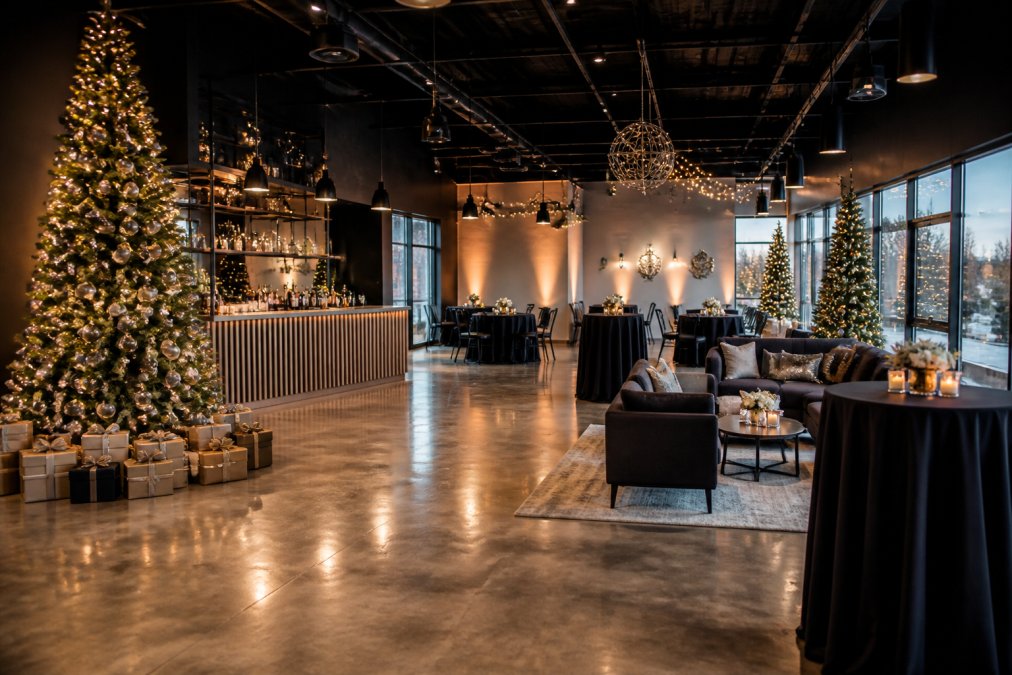
Venue lighting and decor impact begins the moment a guest walks through the door, before anyone says a word. At M Lounge, a single change in color temperature can shift a room from stiff to celebratory in seconds. This guide breaks down how lighting and decor work together, what 2026 trends matter, and how to budget without surprises.
Venue lighting is the deliberate use of fixtures, intensity, color, and placement to shape how a space feels and functions during an event. It is not decoration added at the end. It is the first design decision, because it determines what guests notice, where they look, and how long they linger.
The psychology is straightforward. Warm light at roughly 2700K to 3000K reads as intimate and flattering to skin tones (energystar.gov). Cooler light above 4000K reads as alert and clinical, which works for a corporate retreat and falls flat at a wedding reception. According to ENERGY STAR guidance on lighting color temperature, color temperature is measured in kelvin and directly affects how a space is perceived, which is why the same ballroom can feel like two different venues depending on the setting.
Lighting sets the emotional frame before decor gets a chance to. Choose your color temperature first, then build draping, linens, and florals around it.
The Psychology of Color Temperature in Event Spaces
Color temperature is the single most underrated lever in event design. Most planners obsess over centerpiece colors and ignore the light hitting those centerpieces.
Here’s how it plays out in practice:
- 2700K-3000K (warm): candlelit feel, flatters skin, ideal for weddings, Quinceaneras, and milestone dinners
- 3500K-4000K (neutral): clean and balanced, suits corporate galas and networking receptions
- 5000K+ (cool): crisp and energetic, best reserved for entryways, bars, or branded activation zones
A common mistake is mixing temperatures in the same sightline. Warm uplights on the walls next to a cool overhead wash makes a room look accidentally lit rather than designed. Pick one dominant temperature and use contrast only where you want attention.
Modern Wedding Decor Trends for 2026: What’s Shaping Celebrations
Modern wedding decor trends for 2026 lean toward texture over volume. Couples are trading towering floral installations for fabric, light, and negative space.
Three shifts stand out:
- Draped ceilings and walls replacing heavy floral backdrops
- Monochrome palettes with light doing the color work instead of linens
- Statement lighting as decor, where fixtures themselves become the visual centerpiece
The throughline is restraint. Instead of filling every surface, 2026 celebrations use fewer elements at higher quality, then let lighting carry the mood. That approach also photographs better, which matters when every guest is holding a phone.
Professional Venue Draping Benefits: Transforming Spaces with Fabric
Professional venue draping benefits go well beyond looks. Fabric changes a room’s acoustics, hides architectural flaws, and gives lighting a surface to play against.
At M Lounge, luxurious venue draping is a core part of the space because it does three jobs at once. It softens echo in large rooms, it creates a clean backdrop for uplighting, and it lets a single venue read as romantic for one event and modern for the next.
What most guides miss is that draping and lighting are a package. Fabric without light looks flat. Light without fabric has nothing to catch it. Book them together or you lose half the effect.
Event Lighting Design Techniques: From Uplighting to Pin Spotting
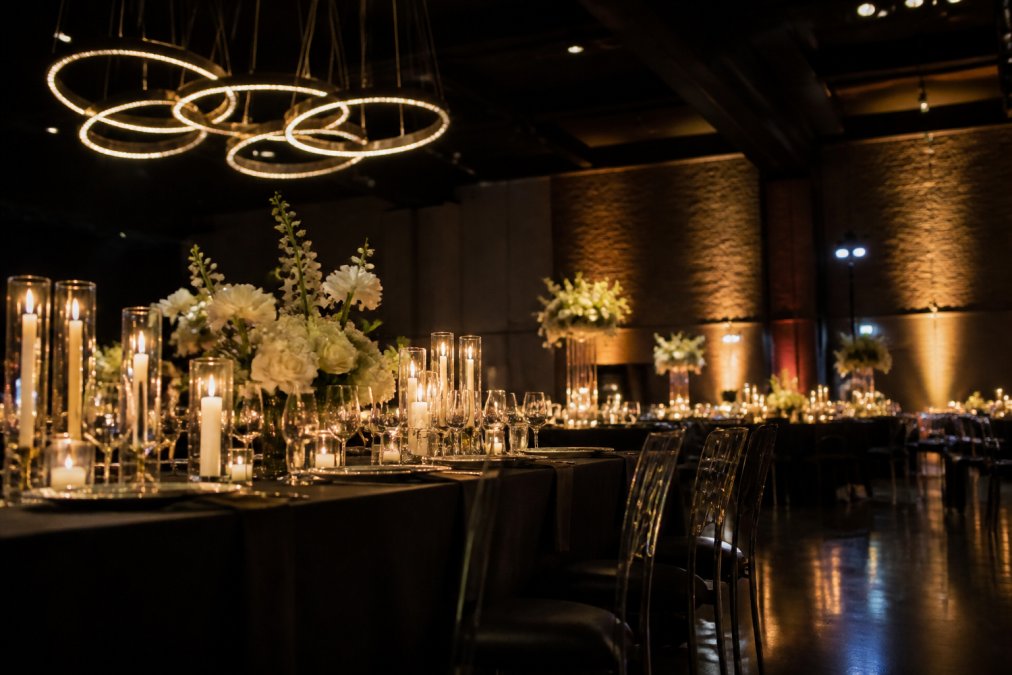
Event lighting design techniques fall into layers, and the best rooms use at least three working together. Architectural uplighting washes walls with color, pin spotting highlights centerpieces, and gobos project patterns or branding onto surfaces. The difference between a room that looks designed and one that looks lit is whether those layers are aimed, gelled, and dimmed as a system.
Start with the room, not the fixtures. Ask what you want guests to see first, then aim light there. A practical sequence most designers follow:
- Walk the room at the event hour. Daylight through windows at 6 p.m. in summer is a different starting point than a blacked-out ballroom. Note every light source already present, sconces, exit signs, kitchen pass-throughs, screen glow.
- Choose the dominant color temperature. Warm light at roughly 2700K to 3000K reads as intimate and flattering to skin tones. Cooler light above 4000K reads as alert and clinical. Mixing temperatures in the same sightline, warm uplights on a wall next to a cool overhead wash, makes a room look accidentally lit rather than designed.
- Set the ambient layer first. This is your base visibility, usually an overhead wash. Dim it to the lowest level guests can still read a menu and find their seat. Everything else builds on top.
- Add perimeter uplighting. Fixtures placed at the base of a wall, aimed upward, shape the room’s edges and give draping something to catch. Beam angle matters here: a narrow beam creates a tight column of light, a wide beam creates a soft gradient. For a standard 12- to 14-foot wall, a fixture with a 10- to 15-degree beam produces a clean column; wider beams wash more surface but lose intensity.
- Pin spot the focal points. Pin spots are narrow-beam fixtures aimed at centerpieces, cakes, or head tables. The goal is a pool of light roughly the size of the object, not a spotlight that spills onto the tablecloth. A common pattern is one pin spot per centerpiece, aimed from a truss or ceiling position at a steep angle so the light doesn’t hit guests’ eyes.
- Project gobos last. Gobos are metal or glass templates that shape light into a pattern or logo. They work best on a clean, flat surface, a draped wall, a dance floor, or a plain ceiling, and they read poorly on busy patterns or textured stone.
Layered Lighting for Depth and Drama
Layered lighting is what separates a flat room from one with depth. Use four tiers:
| Layer | Purpose | Typical Placement |
|---|---|---|
| Ambient | Base visibility | Overhead wash |
| Accent | Highlight focal points | Pin spots, gobos |
| Perimeter | Shape the room | Architectural uplighting |
| Practical | Warmth and detail | Candles, lamps |
Dynamic lighting moves between these layers during the event. Dim the ambient wash when dinner ends, raise the perimeter color for dancing, and the same room feels brand new without moving a single table. The mechanism is a preset, a saved combination of fixture intensities and colors that an operator triggers on cue. Most control systems let you store a ceremony look, a dinner look, and a dancing look, then crossfade between them over a few seconds so the change reads as a mood shift rather than a light switch.
A few trade-offs worth knowing before you commit:
- More fixtures mean more power and more labor. Every added layer needs a circuit, a data run, and someone to focus it. A room with three layers can often be run by one operator; a room with six may need two.
- Color washes and skin tones compete. Saturated blues and greens look dramatic on walls but unflattering on faces. Keep saturated color on the perimeter and keep the light hitting guests in the warm-to-neutral range.
- Gobos need a clean canvas. If your venue has exposed brick, wood paneling, or a patterned carpet, a projected logo will break up and lose legibility. Draping solves this, which is why draping and lighting are usually specified together.
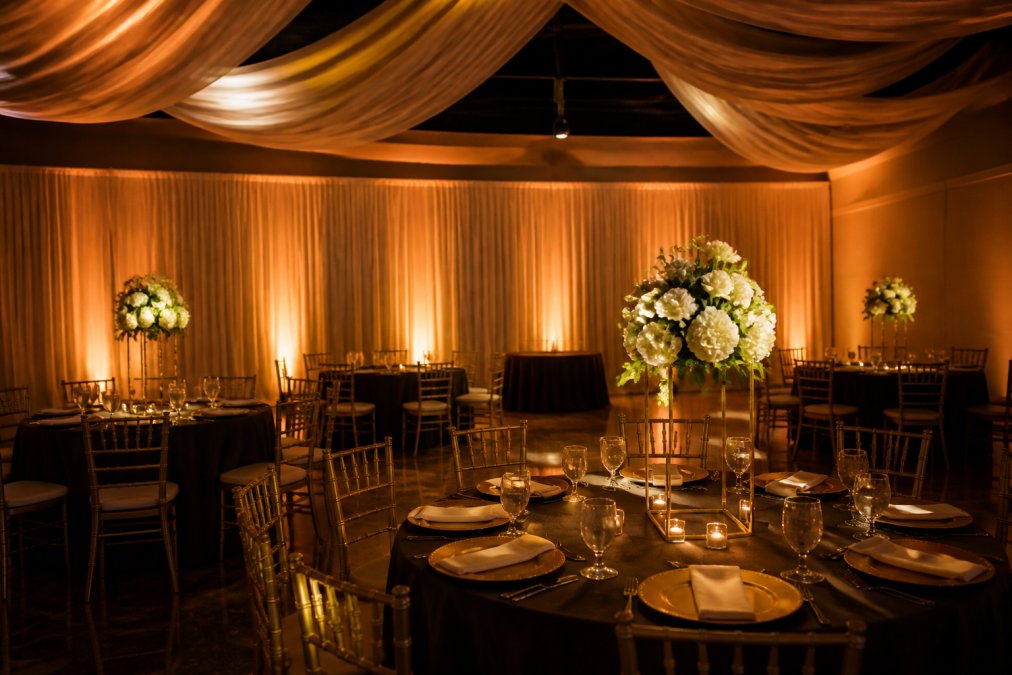
Aim light at what you want guests to notice, dim everything else. Three well-focused layers beat six fixtures pointed in every direction.
Budgeting for Venue Lighting and Decor Without Hidden Costs
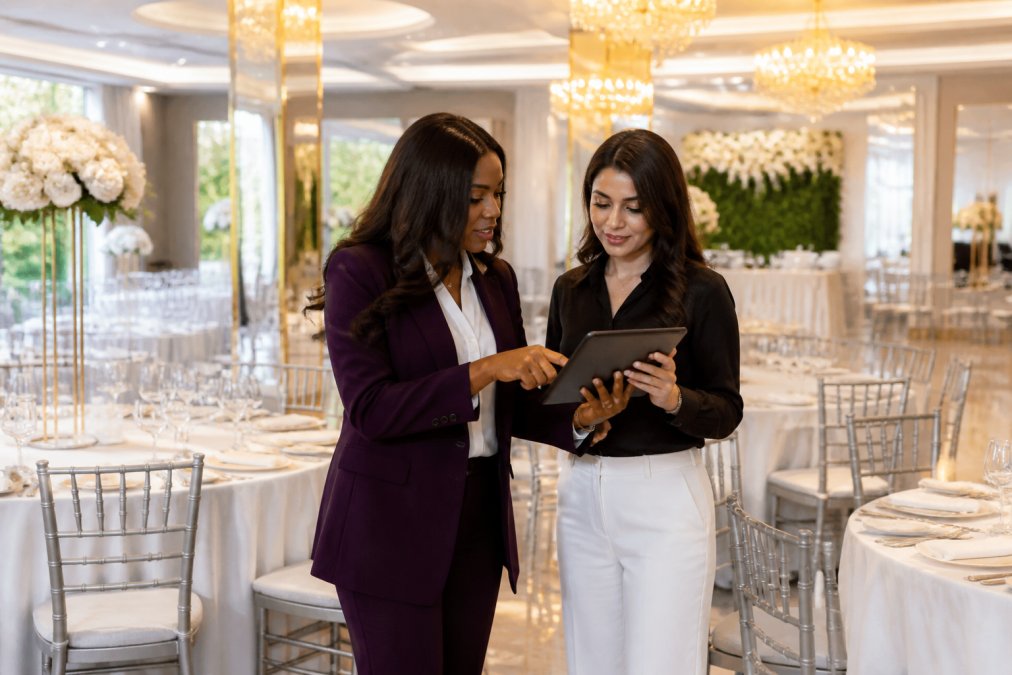
Lighting and decor costs surprise people because the line items arrive late. The fix is two-part: a written inclusion list before you sign, and a rough allocation framework so you know what you’re buying.
A Working Allocation Framework
No two events split the same way, but a common pattern for a full lighting-and-decor package is to treat the two as one budget line and divide it roughly like this:
- Fixtures and draping (the physical elements): the largest single share. This covers uplights, pin spots, gobos, fabric, and any structural pieces.
- Design and programming: the labor to plan the looks, focus the fixtures, and save the presets. This is the line most often underestimated.
- Setup, teardown, and labor: load-in, focus, strike, and any overtime.
- Consumables and contingency: gels, tape, batteries for practicals, and a buffer for changes.
A useful rule of thumb is to reserve a meaningful contingency for changes requested after the design is locked. Color changes and gobo swaps are cheap if they happen before programming and expensive if they happen the day of.
What to Confirm in Writing
Before you sign anything, get answers to these in the contract, not in conversation:
- Confirm which fixtures are included in the base rental and how many of each.
- Ask whether setup, teardown, and overtime are billed separately.
- Clarify who owns the draping and whether installation is included.
- Get the color and gobo programming fee in writing.
- Confirm the cutoff time for changes to the lighting plan.
- Ask what happens if a fixture fails mid-event, is there a backup and who fixes it?
Many venues quote lighting as an add-on, then bill programming, labor, and strike separately. Ask for one number that covers design, setup, and teardown. If a venue can’t give you that, that’s your answer.
Where the Money Actually Goes
The single biggest driver of lighting cost is not the fixtures, it’s the labor to install and focus them. A room with a dozen uplights and a few pin spots can often be set up and focused in a few hours by one technician. A room with a full truss, dozens of fixtures, and multiple gobos can take a full day and a crew. That difference shows up in the quote as labor, not equipment.
Draping follows the same logic. A freestanding pipe-and-drape wall is fast to install; a ceiling treatment that requires rigging points and a lift is not. If your budget is tight, spend on the layers guests actually see, the perimeter wash and the pin spots, and skip the ceiling treatment.
The most common hidden cost is overtime. If your event runs past the contracted end time, lighting labor is often billed by the hour with a minimum. Confirm the overtime rate and the hard stop before the event, not after.
Ask for a written inclusion list and a single all-in number for design, setup, and teardown. A venue that can’t provide both is telling you something about how the final invoice will look.
Sustainable and Smart Lighting Choices for Modern Venues
LED fixtures have changed what’s possible on a modest power draw. They run cooler, last far longer than older lamps, and can shift color without gels, which means one fixture replaces several.
Sustainability here is practical, not performative. Fewer fixtures doing more work means lower labor, faster setup, and less waste. According to U.S. Department of Energy guidance on LED lighting, LEDs use significantly less energy than incandescent equivalents and last many times longer, which is why most professional venues have already made the switch. Integrating these high-efficiency components into professional DMX rigs allows for precise control over output levels, further reducing the environmental footprint of complex lighting designs.
Smart venue tech takes it further. Lighting control systems let an operator save presets for ceremony, dinner, and dancing, then trigger them on cue. Integration with smart venue tech means the DJ, the AV team, and the venue are working from the same control surface instead of three separate ones.
Conclusion
The hardest part of venue lighting and decor isn’t choosing a color. It’s coordinating the venue, the lighting designer, the florist, and the DJ so the room actually looks like the plan.
That coordination is exactly what M Lounge handles. Our luxurious venue draping, professional lounge furniture, and mesmerizing up-lights are built into the space, and our team can assist with managing details. With a seated capacity of 80 and cocktail capacity of 100, the room is designed for intimate, high-end gatherings where every detail is tailored.
Reserve now and let our team turn your date into a timeless experience.
Frequently Asked Questions
How does lighting affect the mood of an event?
Lighting sets the emotional tone through color temperature and intensity. Warm amber tones create intimacy for weddings, while cooler whites feel professional for corporate gatherings. Dimming and layering light guide guests and highlight key moments. At M Lounge, adjustable uplighting and pin spotting let you shift the mood from ceremony to reception without changing venues.
What are the latest modern wedding decor trends for 2026?
2026 trends favor draped ceilings, monochromatic color washes, and sustainable materials like LED candles and recycled fabrics. Couples are mixing metallic accents with soft pastels and using gobos to project monograms or patterns. Venues with built-in draping and lighting rigs, like M Lounge, make these trends easier to execute without extra rental costs.
How can professional lighting enhance event photography?
Professional lighting reduces harsh shadows and creates even, flattering illumination for photos. Uplighting adds background color that separates subjects from walls, while pin spotting draws attention to cakes or centerpieces. Consistent color temperature prevents mixed lighting casts. M Lounge’s lighting design supports photographers by providing adjustable, photo-friendly light sources throughout the space.
What role does venue draping play in event design?
Draping transforms plain walls and ceilings into soft, elegant backdrops. It hides architectural flaws, absorbs sound, and creates a cohesive aesthetic. Ceiling draping adds intimacy by lowering visual height, while wall draping frames focal points. M Lounge includes professional draping in its venue, giving couples and planners a polished foundation that saves on rental and setup costs.