


Table of Contents
- Defining Your Vision: Client Consultation and Event Objectives
- Mastering Event Logistics and Budget Allocation
- The Luxury Event Planning Checklist: From Site Inspection to Seamless Execution
- Curating the Guest Experience and Event Atmosphere
- Event Lighting and Draping Ideas for an Opulent Ambiance
- Vendor Curation and Negotiation for White-Glove Service
- Upscale Event Venues: Selecting the Right Setting
- Conclusion: Orchestrating Your Signature Event
- Frequently Asked Questions
Last Updated: September 9, 2026
Planning a luxury event requires more than a generous budget; it demands meticulous orchestration of ambiance, logistics, and guest experience. To plan luxury event details that feel effortless, treat every element as part of a singular, cohesive vision.
Defining Your Vision: Client Consultation and Event Objectives
The foundation of any successful high-end gathering is a thorough client consultation. Before discussing aesthetics or vendors, establish the core event objectives, which serve as your north star for every subsequent decision.
The most common mistake is jumping straight to color palettes and floral arrangements. Instead, ask probing questions about the guest journey and emotional tone. For high-net-worth individuals, exclusivity and privacy are often paramount.
Mastering Event Logistics and Budget Allocation
Once the vision is clear, translate it into a concrete operational plan encompassing project management, timeline sequencing, and the legal and financial safeguards required for high-stakes events.
Building a Comprehensive Event Timeline and Dependency Map
Effective logistics require a timeline that sequences every task with explicit dependencies and buffer time. Create a master timeline identifying critical path items and allocate buffer time accordingly.
For example, custom invitations may require 4-6 weeks for design and printing; if the guest list is not finalized by week 2, the entire timeline shifts. Map these dependencies explicitly so delays are caught early rather than discovered days before the event.
Use a shared project management platform (such as Asana, Monday.com, or a custom system) that all vendors can access. Assign clear owners for each task and establish weekly check-ins, especially in the final 4 weeks.
Strategic Budget Allocation and Contingency Planning
Effective budget allocation requires discipline, transparency, and a clear understanding of where spending drives guest experience. A common framework allocates: venue (25-35%), catering and beverage (30-40%), décor and florals (10-15%), entertainment or AV (10-15%), and staffing and logistics (10-15%), with 5-10% reserved for contingency.
This allocation should flex based on client priorities. Have this conversation explicitly and document the allocation in writing.
Reserve a contingency fund of at least 10-15% of the total budget for unforeseen expenses. For luxury events, this is not optional, it is a professional standard.
Contractual Frameworks and Liability Management
For high-net-worth clients, contractual clarity is a legal necessity. Every vendor contract should specify the exact scope of work, deliverables, timeline, payment terms, and cancellation or modification policies.
Key contract elements include:
- Scope of Work: Specify exactly what is included (e.g., “floral centerpieces for 20 tables, 18 inches in height, in white and blush tones, delivered by 4 p.m. on event day”) and what is not (e.g., “does not include ceremony arrangements or cocktail hour installations”).
- Deliverables and Timeline: List specific dates and times for deliveries, setup, and completion. Include penalties for late delivery or incomplete work.
- Payment Terms: Specify deposit amounts, payment schedule, and final payment due date (typically 48 hours after the event).
- Cancellation and Modification Policies: Clearly state the client’s right to modify or cancel, the vendor’s cancellation fees, and the timeline for changes (e.g., “modifications requested more than 14 days before the event are subject to a 10% change fee; modifications within 14 days are subject to a 25% change fee”).
- Liability and Insurance: Require vendors to carry liability insurance and to name your client as an additional insured on their policy. This protects your client if a vendor causes damage or injury.
- Confidentiality Clauses: For events with high-profile or sensitive attendees, include a confidentiality clause prohibiting vendors from discussing the event, sharing photos, or disclosing guest lists without written permission.
Insurance and Risk Management
Luxury events require specialized insurance beyond standard event liability. Work with an insurance broker experienced in high-end events to secure:
- General Liability Insurance: Covers bodily injury or property damage caused by the event or its operations. Standard coverage is $1-2 million per occurrence (iii.org).
- Liquor Liability Insurance: Required if alcohol is served. Covers claims related to alcohol-related injuries or incidents. This is often a separate rider on a general liability policy.
- Event Cancellation Insurance: Covers financial losses if the event must be canceled due to unforeseen circumstances (illness of the guest of honor, venue closure, severe weather). Premiums typically range from 3-8% of the total event budget, depending on the coverage amount and risk profile (travelers.com).
- Property Insurance: If the client is bringing high-value items (art, jewelry, family heirlooms) to display at the event, ensure they are covered under a rider or separate policy.
- Cyber Liability Insurance: If the event involves digital ticketing, guest data collection, or virtual components, cyber liability covers breaches or data loss.
For events with high-profile attendees or sensitive business discussions, also consider kidnapping and ransom insurance or executive protection liability, which covers incidents related to security breaches or threats to attendees.
Contingency Protocols and Crisis Response
Despite meticulous planning, high-stakes events can encounter failures. Establish contingency protocols before the event so your team can respond quickly without panic.
Common contingencies and response protocols:
- Vendor No-Show or Quality Failure: Identify backup vendors for critical services (catering, florals, AV) before the event. Maintain a list of emergency contacts and have backup vendors on standby. If a vendor fails to deliver, your backup can often step in within hours.
- Weather Contingencies: For outdoor events, secure a weather-appropriate backup venue or have a tent and heating/cooling systems ready. Establish a decision point (e.g., “if rain is forecast for more than 60% probability by 48 hours before the event, we move indoors”) and communicate this to the client in advance.
- Guest of Honor Illness or Absence: Have a plan for how the event will proceed if the primary honoree cannot attend. For some events, this may mean postponement; for others, a brief acknowledgment and continuation of the celebration is appropriate. Discuss this scenario with the client during planning.
- Security or Safety Incident: Establish a clear chain of command and communication protocol. Designate a spokesperson who will communicate with guests, media (if applicable), and authorities. Brief all staff on the protocol before the event so that if an incident occurs, the response is coordinated rather than chaotic.
- Overcrowding or Capacity Issues: If more guests arrive than expected, have a plan to manage flow (e.g., staggered seating, standing room only in certain areas, or overflow to an adjacent space). Coordinate with the venue and security team in advance.
Vendor Coordination and Communication Cadence
A single point of contact is essential to prevent miscommunication. Designate one person (often the event planner or venue coordinator) as the primary contact for all vendors.
Schedule a final vendor briefing 2-3 days before the event to walk through the entire timeline and confirm everyone understands their role.
The Luxury Event Planning Checklist: From Site Inspection to Seamless Execution
A luxury event planning checklist is your safeguard against oversight. The process begins with the site inspection, where you evaluate the venue’s capacity, flow, and aesthetic potential.
Following venue confirmation, your checklist should guide you through vendor confirmation, design finalization, and timeline creation. It should also include a final walk-through and a detailed run-of-show distributed to all stakeholders.
Curating the Guest Experience and Event Atmosphere
The true measure of a luxury event lies in the quality of the guest experience. Systematic personalization separates exceptional high-end events from merely expensive ones.
Segmenting and Profiling Your Guest List
Begin by creating detailed guest profiles before the event design phase. Categorize guests by relationship type, travel distance, accessibility needs, and known preferences to design tiered experiences. professional room draping.
Document preferences in a shared event management system accessible to your entire vendor team.
Designing Micro-Moments of Delight
Luxury is experienced through unexpected moments of attentiveness. Personalized place cards with hand-written notes referencing a shared memory of the guest of honor create emotional resonance that generic décor cannot achieve.
Implement a “preference capture” system at check-in or via pre-event survey, asking about seating, dietary, and special requests.
Managing Privacy and Discretion for High-Profile Attendees
For events with high-profile guests, privacy protocols are non-negotiable. Establish a clear media and photography policy, and provide high-profile guests with a private entrance, dedicated coat check, and a quiet retreat space.
Require all vendors, staff, and even other guests to sign a confidentiality agreement if sensitive matters may be discussed.
Sensory Design and Atmosphere Calibration
The event atmosphere is shaped by layered sensory inputs: sound, scent, temperature, and visual flow. Work with your venue and AV team to establish sound level targets for each phase (welcome: 70 dB, cocktail hour: 75 dB, dinner: 65 dB, dancing: 85 dB) (the CDC).
Scent is one of the most underutilized tools in luxury event design. Work with a florist or fragrance consultant to select a signature scent that complements the season and venue without overwhelming guests with allergies.
Temperature control is critical and often overlooked. Coordinate with the venue’s HVAC team to ensure the space is cooler than comfortable, and have backup heating or cooling available for outdoor events.
Measuring and Iterating on Guest Satisfaction
Post-event feedback is essential for refining your approach. Distribute a brief, mobile-friendly survey within 48 hours asking guests to rate key elements and include an open-ended question: “What was your favorite moment?”
For recurring events, track feedback trends over time and adjust your priorities accordingly.
Event Lighting and Draping Ideas for an Opulent Ambiance
Lighting and draping are the most effective tools for transforming a blank space into an opulent setting. Luxurious venue draping in soft, neutral tones adds architectural interest and intimacy, while strategic up-lights highlight textures and create a warm glow.
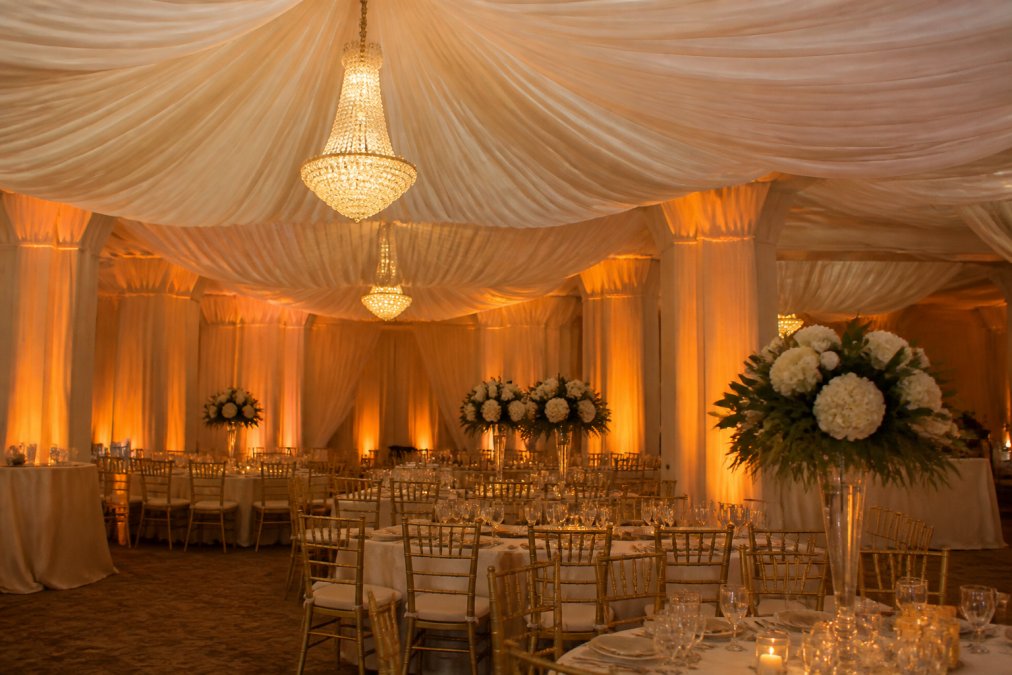
When considering event lighting and draping ideas, think in layers. Start with ambient lighting to set overall warmth, then add accent lighting to draw attention to specific features.
Vendor Curation and Negotiation for White-Glove Service
The quality of your vendor team determines the quality of your execution. Select partners who deliver exceptional work and understand the standards of discretion and polish required for high-end events.
Effective vendor negotiation is about establishing clear terms and expectations. A detailed contract should outline the scope of work, deliverables, and timeline, leaving no room for ambiguity.
Upscale Event Venues: Selecting the Right Setting
The venue is the canvas upon which your entire event is painted, making the selection of upscale event venues the most consequential decision you will make. The right space should possess an inherent elegance that reduces the work needed to achieve your desired aesthetic.
To plan luxury event details effectively, the venue must align with practical requirements such as acoustics, power supply, and accessibility.
Conclusion: Orchestrating Your Signature Event
Planning a luxury event requires a clear vision, meticulous planning, and an unwavering commitment to quality. By focusing on the details that elevate the guest experience, you can transform a gathering into a signature event.
The challenge lies in coordination; managing the intricate dance between logistics, design, and service can be overwhelming without the right partner. M Lounge offers a premier space in Capitol Heights and Bowie, MD, where opulence is the standard. Reserve now and let us help you orchestrate an event of unparalleled grandeur.
Frequently Asked Questions
What defines a luxury event experience?
A luxury event experience is defined by meticulous attention to detail, a seamless guest journey, and an atmosphere of refined elegance. It goes beyond a beautiful space. It involves white-glove service, curated vendors, and a cohesive design that engages all the senses, from the lighting to the flow of the event. The goal is to create a timeless, memorable occasion where every element feels intentional and exclusive for your high-profile guests.
How far in advance should you start planning a luxury event?
For a truly bespoke experience, start planning 9 to 12 months in advance. This timeline is essential for securing the best upscale event venues, especially for peak seasons. It allows ample time for thorough site inspections, detailed vendor negotiation, and the design of custom event lighting and draping ideas. If your date is flexible, some venues may accommodate a tighter 4 to 6 week timeline, but a longer runway ensures more options and less stress.
What is the role of lighting and draping in luxury event design?
Lighting and draping are the primary tools for transforming a blank space into an opulent atmosphere. Professional draping adds texture, softens architectural lines, and can create intimate zones within a larger room. Strategic lighting, such as up-lights and pin-spotting, sets the mood, highlights the draping, and guides the guest journey. Together, they are foundational elements of event design that elevate the ambiance and create the signature look of a high-end event.