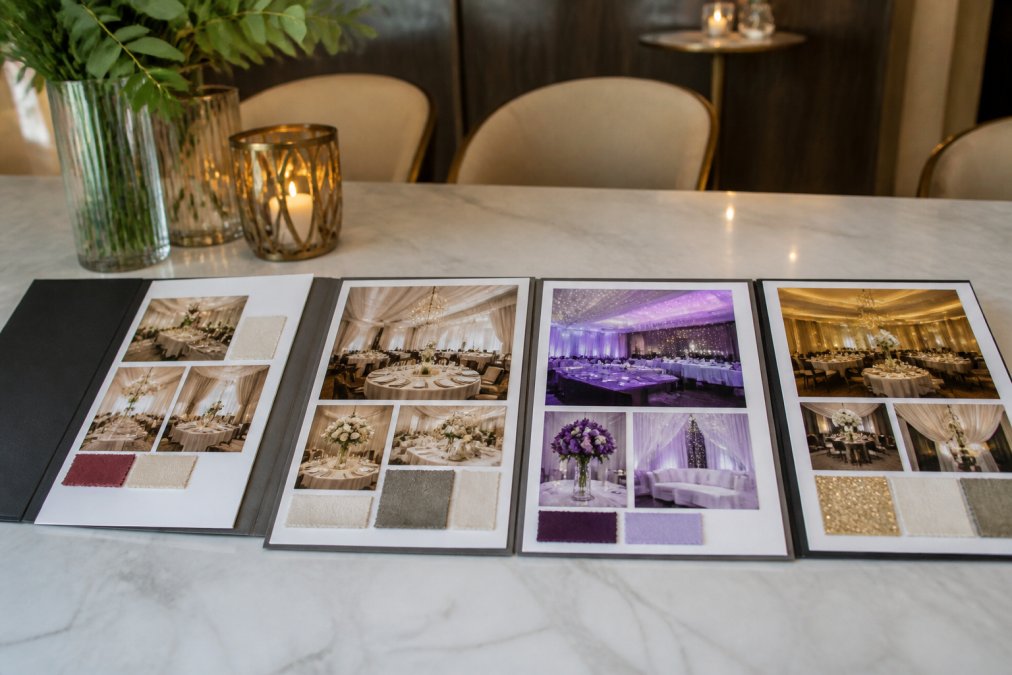




Last Updated: November 11, 2026
Quick Summary
Luxury wedding catering menu planning starts 6 to 9 months before the wedding, with your per-person food and beverage budget set before you book a single tasting. Build the menu as a sequence of courses, lock it in writing, and confirm your final guest count two weeks out.
- Start menu planning 6 to 9 months before the wedding and follow a clear order of decisions.
- Fix your food and beverage budget before tasting, since tastings can talk you into unplanned numbers.
- A three-course menu reads as opulent through progression, restraint, and precise plating.
- Collect dietary needs at RSVP and share a written allergen list organized by table and seat.
- M Lounge seats 80 guests and holds 100 for cocktails in its luxury event space.
Table of Contents
- What Luxury Wedding Catering Menu Planning Actually Requires
- Wedding Catering Menu Planning: A Step-by-Step Timeline
- 3 Course Wedding Menu Ideas That Feel Opulent
- Wedding Food Ideas for Buffet Service and Interactive Stations
- Handling Wedding Dietary Requirements and Food Allergies
- Matching the Menu to Your Venue, Theme, and Service Style
- Reserve Your Date and Build the Menu With M Lounge
- Frequently Asked Questions
What Luxury Wedding Catering Menu Planning Actually Requires
Luxury wedding catering menu planning is the process of designing a reception meal that matches your venue, your budget, your guest list, and the level of service you want guests to remember. Proactive coordination between your culinary vision and your financial constraints ensures that sticking to your wedding budget remains a manageable priority throughout the planning process.
The stakes are real. A menu that ignores dietary needs or venue constraints creates problems you cannot fix on the day. Good planning starts months out and follows a clear order of decisions.
Below, we break down the timeline, the courses, the service styles, and the safety rules that separate a smooth reception from a stressful one. If you want to see what’s included in luxury wedding packages before committing to a menu, that breakdown can help.
Wedding Catering Menu Planning: A Step-by-Step Timeline
Most couples should start menu planning 6 to 9 months before the wedding. The sequence matters more than the speed.
- Set your per-person food and beverage budget
- Draft a guest list with dietary notes
- Shortlist two or three caterers who fit your venue
- Schedule tastings
- Choose your service style
- Lock the menu and sign the contract
- Confirm final guest count two weeks out
- Review the service timeline with the venue
The complete luxury wedding planning guide shows how these menu deadlines fit into the wider schedule, from venue booking to the final walkthrough.
Setting a Catering Budget Before You Taste a Single Dish
Fix your food and beverage budget before you book a single tasting. Tastings are persuasive, and a caterer’s best dish can talk you into a number you never planned for.
Build the budget around these line items:
- Food cost per guest, the core plate cost
- Beverage package, wine, cocktails, and non-alcoholic options
- Service staff, servers, bartenders, and captains
- Rentals, china, glassware, linens, and flatware
- Service charges and gratuity, often a set percentage
- Contingency, a cushion for count changes and extras
Pricing depends on your guest count, season, and menu complexity, so ask each caterer for a written quote rather than a verbal estimate. Our venue pricing guide gives you the context to set a realistic overall budget before you commit.
Booking the Menu Tasting and Finalizing Guest Count
Book your tasting once you have narrowed the field to two caterers. Taste the dishes you actually plan to serve, not the showpieces.
Bring your guest list and dietary notes to the tasting. Ask how the caterer handles allergies and cross-contact in the kitchen. Then confirm your final guest count with the venue and caterer at the same time, since both need the same number.
Watch out: a count that changes after the contract deadline often triggers extra charges or a reduced guarantee. Confirm the cutoff date in writing.
3 Course Wedding Menu Ideas That Feel Opulent
A three-course menu reads as opulent when the courses are built as a sequence, not a list.
First course. Keep it light and cold or barely warm.
Main course. This is where the budget concentrates. A braised short rib, herb-roasted chicken, or seared salmon fillet each pair with a starch and a seasonal vegetable.
Dessert. A plated dessert or a small dessert trio lets guests sample more than one sweet and gives the caterer a final presentation moment.
Portion size matters. A generous main with lighter courses keeps guests satisfied without overwhelming them.
What Drives the Per-Person Cost of a Three-Course Menu
Luxury menu pricing is not a single number, it is the sum of plate cost, service, and rentals. Ask each caterer to break the quote into these drivers so you can compare like for like:
- Protein and luxury ingredients, the largest plate-cost variable; seafood and premium cuts move the number most.
- Course count and complexity, each added course adds food cost, labor, and plateware.
- Service style, plated service requires more staff per guest than buffet or stations, which raises the labor line.
- Rentals and tabletop, china, glassware, flatware, and linens scale with guest count and course count.
- Service charge and gratuity, typically a set percentage on top of food and beverage.
Because these drivers interact, the same three courses can land at very different totals depending on service style and rentals. Get a written quote that itemizes each line rather than a single per-person figure, and confirm what the quote excludes.
Watch out: a low per-person quote that omits rentals, service charge, or staffing can end up costing more than a higher all-in quote, compare the fully loaded number, not the headline plate price.
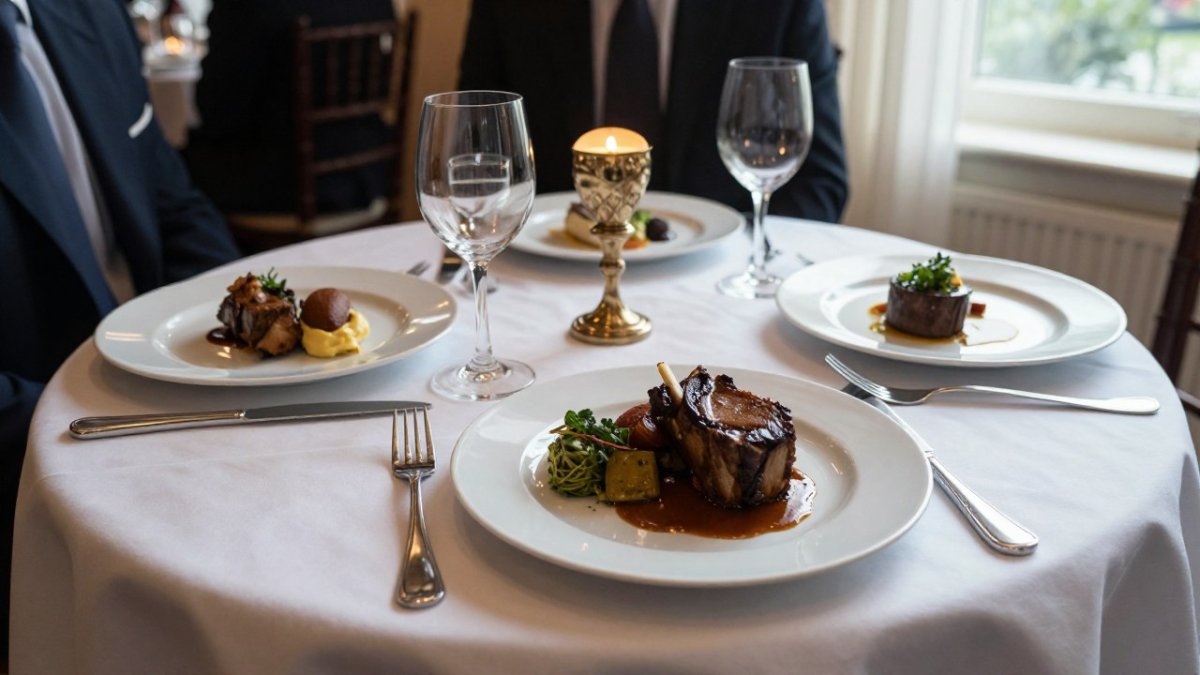
Presentation and Service Standards That Signal Luxury
Opulence is delivered at the table, not just in the kitchen. Three standards separate a luxury three-course service from a standard one:
- Synchronized plating, all guests at a table are served within a short window, so no one eats cold while waiting.
- Described courses, servers can name the dish, its key ingredients, and any allergens when they set the plate.
- Considered tabletop, polished flatware, proper glassware, and a menu card that matches the wedding’s design language.
Ask your caterer how they staff a plated room and how they time the courses against speeches and dancing. A menu that is beautiful on paper but mistimed in the room will not feel luxurious to guests.
Wedding Food Ideas for Buffet Service and Interactive Stations
Buffet and station service let guests build their own plates, which suits a relaxed but still elegant reception. The trade-off is that some dishes hold up better than others.
Choose foods that hold well under heat lamps and on chafing dishes:
- Slow-roasted meats and braised dishes
- Herb-roasted chicken and salmon
- Pasta and risotto stations
- Carved-to-order meat stations
- Mashed potato and grain bowls
- Seasonal vegetable sides
Interactive stations add energy to cocktail hour. A carving station, a pasta bar, or a made-to-order taco station gives guests something to watch and a reason to mingle. Pair these with passed appetizers and welcome snacks so no one waits hungry.
Handling Wedding Dietary Requirements and Food Allergies
Dietary accommodations are not optional, and food allergies are a safety issue, not a preference.
Collect dietary needs when guests RSVP. Ask about allergies, intolerances, religious restrictions, and lifestyle choices such as vegetarian or vegan diets. Then share that list with the caterer in writing, organized by table and seat so the service team can match plates to guests without guesswork.
A Written Allergen Communication Protocol
The most common failure is not a lack of options, it is a breakdown in communication between the guest, the planner, and the kitchen. Build a written protocol that covers four handoffs:
- Guest to planner, the RSVP captures the specific allergen, the severity, and whether the guest carries emergency medication.
- Planner to caterer, a single consolidated list, delivered in writing and updated at the final count deadline.
- Caterer to service staff, a pre-service briefing that maps each restricted guest to a seat and a plate.
- Service staff to guest, the server confirms the plate by name and allergen status when it is set.
Ask the caterer these questions before you sign:
- How do you prevent cross-contact between allergen and non-allergen dishes in the kitchen?
- Can you label each dish at a buffet or station, and who checks the labels?
- Do you prepare separate plates for guests with severe allergies, and how are they identified in the room?
- Who on your staff manages allergen questions on the day, and how do servers reach that person?
- What is your procedure if a guest has a reaction during service?
Regulatory guidance on food allergens is available from the U.S. Food and Drug Administration and can help you ask the right questions and read labels correctly (the FDA).
Serving Allergy-Sensitive Guests Without Singling Them Out
Luxury service means a restricted guest never feels like an afterthought. Two mechanics make that possible:
- Plated service, the kitchen prepares a separate, clearly identified plate, and the server sets it with the same description and care as the main course.
- Buffet and stations, each dish carries a label listing the major allergens, and a staff member is assigned to answer guest questions rather than leaving guests to guess.
Confirm that the caterer’s staff, not the couple, owns allergen questions on the day. A menu that is safe for every guest is part of what makes a reception feel effortless.
Matching the Menu to Your Venue, Theme, and Service Style
The menu should match the room, the theme, and the way food is served. A plated dinner suits a formal ballroom with lounge furniture and up-lighting. A station-based reception suits a looser, cocktail-style event.
Consider these pairings:
| Service Style | Best For | Menu Focus |
|---|---|---|
| Plated dinner | Formal seated receptions | Multi-course, precise plating |
| Buffet | Larger, relaxed crowds | Hearty dishes that hold well |
| Food stations | Cocktail-style mingling | Interactive, small-plate options |
| Passed appetizers | Cocktail hour | Bite-sized, easy to eat standing |
Seasonal and local ingredients also shape the menu. Fresh, in-season produce tastes better and often costs less. If your venue has in-house catering, find venues with catering so the menu and the room are planned together from the start.
Reserve Your Date and Build the Menu With M Lounge
The menu is only as good as the room it is served in. M Lounge offers a luxurious event space with venue draping, professional lounge furniture, and up-lighting that sets an opulent tone for your event.
M Lounge can help you coordinate details of your event, and you can contact us for specifics on what our team handles. For broader guidance on planning, see our tips for luxury weddings.
A reception menu only works when the venue, the service, and the food move as one.
Frequently Asked Questions
How do you plan a luxury wedding catering menu?
Start with your guest count and budget, then choose a service style (plated, buffet, or stations) that fits your venue. Build the menu around three or four crowd-pleasing mains like braised short rib, herb-roasted chicken, or salmon, and balance flavors and textures across courses. Book a menu tasting, confirm dietary accommodations early, and finalize the menu four to six weeks before the wedding so your caterer can source seasonal ingredients.
What should be included in a three-course wedding menu?
A three-course wedding menu typically opens with a light appetizer or soup, moves to a main course with a starch and vegetable, and closes with dessert. For a luxury feel, pair a starter like a seasonal salad or seared scallop with a main such as braised short rib or herb-roasted chicken, then finish with a plated dessert or small dessert trio. Include a vegetarian option and confirm allergen handling with your caterer.
How do you choose wedding food that suits different dietary needs?
Ask guests about allergies and dietary restrictions on the RSVP card, then share the list with your caterer at least three weeks out. Plan one vegetarian or vegan main and confirm gluten-free and nut-free preparations. A luxury wedding catering menu should handle dietary accommodations without making guests feel singled out, so ask your caterer how they plate and label special meals and how they prevent cross-contamination in the kitchen.
How far in advance should you finalize a wedding catering menu?
Finalize your wedding catering menu planning four to six weeks before the event. That window gives your caterer time to source seasonal ingredients, confirm staffing, and adjust for the final guest count. Schedule the menu tasting two to three months out so you have room to revise dishes. If you are booking a venue within four to six weeks, ask whether the team can still accommodate a tasting and a compressed timeline.