



Last Updated: November 5, 2026
Quick Summary
Indoor wedding venues offer predictability, with climate control and little weather risk, while outdoor venues offer natural scenery and atmosphere but need tents, power, restrooms and a backup plan. The right wedding venue depends on your season, guest list and tolerance for risk.
- Indoor venues keep your timeline steady through rain, wind and heat, with climate control built in.
- Outdoor venues often need rented tents, power and restrooms on top of the base rental fee.
- Confirm a covered backup space in writing, since many outdoor sites have no shelter.
- Walk the guest route yourself to check accessible paths, restroom distance and shade.
- Compare total costs line by line at the same guest count, not just base rental fees.
Table of Contents
- Indoor vs Outdoor Wedding Venue Pros and Cons at a Glance
- Weather Protection and Backup Plans for Outdoor Weddings
- Guest Comfort, Accessibility, and Climate Control
- Natural Scenery, Lighting, and Photography Trade-offs
- Comparing Indoor vs Outdoor Wedding Venue Costs
- Wedding Venue Questions to Ask Before You Book
- How to Choose the Right Wedding Venue for Your Priorities
- Frequently Asked Questions
Choosing between an indoor and an outdoor wedding venue shapes almost every other decision you make. The space affects your weather plan, your budget, your guests’ comfort, and the photos you keep for decades. Couples in Capitol Heights and Bowie should compare these options before they sign anything, so the choice fits their priorities rather than a pretty photo.
Indoor venues offer control. Outdoor venues offer natural scenery and atmosphere. Each has real advantages and real drawbacks, and the right answer depends on your season, your guest list, and how much risk you can accept. Below, we walk through the trade-offs and give you a framework for deciding.
Indoor vs Outdoor Wedding Venue Pros and Cons at a Glance
Indoor venues give you predictability. Rain, wind, and heat do not change your timeline, and climate control keeps guests comfortable from the ceremony to the last dance.
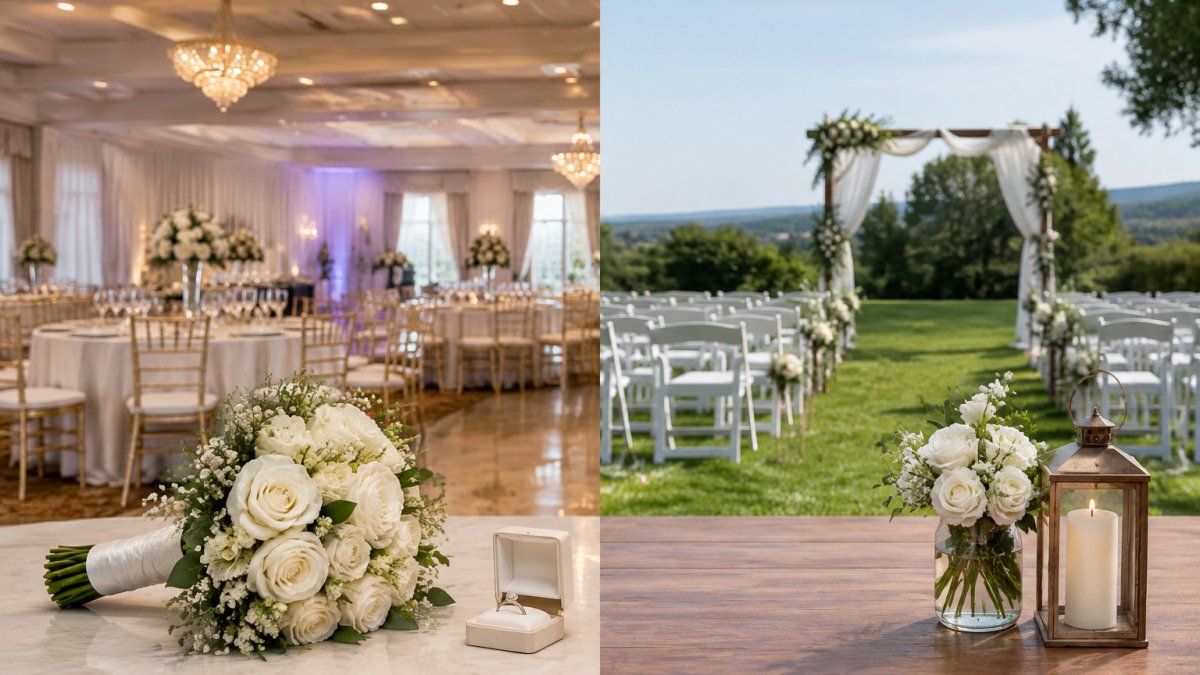
Outdoor venues give you scenery. Gardens, lawns, and open views create an atmosphere that a ballroom cannot match. Natural light can make photos look soft and warm, especially around sunset. The trade-off is that you must plan for weather, bugs, and temperature swings, and you will likely pay for tents, power, and restrooms on top of the base rental.
| Factor | Indoor Venue | Outdoor Venue |
|---|---|---|
| Weather risk | Low | High, needs backup plan |
| Climate control | Built in | Often rented |
| Natural scenery | Limited | Strong |
| Setup complexity | Lower | Higher |
| Hidden extra costs | Fewer | Common (tents, power, restrooms) |
Weather Protection and Backup Plans for Outdoor Weddings
Every outdoor wedding needs a rain plan, even in dry climates. Ask the venue whether there is an indoor space you can move to, and confirm that the space is available on your date. Many outdoor sites have no shelter at all, so a tent rental becomes your only option, and tents must be booked early in peak season. Securing a reliable backup location is especially critical for those planning a destination wedding tips for the Smoky Mountains often emphasize the unpredictable nature of mountain weather.
A practical weather checklist helps you stay ahead of problems:
- Confirm a covered backup space in writing, with its capacity and cost.
- Ask whether the tent price applies whether or not you use it.
- Check wind and lightning policies, which often trigger a move before rain starts.
- Plan a decision deadline, such as 48 hours before the event, for going indoors.
- Keep a small emergency kit with umbrellas, towels, and extra lighting on hand.
Watch out: a backup tent that is not confirmed in your contract may not be available when the forecast turns. Get it in writing before you book.
Guest Comfort, Accessibility, and Climate Control
Guest comfort is often where indoor venues win clearly, and it is also where outdoor venues require the most planning.
Start with accessibility. Under the Americans with Disabilities Act (ADA), places of public accommodation are expected to provide accessible routes, parking, entrances, and restrooms (2010 ADA Standards for Accessible Design).
Then map the guest journey. For an outdoor site, walk the route yourself and note:
- Distance to restrooms. A restroom trailer at the far edge of a field is a different experience than an indoor restroom steps from the dining room, especially for older guests and children.
- Seating and shade. Confirm that seating is available near the ceremony for guests who cannot stand, and that shade or a tent covers the seating area during the hottest part of the day.
- Temperature and sun. Heat, humidity, and direct sun affect everyone. Arrange fans, cooling stations, water, and shade, and schedule the ceremony outside the peak heat window.
- Bugs and terrain. Standing water and tall grass attract insects. Ask whether the site is treated before the event and whether guests should plan for repellent.
- Children and older guests. A quiet indoor space and short restroom distance make it easier for families with young children and for grandparents. Outdoor sites can work well but benefit from a designated quiet area and clear paths.
Climate control is the other half of comfort. Outdoor sites often require rented heaters, fans, or portable cooling units, plus the power to run them. Ask who supplies the equipment, who operates it, and what happens if the temperature swings beyond the forecast.
Watch out: an outdoor site that is accessible in dry weather may not be accessible after rain. Ask whether the accessible route is paved and covered, and confirm a backup plan that keeps the route usable if the ground softens.
If you choose an outdoor site, arrange accessible paths, seating near the ceremony, shade, and cooling options before the day, and put the plan in writing so vendors and guests know what to expect.
Natural Scenery, Lighting, and Photography Trade-offs
Natural scenery is the main reason couples choose outdoor venues. A garden at golden hour can produce images that feel timeless. Indoor spaces rely on lighting design, and a well-lit ballroom with draping and uplighting can look dramatic in its own way. M Lounge offers professional lighting and draping for indoor events, which gives you control over the look that natural light cannot always provide.
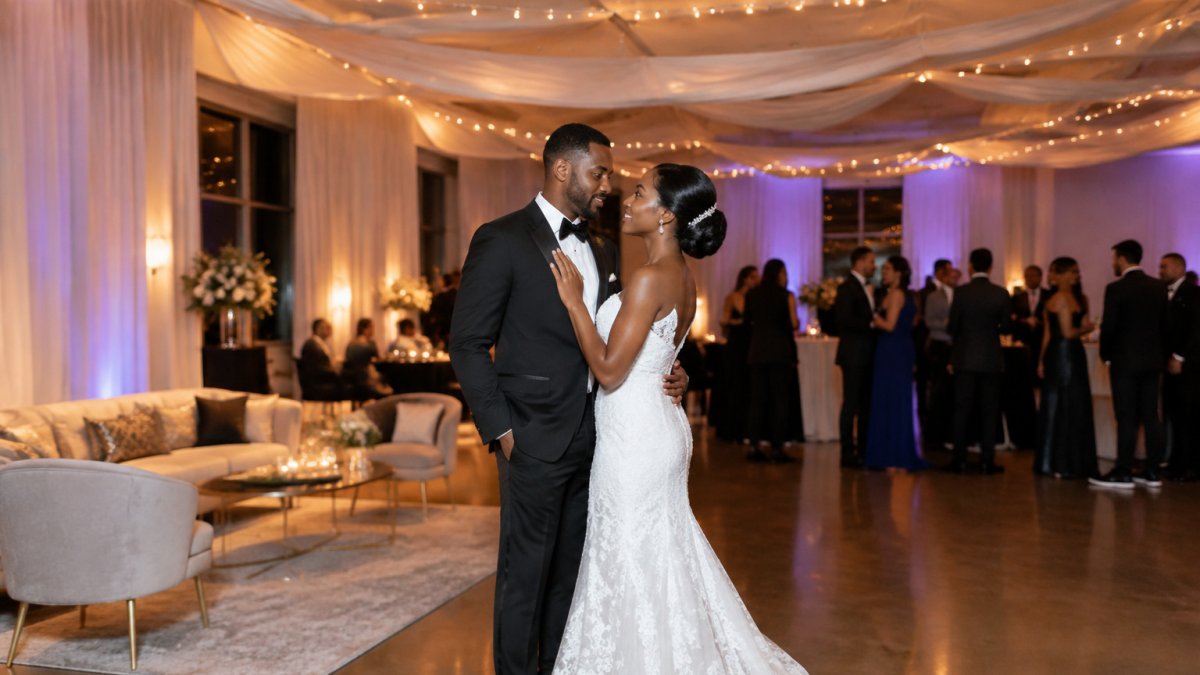
Photography also depends on timing. Outdoor photos change with the sun, clouds, and wind, so your photographer needs to know the schedule in advance. Indoor photos depend on ceiling height, window placement, and the quality of the room’s lighting. Ask your photographer which setting gives them the most flexibility.
Comparing Indoor vs Outdoor Wedding Venue Costs
Venue rental fees are only the first line of the budget. The real comparison is total cost for the same guest count, same service level, and same date. Outdoor sites often carry a lower base fee but shift costs into rentals, power, and weather contingencies that indoor venues bundle into the rental.
Use this like-for-like framework. Request written quotes for each line from every venue and vendor, and note whether the price is per hour, per day, or per guest.
- Base rental. The venue fee itself, including setup and breakdown hours. Confirm whether overtime is billed hourly and at what rate.
- Climate control. Indoor venues usually include heating and air conditioning in the rental. Outdoor sites may require rented heaters, fans, or portable cooling units, plus fuel or power to run them.
- Tent and flooring. A tent is the most common outdoor add-on. Ask whether the tent price applies whether or not you use it, and whether flooring, sidewalls, and lighting are included or billed separately.
- Power and distribution. Outdoor sites often need generators, distribution panels, and cable runs. Ask who supplies power, who operates it, and whether the venue requires a licensed electrician.
- Lighting. Indoor venues typically have house lighting and may include uplighting or draping. Outdoor sites usually require rented lighting, string lights, and a power plan for them.
- Restrooms. Indoor restrooms are included. Outdoor sites may need portable restrooms or restroom trailers, delivered and serviced, with a price that scales with guest count and hours.
- Transport and access. Shuttle service, valet, and vendor load-in distance affect cost. A site with a long carry from the parking area can add labor hours to every vendor’s quote.
- Weather contingency. Budget a contingency line for a late tent upgrade, a heater rental, or a moved indoor ceremony. Ask whether the venue holds a backup space at no charge or charges a fee to reserve it.
- Insurance and permits. Some outdoor sites require event insurance, noise permits, or fire permits. Ask the venue which permits it holds and which you must obtain.
Then compare totals at the same guest count. A common pattern is that an outdoor site with a lower base fee closes the gap once tent, power, restrooms, and lighting are added, and can exceed an indoor venue once a weather contingency is included.
Watch out: a quote that lists a tent as “available” is not the same as a tent reserved in your contract. Confirm in writing that the tent, flooring, and power are held for your date and what the cancellation terms are.
Pricing depends on date, guest count, and what each venue includes. Contact M Lounge directly for current quotes rather than relying on estimates.
Wedding Venue Questions to Ask Before You Book
Before you sign a contract, ask every venue these questions:
- What is included in the base rental, and what costs extra?
- Is there a covered or indoor backup space, and is it held for us?
- How do you handle severe weather, and when is the decision made?
- What are your policies on outside vendors, decor, and open flames?
- Do you have accessible restrooms, parking, and routes for guests?
- How many guests can you seat for dinner, and how many for cocktails?
- Who manages vendor communication on the day of the event?
You can also ask about seated capacity, which is 80 guests, and cocktail capacity, which is 100 guests.
How to Choose the Right Wedding Venue for Your Priorities
Start with your top priority and work outward. If guest comfort and a guaranteed timeline matter most, an indoor venue is usually the safer choice. If photography and natural scenery are central to your vision, an outdoor venue may be worth the extra planning and cost.
Consider these questions to narrow your decision:
- How important is a guaranteed plan if the weather turns?
- How many guests will need accessible routes and climate control?
- What is your total budget, including add-ons?
- Which setting matches the atmosphere you want?
Whatever you choose, get every promise in writing and build a backup plan. M Lounge offers an opulent indoor space in Capitol Heights and Bowie, with luxury draping, lounge furniture, and up-lighting designed to create a timeless atmosphere. If an indoor setting fits your priorities, reserve your date with M Lounge and see the space for yourself.
Frequently Asked Questions
Are indoor or outdoor weddings better?
Neither is better in every case. Indoor venues give you climate control, predictable timing, and easier guest access, which matters most if you have older guests or an unreliable forecast. Outdoor venues offer natural scenery, open-air atmosphere, and often more flexible decor. The right choice depends on your season, guest list, and how much you are willing to plan for weather. Many couples who love the outdoor look choose a venue with an indoor backup space so they do not have to give it up.
Is an outdoor wedding usually more expensive than an indoor wedding?
It often can be, even when the venue rental looks lower. Outdoor-only sites may need tent rentals, flooring, generators, portable restrooms, extra lighting, and climate solutions for heat or cold. These add-ons can quickly exceed the cost of an indoor venue. Ask every venue for a written list of what is included and what costs extra, then compare the total price rather than the base rental fee. Pricing depends on date, guest count, and services, so request a current quote from M Lounge directly.
How do you plan for bad weather at an outdoor wedding?
Confirm a backup plan with the venue before you book. Ask whether an indoor space is available on your date, how quickly it can be set up, and whether it is included or billed separately. If the venue has no indoor option, reserve and budget for a rented tent with sidewalls, heaters or fans, and a written decision deadline with your vendors. Share the decision timeline with your guests in your invitations or wedding website so they know what to expect.
What should you consider when choosing a wedding venue?
Start with your guest count, budget, season, and must-have features such as accessibility, parking, restrooms, and climate control. Then ask what is included in the rental, how vendors are coordinated, and what the cancellation and rain policies are. Visit at the time of day your ceremony will happen so you can judge natural light and comfort. Compare the total cost, not just the quoted rate, and get every answer in writing before you sign.
Ready to compare the options for your day? Contact M Lounge to talk through your guest count, budget, and style, and to check availability for your date.