


Last Updated: November 4, 2026
Quick Summary
A Maryland corporate event space rental checklist should cover your event purpose, format, guest count, layout, accessibility, logistics, costs, and contract terms. Request an itemized quote, tour the room in your planned setup, and confirm key arrangements, including fees, vendor access, and cancellation rules, in writing before signing.
- Ask for seated and cocktail capacities, and confirm how tables, chairs, a stage, and AV affect usable space.
- Request an itemized quote using your event date, guest count, hours, and planned layout.
- Test Wi-Fi in the presentation area and confirm remote audio, camera placement, and a backup plan for hybrid events.
- Name one venue contact and one organizer contact for event-day decisions and questions.
Table of Contents
- Maryland Corporate Event Space Rental Checklist: Define the Event
- Corporate Event Space Capacity Planning for Your Guest Count
- Questions to Ask When Touring an Event Venue
- Corporate Event Venue Cost Checklist
- Corporate Event Venue Rental Contract Checklist
- Plan Maryland Event Logistics, Access, and Contingencies
- Schedule a Tour and Confirm Your Event Fit with M Lounge
- Frequently Asked Questions
Maryland Corporate Event Space Rental Checklist: Define the Event
A Maryland corporate event space rental checklist starts with the event’s purpose, guest count, and format. A polished room still needs to fit the work your guests will do. A corporate event space is a venue chosen to support a business gathering’s goals, guest needs, and planned activities.
Use this short brief to guide your search. It keeps the focus on fit, not just appearance.
- Goal: training, retreat, presentation, or celebration
- Format: seated meeting, panel discussion, or cocktail event
- Guest count: expected number, plus any likely changes
- Needs: catering, AV setup, Wi-Fi, and vendor access
For accessibility planning, review the U.S. Access Board’s accessibility standards and ask how guests can reach and use the event areas. The standards are a reference point; confirm which rules apply to your event and venue.
Corporate Event Space Capacity Planning for Your Guest Count
Corporate event space capacity planning means matching the room’s usable space and seating plan to your guest count and event format. Ask for the seated and cocktail capacities, then confirm what each number includes. M Lounge lists capacity for 80 seated guests or 100 for a cocktail event, so the layout matters.
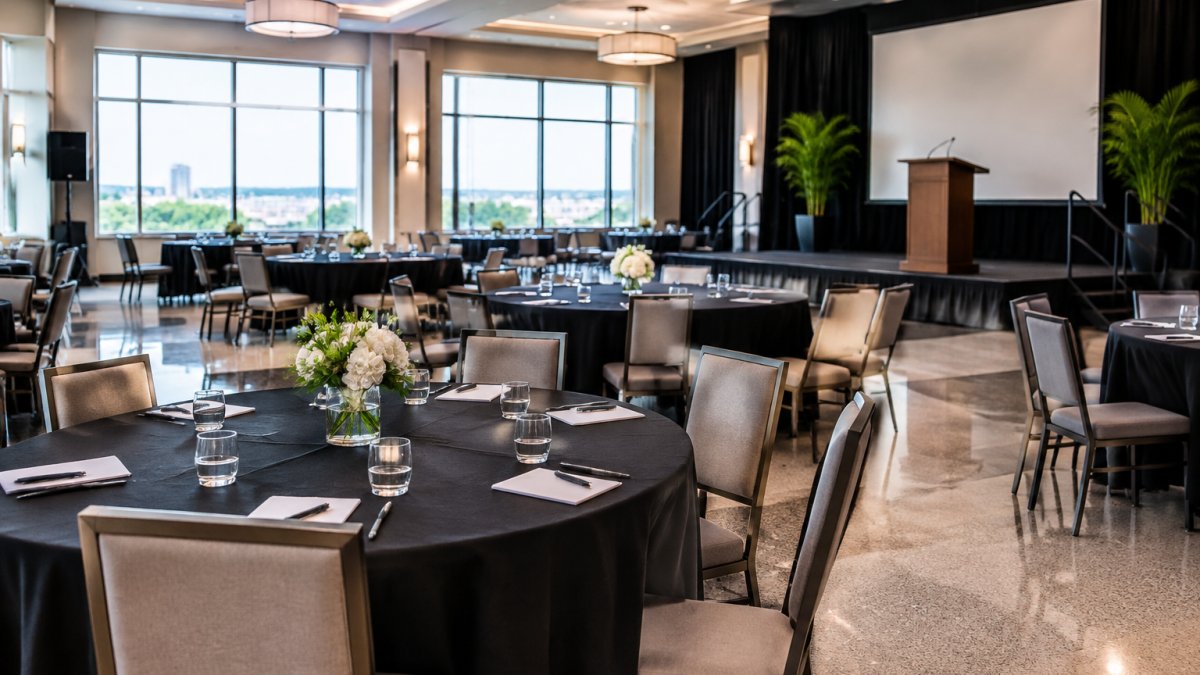
A room’s maximum capacity does not tell you whether it will work for a presentation, meal, or networking session. Ask how tables, chairs, a stage, and AV equipment affect the usable floor area.
| Event format | What to confirm | Planning check |
|---|---|---|
| Seated meeting | Tables and chair count | Sightlines to presenter |
| Panel discussion | Stage and microphones | Clear audience view |
| Cocktail event | Open floor area | Space to move |
| Hybrid session | Wi-Fi and AV setup | Remote audio and video |
For a smaller gathering, our small corporate event floor-plan guide offers practical layout ideas. A common mistake is planning from the guest count alone; the room must also support movement, access, and the event’s main activity.
Questions to Ask When Touring an Event Venue
Questions to ask when touring an event venue should cover layout, equipment, access, and what the rental includes. Ask the venue to show the room in the setup you plan to use, not only in its empty state. Then note what still needs to be confirmed in writing.

Bring these questions on your tour:
- Which room layout fits our event format?
- What audio-visual equipment, microphones, and sound system are available?
- How does the Wi-Fi support presentations or hybrid guests?
- What catering and food-and-beverage options are allowed?
- When can vendors load in, set up, and tear down?
- What parking, guest access, and accessibility details should we share?
- Which amenities are included, and which cost extra?
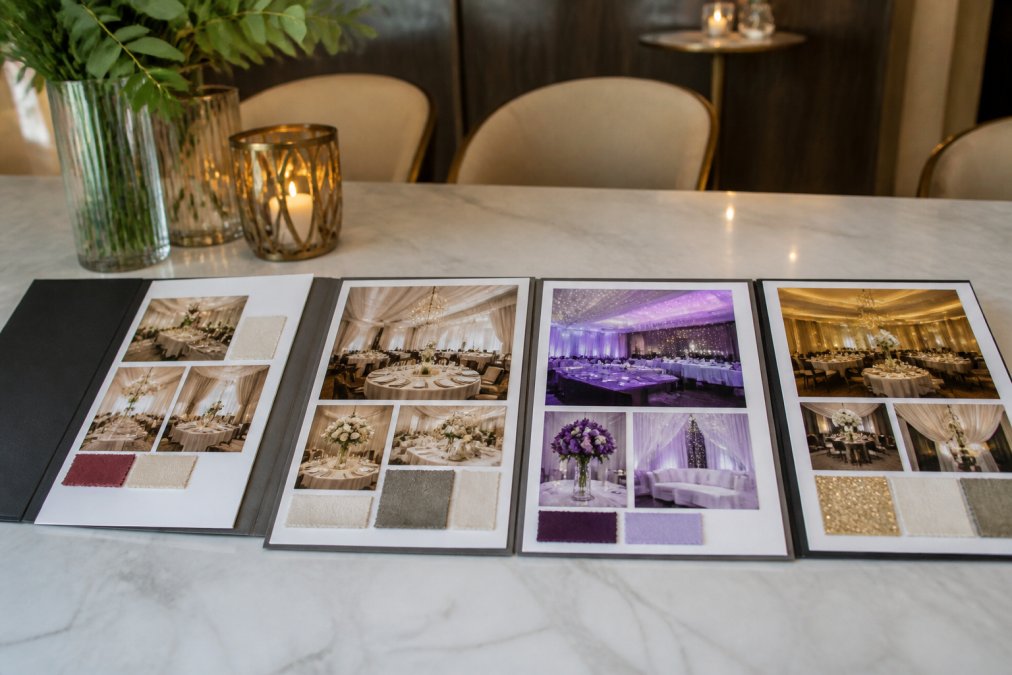
M Lounge offers venue draping, lounge furniture, and professional lighting. Ask to see examples of the setup you have in mind, and use this venue-tour guide for more questions.
Corporate Event Venue Cost Checklist
A corporate event venue cost checklist should compare the full amount due under each proposal, not just the room-rental fee. Request an itemized quote for your event date, guest count, hours, and planned layout, then compare the same assumptions across venues. Ask the venue to identify which charges are fixed, which depend on final attendance or vendor choices, and which may be added if the schedule changes.
Use this worksheet for each venue:
| Cost or term | Venue response | Amount or calculation | Follow-up |
|---|---|---|---|
| Room rental and reserved hours | Does the rental include setup and teardown time? | ||
| Deposit and payment schedule | When is each payment due, and is the deposit refundable? | ||
| Taxes and service charges | Which charges apply, and what are they calculated on? | ||
| Food and beverage | Are minimums, staffing, or service charges separate? | ||
| Furniture, lighting, and AV | What is included, and what requires a separate rental? | ||
| Setup, cleanup, and vendor access | Are labor, early access, or cleanup charged separately? | ||
| Overtime | What triggers it, how is it billed, and who can authorize it? | ||
| Insurance and outside vendors | What coverage or vendor documentation is required, and by when? | ||
| Cancellation or date change | What deadlines, fees, and refund rules apply? |
Ask for the quote and the contract to use consistent terms. For example, confirm whether the quoted event window includes vendor load-in, guest arrival, and teardown; a room fee for the event itself may not cover all the hours your team needs. Clear communication regarding these logistical constraints ensures that the venue can accommodate your specific requirements for managing technical specs during the setup and execution of your program.
Compare the total expected cost for the same event plan. If one venue includes tables, chairs, and basic AV while another charges separately, record both the included items and the additional costs needed to deliver the same setup. Dividing the comparable total by expected attendance can help with internal planning, but it is not a substitute for checking minimums, variable charges, or the final invoice terms.
Watch out: A verbal assurance that a fee is waived or an item is included is difficult to rely on later; ask for the quote or contract to state the agreed amount, service, and conditions.
Before signing, check that the contract identifies the payment due dates, cancellation and rescheduling rules, overtime rate or calculation, insurance requirements, and responsibility for damage or cleanup. Confirm who may approve extra charges on event day and how those charges will be documented. Our event package cost guide explains what packages may include.
Corporate Event Venue Rental Contract Checklist
A corporate event venue rental contract checklist helps you confirm the agreed terms before you sign. The contract should match the quote and tour details, including the room, event hours, setup plan, fees, and vendor policies. Read the full agreement, not just the payment page.
Check that it states:
- Event date, access times, and end time
- Room and capacity for your planned layout
- Included amenities and any extra charges
- Catering, outside vendors, and insurance terms
- Cancellation, date changes, and refund rules
- Cleanup duties and overtime costs
- Who handles venue questions on event day
A common mistake is relying on verbal promises about setup or included items. Ask for each agreed detail in writing. For more selection criteria and amenity checks, read our corporate venue criteria guide.
Plan Maryland Event Logistics, Access, and Contingencies
Event logistics cover how guests, vendors, and equipment reach the venue, how the space works for everyone, and what the team will do if plans change. Make this a venue-by-venue check: travel time and arrival conditions can differ across Maryland markets, so do not rely on a single statewide direction or parking assumption. Send guests the venue’s exact address, entrance, parking instructions, and transit or rideshare guidance, and ask the venue where vendors should unload and where guests should enter.
Use this checklist with the venue contact:
- Guest arrival: Confirm the correct entrance, parking availability and restrictions, accessible drop-off location, and any instructions for guests arriving by transit or rideshare. Ask whether parking is shared, reserved, or subject to event-day restrictions.
- Vendor access: Walk the route from the loading area to the event room. Confirm access hours, door or elevator constraints, staging space, and who coordinates deliveries, setup, and teardown.
- Accessible use: Verify the route from arrival point to the event room, seating area, and restrooms. Ask whether the route will remain clear during setup and whether the planned layout preserves access. The U.S. Access Board’s accessibility standards are a useful reference; confirm which requirements apply to the venue and event with the appropriate venue representative.
- Occupancy and permissions: Ask the venue to confirm the permitted occupancy for your specific layout and whether your planned activities, equipment, or outdoor use require additional approval. Request written confirmation of any permits or restrictions that apply rather than assuming the room’s advertised capacity covers every setup.
- Hybrid connectivity: Test Wi-Fi in the actual presentation area and ask whether the connection can support the planned stream and guest use. Confirm microphone coverage, remote-participant audio, camera placement, power access, recording permissions, technical support, and a backup connection or presentation plan.
- Weather and emergency response: For outdoor or partly outdoor events, identify an indoor backup space, the decision deadline for moving, and who makes that call. Ask where guests should go during severe weather or another emergency, who communicates instructions, and whether backup power is available for essential equipment.
- Event-day responsibility: Name one venue contact and one organizer contact. Confirm who handles access, vendor questions, AV troubleshooting, room changes, and approval of overtime or other added charges.
For a Maryland event, build the arrival plan around the actual venue and guest list: share clear directions and parking details in advance, and allow time for vendor access and setup separately from guest arrival. If guests are coming from different parts of the state, consider whether the venue’s access and parking arrangements work for the group rather than assuming everyone will arrive by the same route.
Watch out: A backup plan is not complete if it names an alternative but does not specify who decides to use it, when that decision is made, and how guests and vendors will be notified.
Record the answers in your event plan and confirm important arrangements in writing. The Maryland Department of Disabilities offers state resources on accessibility; use them alongside a direct review of the venue’s routes, facilities, and your event layout.
Schedule a Tour and Confirm Your Event Fit with M Lounge
A venue tour is the best next step when the guest count, event format, and must-have features are clear. Bring your checklist, walk through the planned layout, and ask which details need written confirmation. M Lounge offers event spaces in Capitol Heights and Bowie.
The choice is not just about a striking room. It is about matching capacity, ambiance, access, and event needs without leaving costs or contract terms unclear.
Frequently Asked Questions
What should I look for when renting a corporate event space?
Check that the event format, guest count, room layout, location, accessibility, and included amenities fit your plans. Confirm the venue can support your presentation or panel discussion, including the needed audio-visual equipment, microphones, sound system, and Wi-Fi. Ask about catering, vendor policies, parking, setup and teardown access, and every fee that may affect the total. A written checklist makes it easier to compare Maryland corporate event space options on the same criteria.
How do I estimate the right venue capacity for a corporate event?
Start with the confirmed guest count, then match capacity to the event format and layout. A seated presentation, panel discussion, and cocktail reception use space differently, so ask for the venue’s seating and standing capacities rather than relying on one maximum figure. M Lounge lists capacity for 80 seated guests or 100 for a cocktail event. Confirm the layout, tables, chairs, AV setup, and guest access for your specific plan.
What should a corporate event venue rental contract include?
Ask for the event date and access times, rental fee, payment and cancellation terms, included amenities, setup and teardown responsibilities, vendor policies, and any overtime or cleanup charges in writing. The corporate event venue rental contract checklist should also cover catering arrangements, equipment, damage procedures, and what happens if the venue becomes unavailable. Request clarification on any term that could change your total cost or restrict your event plans before signing.
What costs should I check before booking an event venue?
Request a quote and confirm what is included. M Lounge has not provided pricing details here, so contact the venue directly for current pricing and a quote for your date and requirements.
If venue fit is difficult to judge from photos alone, a tour can help you assess the space and ask direct questions. Schedule a virtual or onsite tour to review the venue in person or online. Get started with M Lounge and assess whether its draping, lounge furniture, and professional lighting suit your corporate event.